Travelling to Fiji

I am so pleased that 12 months ago Alana had the genius idea to travel somewhere warm this winter. We have had a very cold snap hit in the last couple of days and I can’t wait to leave it behind and head to warmer days. Having this to look forward to during the winter months has been wonderful. In just a few hours, I will be lying by a pool, sipping cocktails and soaking up the sun.

Bliss.

The last few weeks have been incredibly busy. I am looking forward to slowing right down and getting familiar with ‘Island Time’. It’s been 4 years since my last international trip, 13 years since I have been in the Islands (Why? It’s only 4 hours away, I need to do this more!) and 17 years since I have been in Fiji. This trip is well overdue.

We have a stressful start, I wake up with a cold 2 days before we leave. Fortunately not a bad one. Then the day before we depart, I get a message from our travel agent advising that the Yasawa Island accommodation (which we booked 4 months ago) has been double booked and wants to move us to their sister resort on an entirely different island. I am gutted. I spent weeks researching all the islands and specifically booked this one for several reasons.

So we depart, with the tail end of a cold and accommodation unresolved. We are not sure where we will be staying, but I am determined that whatever happens, it will be amazing.

As much as I dislike flying, I enjoy that feeling of leaving the busyness behind. There is always that last minute rush to get everything sorted, but once I step onto that plane, I feel it fall away, leaving it all behind.

We are flying Fiji Airways today, a first for us. We normally fly with Air New Zealand, but Fiji Airways offers direct flights to Nadi from Wellington, so in as little as 4 hours, we will be in the Isles of Smiles.

From up in the sky, the clouds look like sheets of ice, but when it finally breaks, there is so much blue below us.

It’s a smooth, easy flight, with OK food and onboard entertainment. I would fly Fiji Airways again. My fear of flying isn’t helped when Daniel kindly tells me that the type of airplane we are on had new technology that caused a couple of planes to crash. He quickly followed this up with, it’s OK though, they fixed it. Thank you husband.

When we step off the plane, I am expecting to be hit with the heat wave that I remember from travelling here as a kid. That thick, warm air, pungent with the perfume of fragrant frangipani, but it doesn’t arrive. The weather is still warm though and we are welcomed into the country with singing and guitars. Welcome to the Islands! Getting through passport control feels like it takes forever, but while waiting, we get some good news. A message from our accommodation in the Yasawas saying there has been a cancellation and our booking is confirmed. Phew.

Our transfer driver greets us with a warm and friendly ‘Bula’, a bottle of cold water and a lovely shell necklace (which I still have.) We arrive at our accommodation, Aquarius on the Beach and check in. It’s very simple, but clean, the staff are friendly and it’s right on the beach. The cheap price tag also means more dollars for spending on activities.
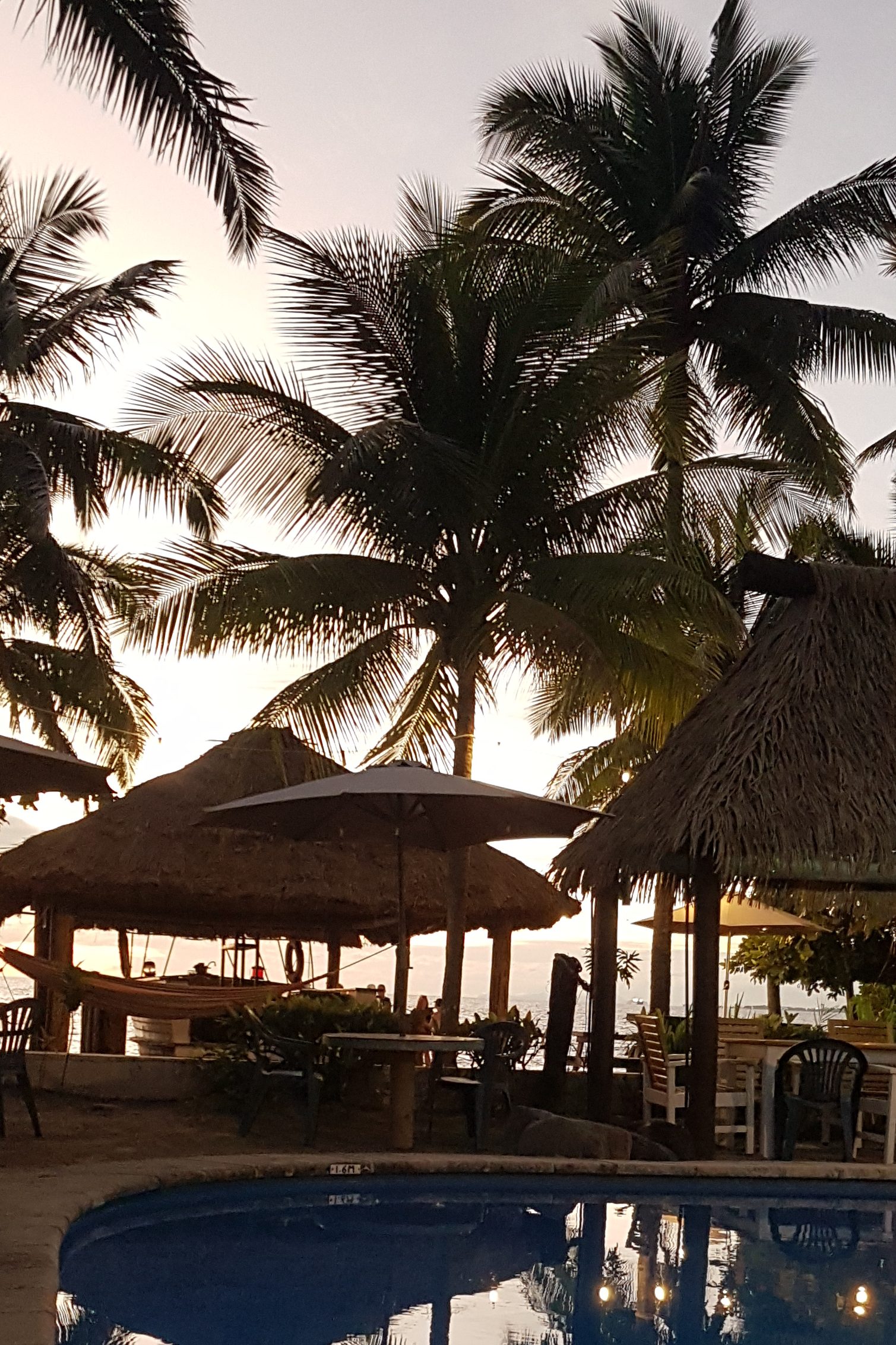
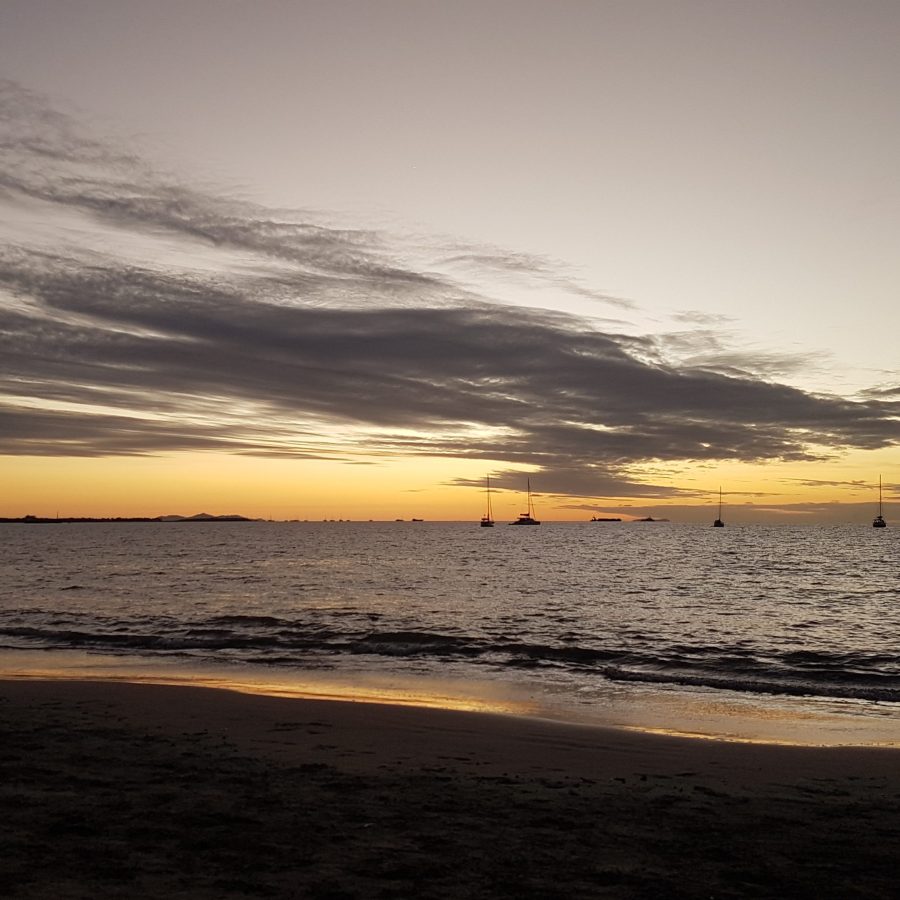
We drop our bags in the room, head straight to the bar and within minutes, we are sitting by the pool, watching the brilliant sunset, listening to the ocean. It feels so good to stop and slow down. I have traded punga trees and icy wind for coconut palms and for 20+ degrees.

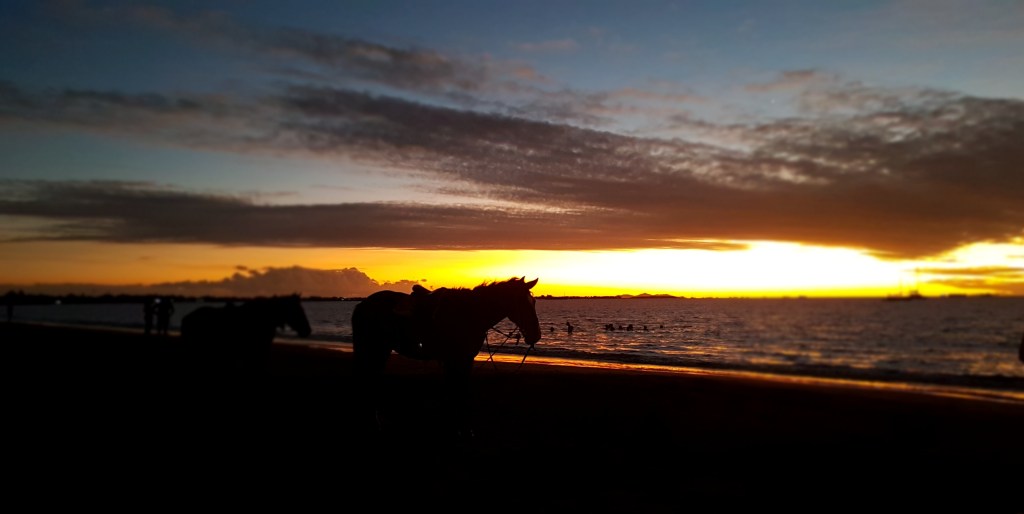
We have a tasty dinner by the pool, watching horses on the beach and the glowing sky get redder and redder. Hello Fiji, I am looking forward to getting to know you better.
A Foodie Weekend in Petone

Sometimes it’s easy to forget how many great things there are to do right on our back door. So this weekend, I’m doing some local activities and having a foodie weekend in Petone. I am booked into a cake decorating class on Saturday morning with my sister in law, and a ravioli making class with my brother on Sunday afternoon.

It’s guaranteed to be a delicious weekend.

We arrive at the Cake it Forward studio eager to get our cake on and learn some skills. We are warmly greeted and offered a complimentary tea or coffee from the cart out front. A great start. We chat with some of the other ladies while waiting for everyone to arrive. Classes are small with a maximum of 6 people, great for learning lots of new things and keeping a casual relaxed atmosphere.

Could you imagine a birthday without gifts? Without a birthday cake to celebrate your special day? I know that I am lucky to have never experienced this, but there are many for whom this is a reality. Cake it Forward was started by Bridget as a hobby but it has grown into much more than that. Wanting to teach her daughter that they have enough ‘stuff’ and that there are others who don’t have a lot, Cake it Forward has partnered with the Angel Tree Programme. Through this programme, she is able to bring some joy and happiness to children on their special day, by donating birthday cakes to children with parents in prison. I also noted that Bridget has adopted and fosters rescue dogs. What a legend!

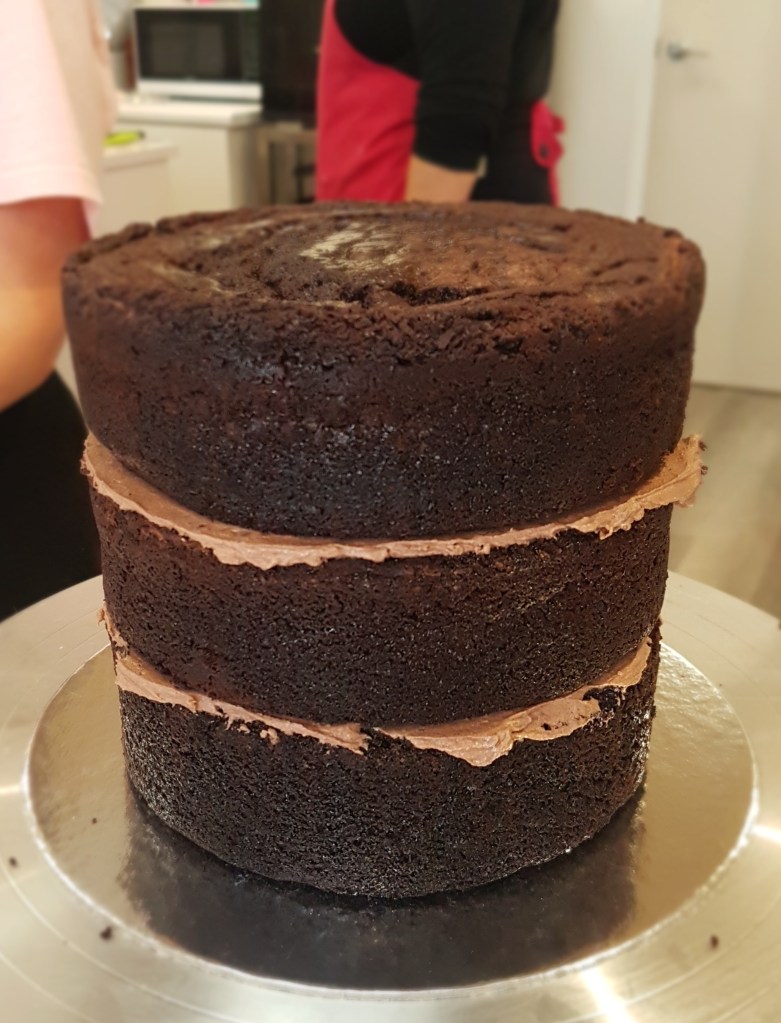
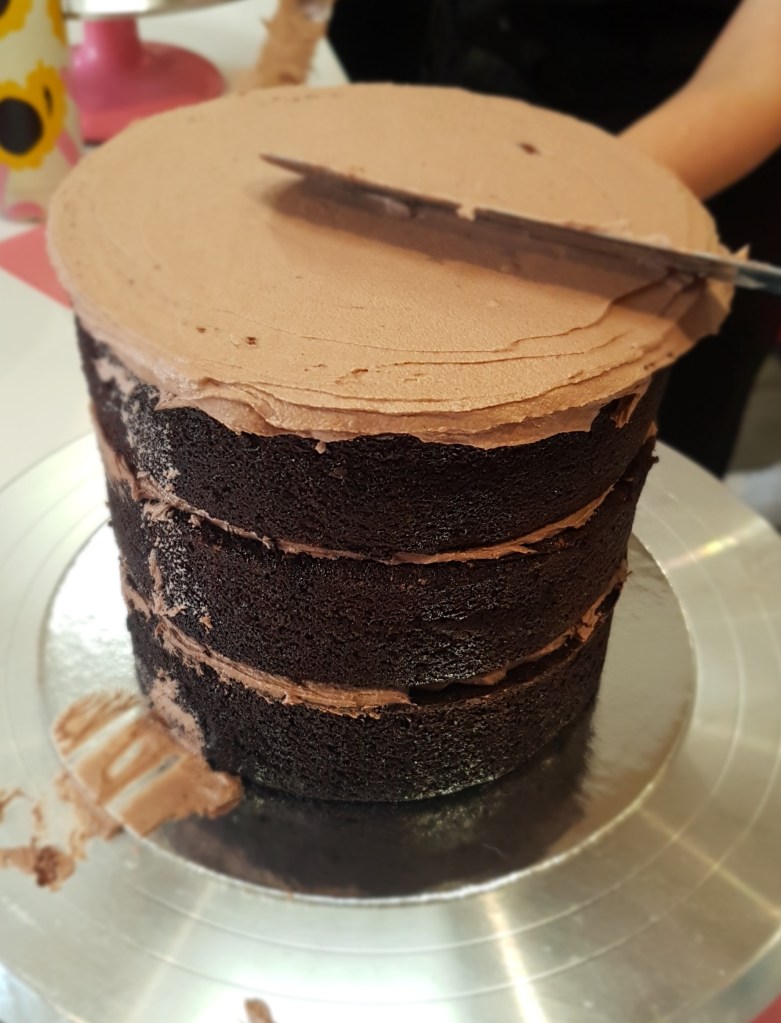
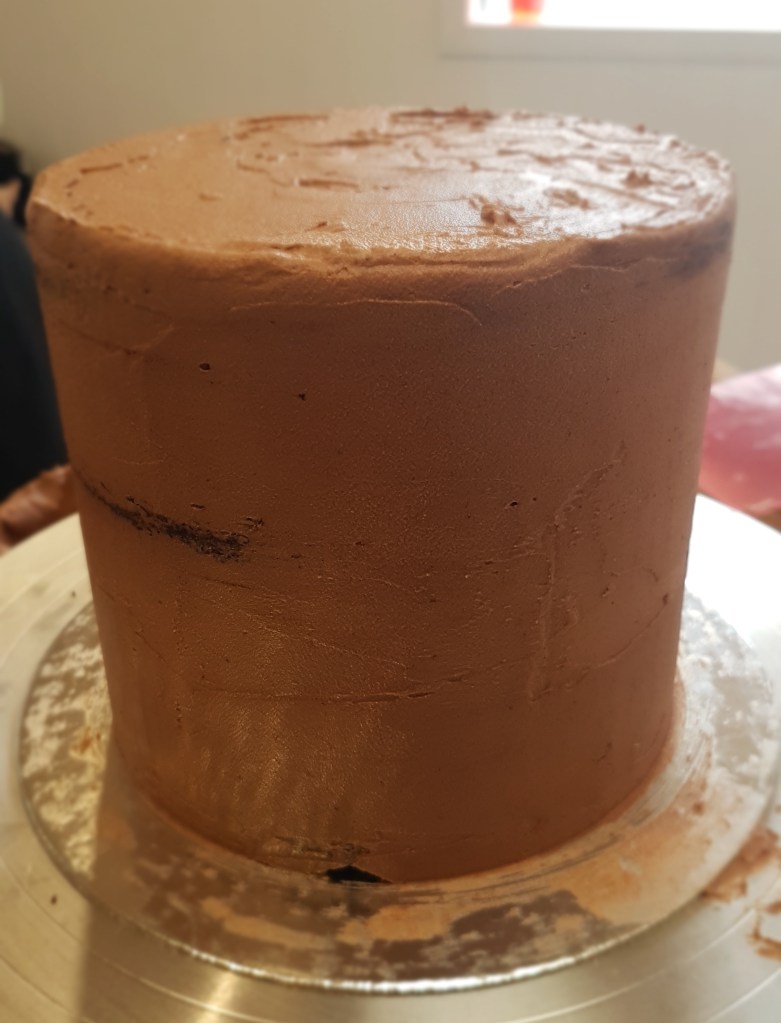
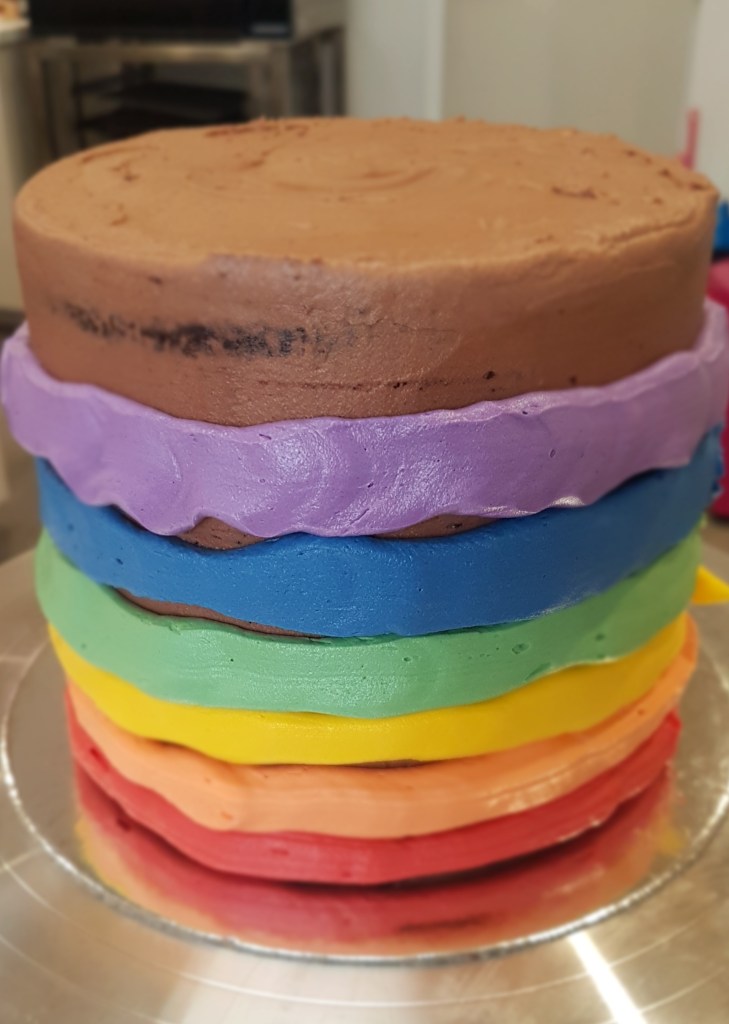
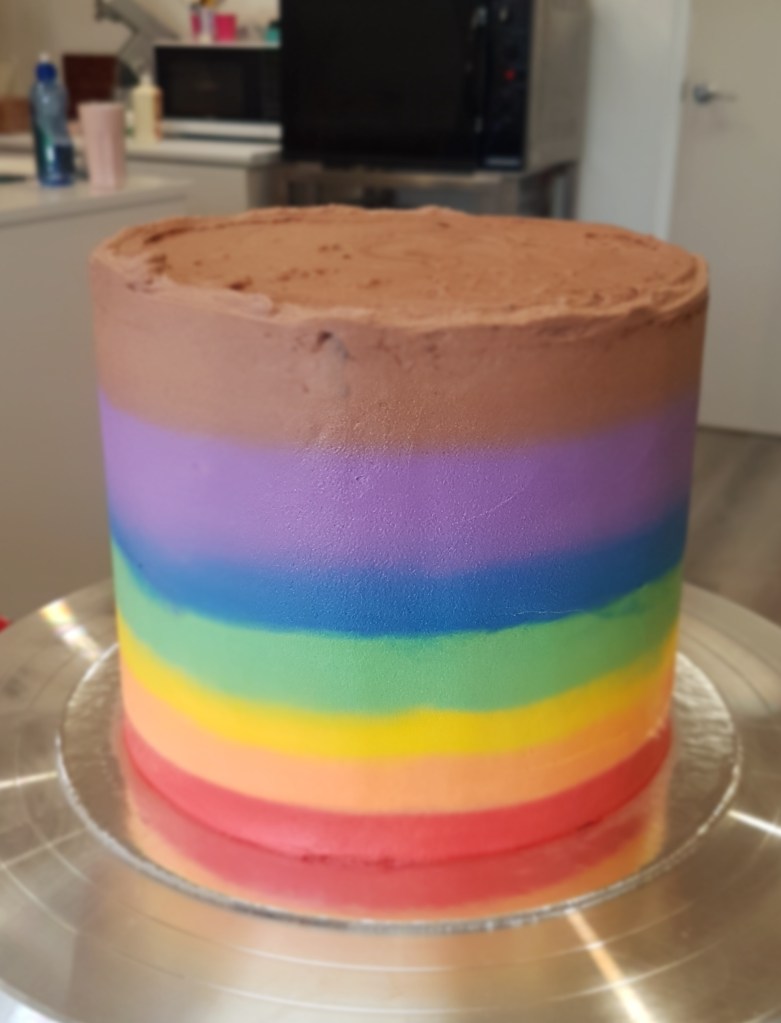
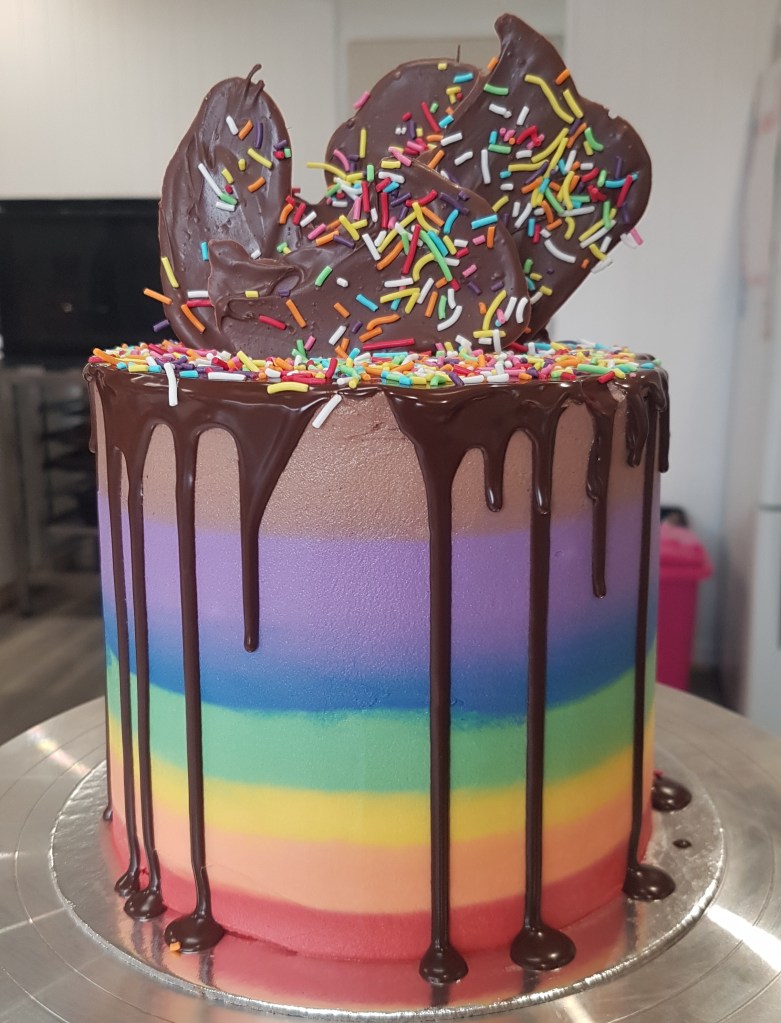
Today, we are trying our hand at creating a rainbow drip cake. I have made many cakes in the past, so I was surprised at how much I learnt in this class. I was already OK at making cakes, but these skills have enabled me to work to a much higher standard with a professional looking finish. They are simple tips, but make a big difference to the end result.

Over the next 2 hours we watch demonstrations, have hands-on experience decorating our own cake and learn lots of tips and tricks. I quickly realise what a big difference it makes having the right equipment. I love the cake turntable and palette knife, they’re a game changer! Bit by bit we build our masterpieces, stacking the layers, crumb coating and then creating some magic with the rainbow icing. We learn how to create a chocolate drip finish and garnish with our home made chocolate shards.

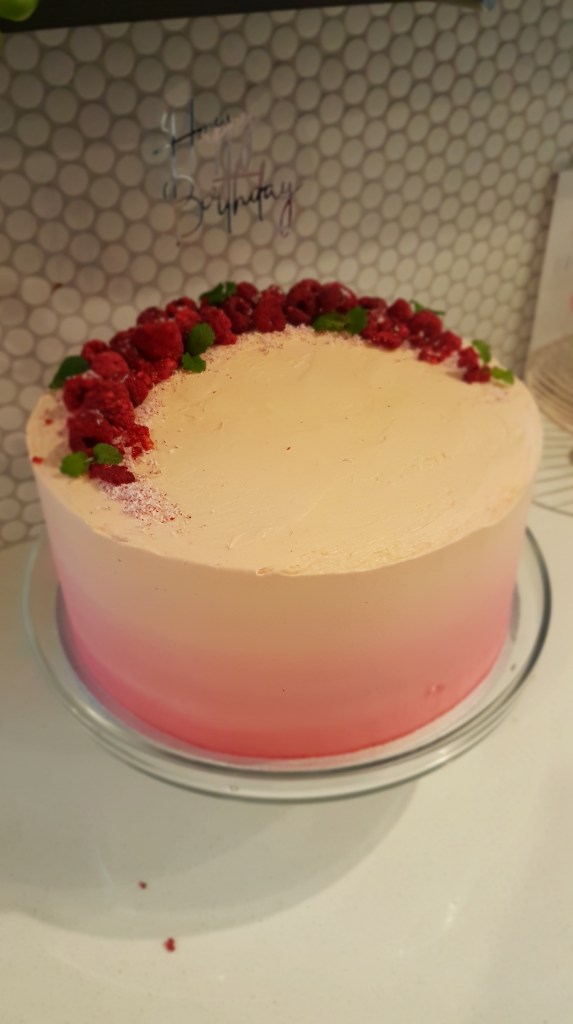
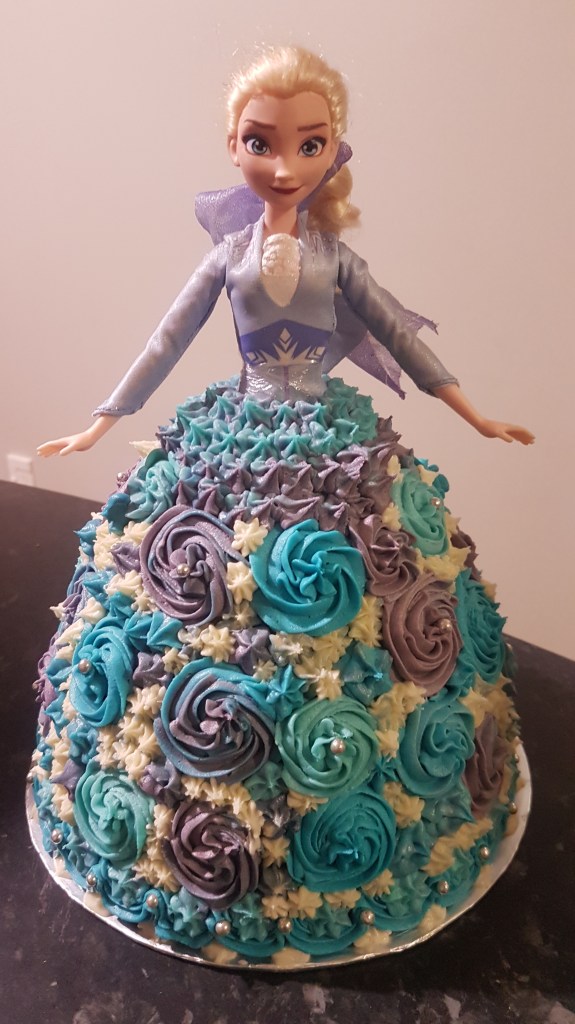
This 2 hours class was so much fun and the time went by so quickly. At the end of the session, I was able to take away a beautifully decorated, 3 tier cake to enjoy with the family. I love the motive behind this business venture and was glad that I could be a part of it today. I have since made 2 birthday cakes and the skills I learnt have been so useful with these. I am sure I will be booking in for another class soon. I have my eye on a cupcake class!

On Sunday afternoon my brother and I head to La Bella Italia ready to spend the afternoon soaking up some Italian atmosphere. La Bella Italia is an authentic Italian restaurant serving up delicious meals in a casual setting. You will also find quality Italian products you can purchase, from pastas, cheeses, meat and of course gelato. Everything that reminds me of Italy.

The class begins with a glass of prosecco and a large platter of antipasti shared among the group. I love Italian food and this brings back some wonderful memories of eating my way around Italy, especially Bologna, gosh, the food was incredible there! Bellissimo.

After getting our fill of these tasty bites, we head to the tables all set up with ingredients and pasta makers ready for us to use.

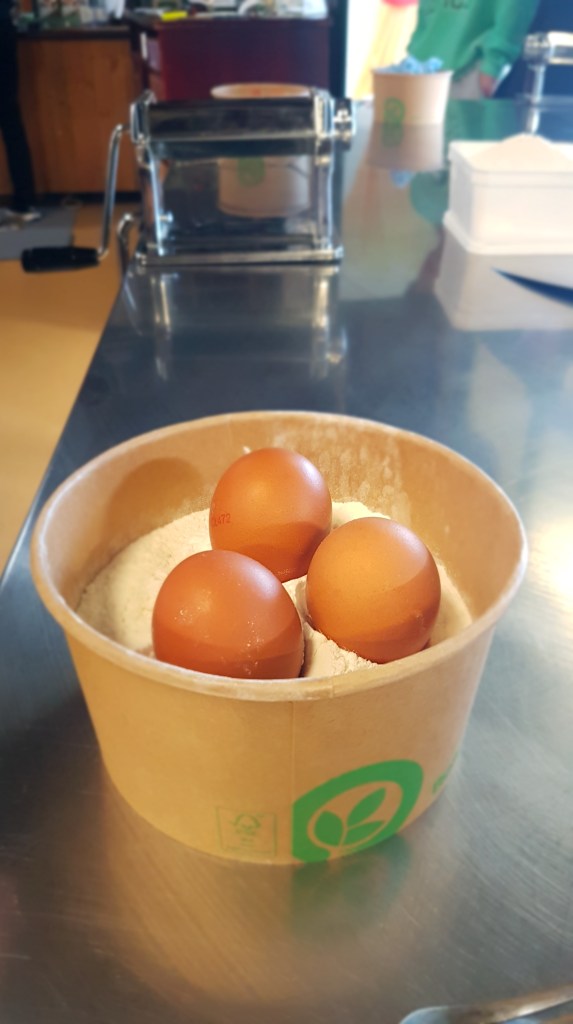
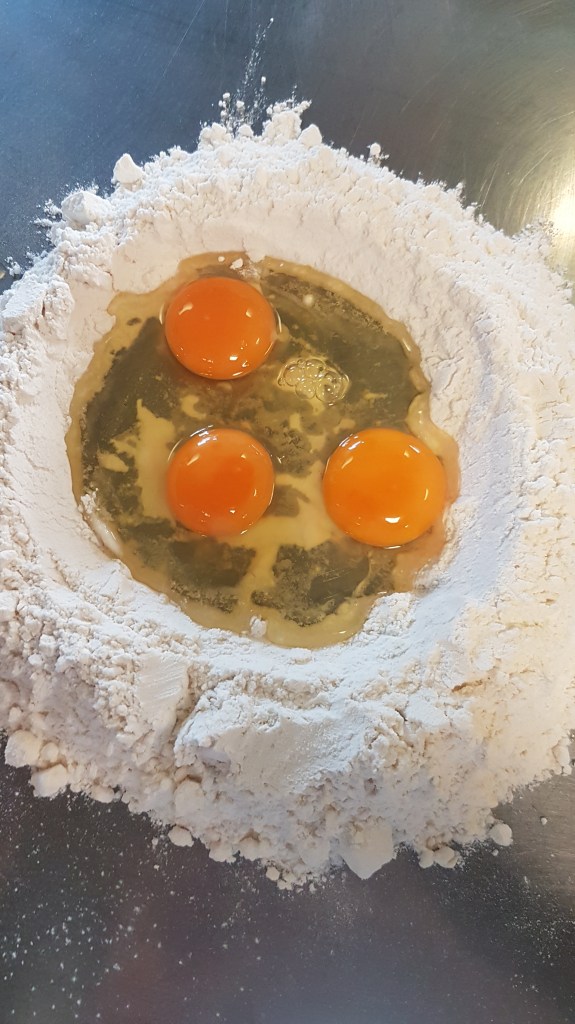
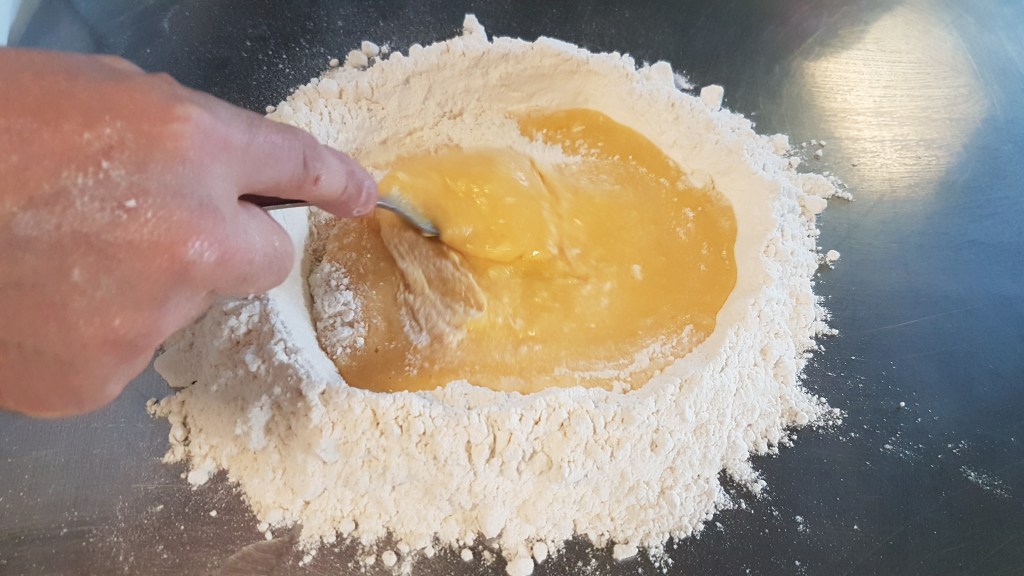
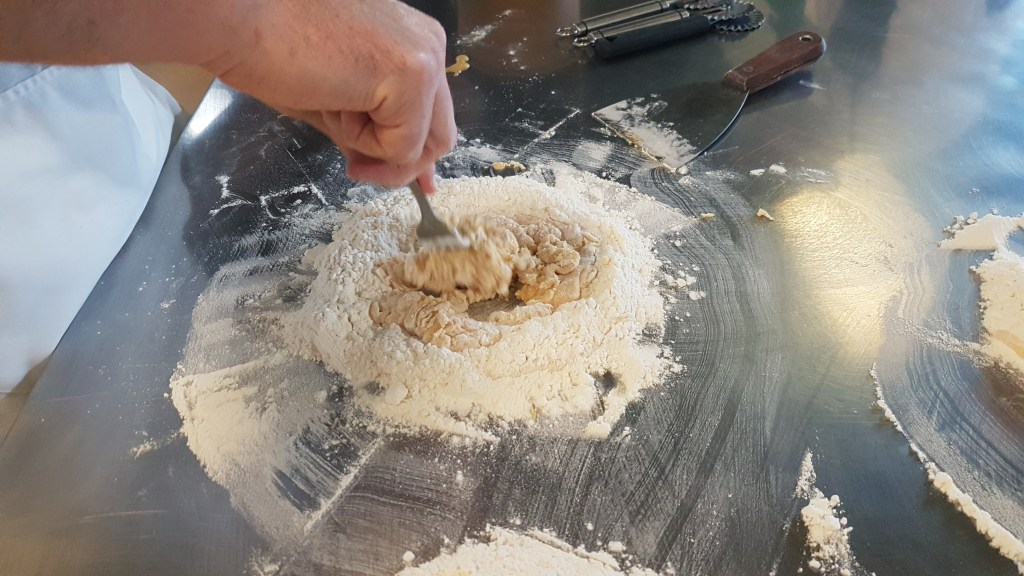
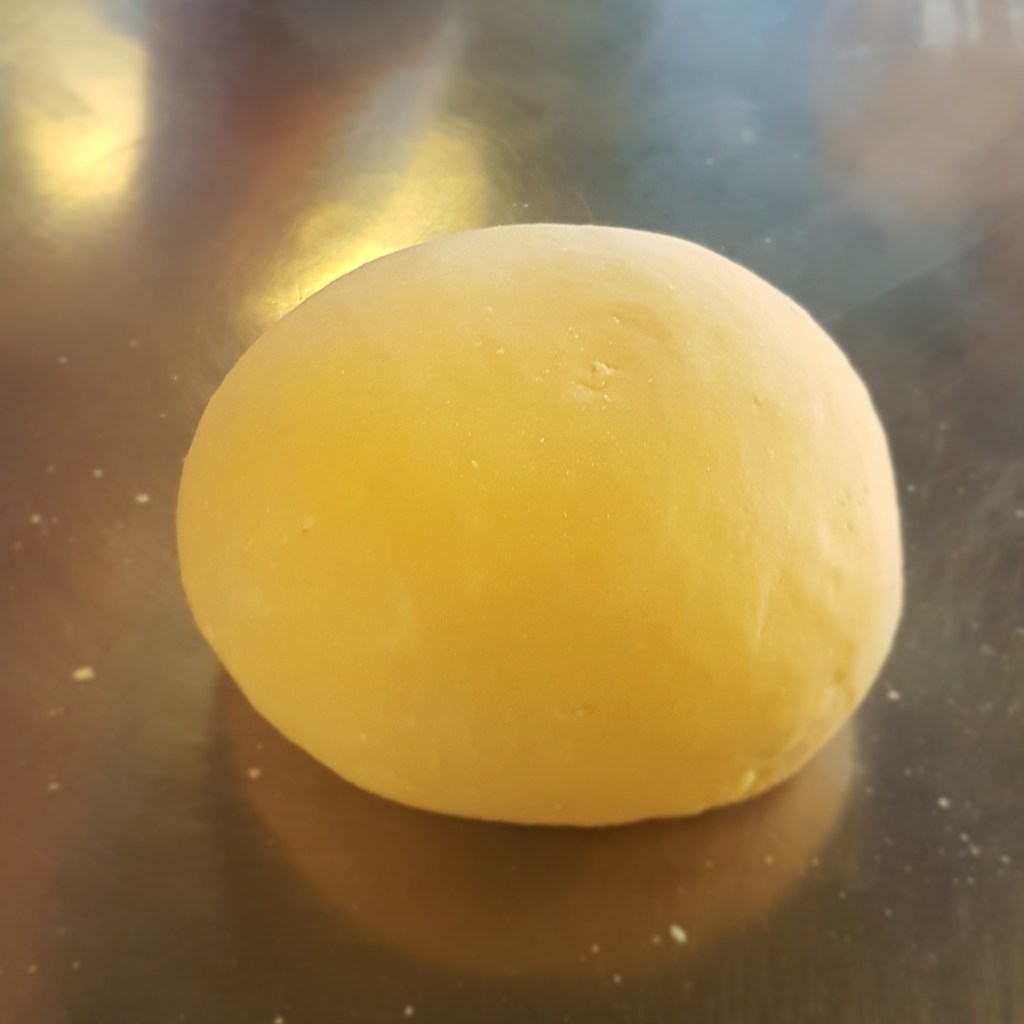
We begin with mixing the eggs and gradually adding the flour to make a globby mess that eventually becomes dough. Now the hard part, kneading it until it becomes the right consistency – smooth and elastic. This takes quite a long time and I am pleased to have James with me to put in the hard work. I am a bit useless at this step!

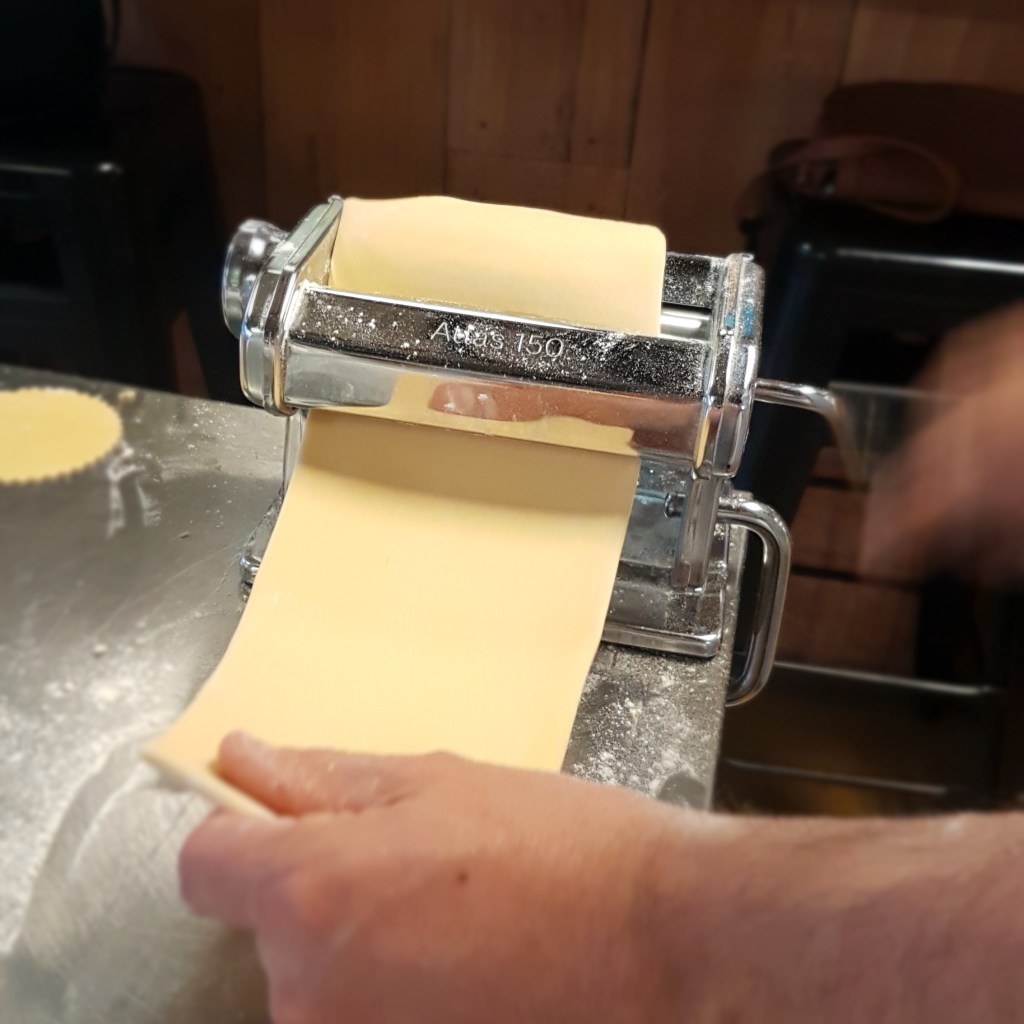
When the dough is ready (after what seems like ages) we let it rest while we clean up our work bench, ready to roll it out. We get a demonstration from the chef and then it’s our turn. Working with half the dough at a time, we put it through the rollers, changing the setting every couple of turns to roll it out thin.

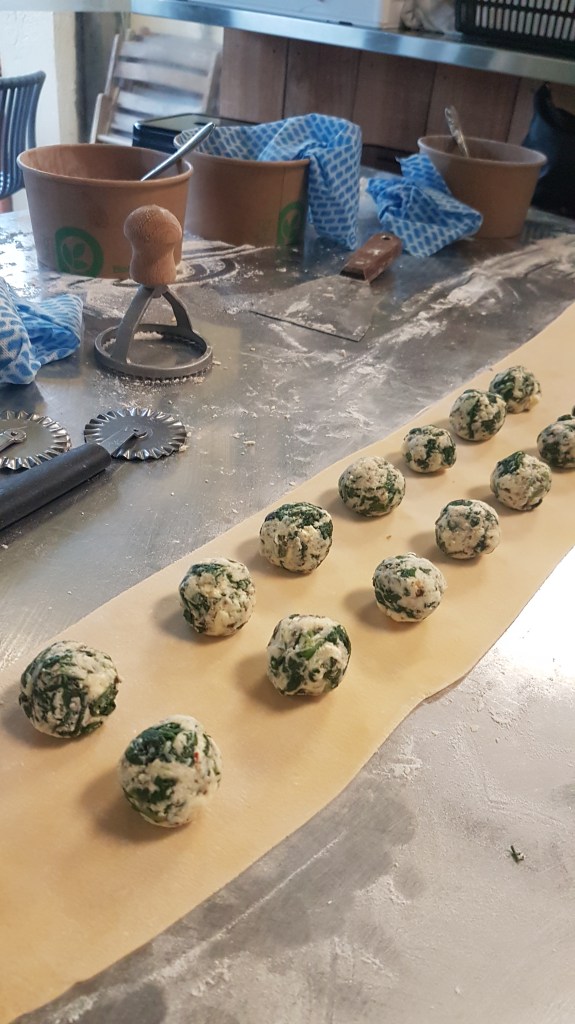
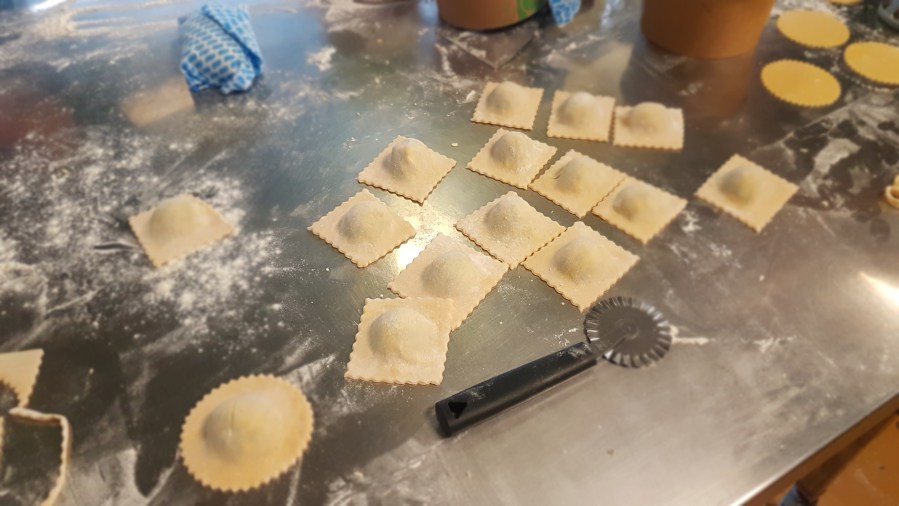
Once we have the right thickness we can add the fillings. There are 2 options, feta & ricotta and a pumpkin one. Yum! We roll balls of fillings and place it on the pasta before folding the pasta over to enclose it.

The last step is to use a pasta wheel with a zig zag edge to cut it. Using this also seals the two layers together so the filling doesn’t come out when cooking.

And that’s it. Easy right?

I have to say, making pasta is a labour of love! But tonight I will be having Italian, made the Italian way.

Hanging out with Taxidermy and Old Bones.

It’s our last day in Dunedin. In 2 days we have managed to see and do a lot, but I still have activities on my list before we board a plane to head home. It’s a very cool, fresh morning, but I can’t complain. The sun is out and it’s a perfect day for exploring the city.

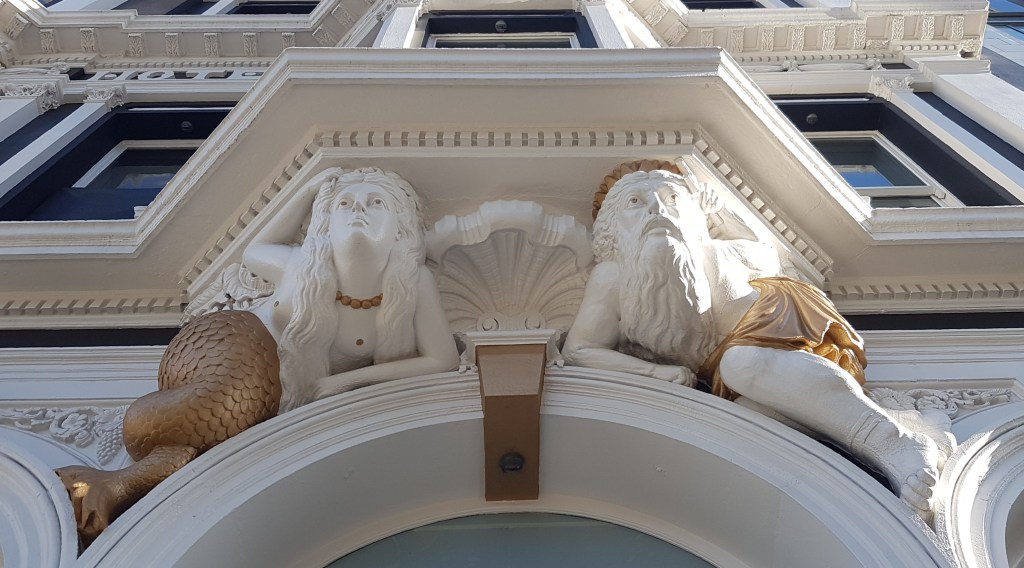
We have breakfast at the hotel (Leviathan Heritage Hotel). The dining room is stunning. Beautiful moldings and sculptures decorate the ceilings and there is a large fireplace for warmth and atmosphere. We are the only ones in this large room. It feel like such a wasted space. It would have been a grand room in its days. The hotel was built in 1884. With its elegant, dark wooden interior and many stained glass windows, you can just imagine the balls and stories from the past that this hotel has seen. The hotel doesn’t look much from the outside, it was modernised in the 1950’s by previous owners which is such a shame, but inside you will find a beautiful old building.

We head out to The Octagon and begin a heritage walk around the city to look at all the old architecture. There are some beautiful buildings here. Using the heritage walk map we picked up from the information center, we begin at St. Paul’s Cathedral.

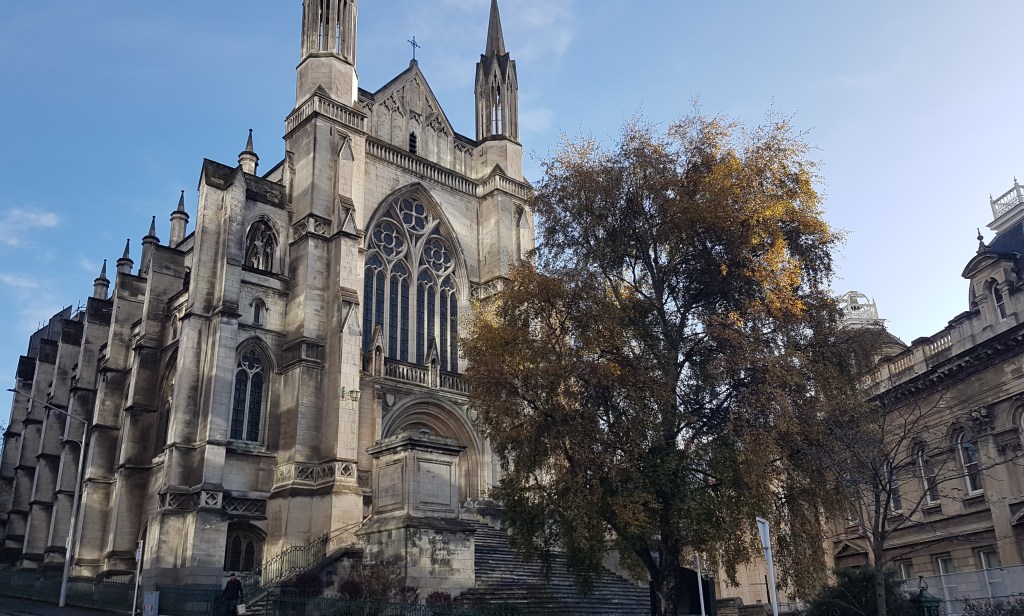
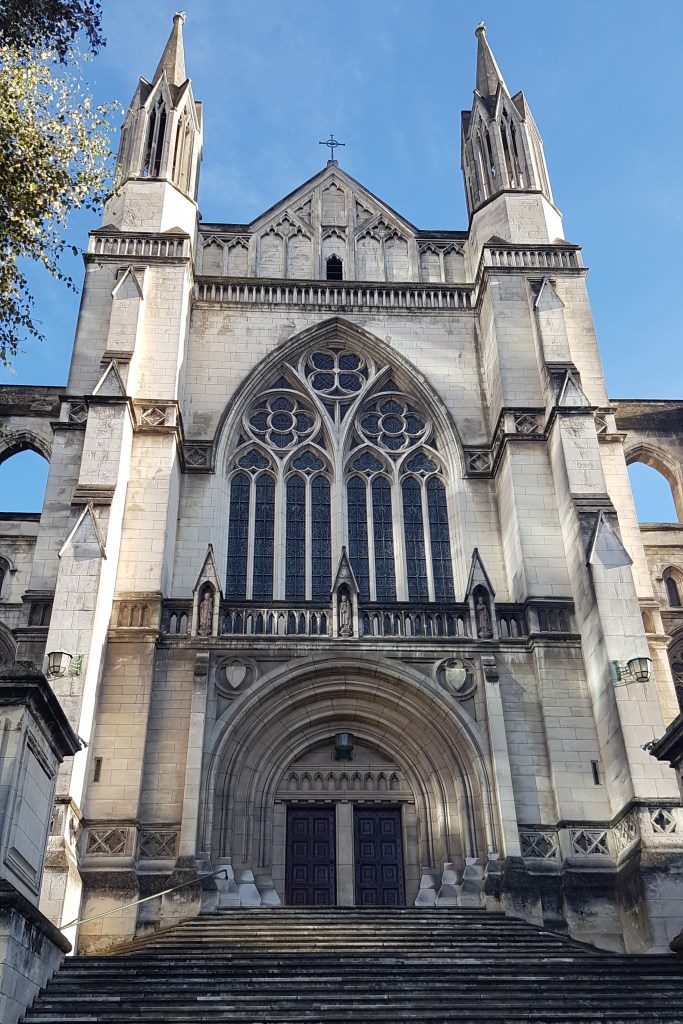
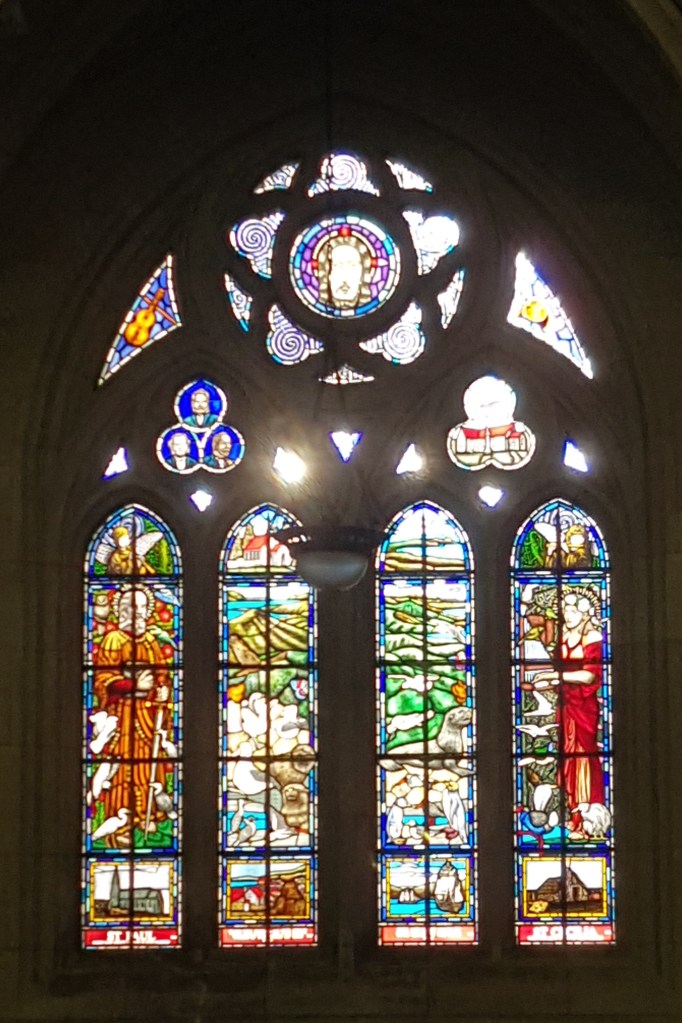
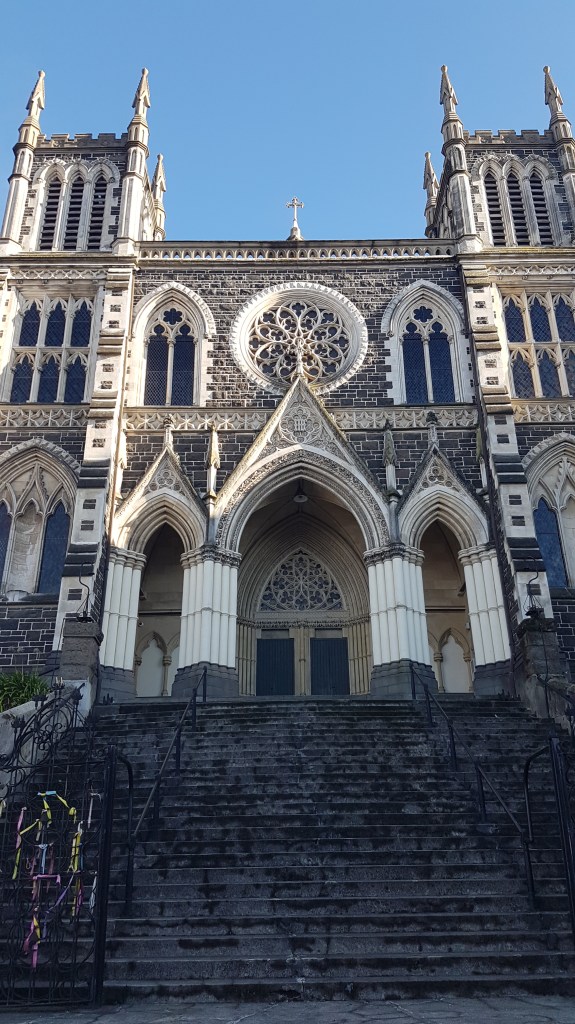
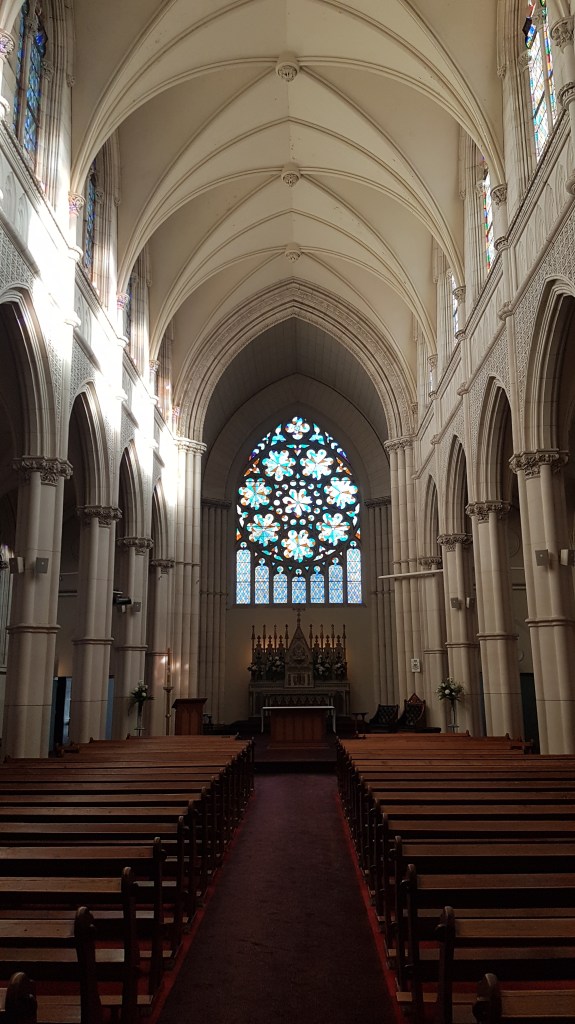
Looking around me, I feel like I am back in Europe. What a stunning building! A grand staircase leads up to the entrance. Tall, white pillars tower up to grand domes and arches, a beautiful example of Gothic architecture. Inside the beauty continues, it is equally impressive with high ceilings and many stained glass windows. There is something very peaceful in the vastness of the high ceilings and open space. I particularly like the window that pays homage to the landscape and nature that is distinct to Dunedin – fur seals, albatross & māhutonga star constellation to name a few.

I carry on my walk, stopping to look at various buildings; churches, hotels, banks. Dunedin was quite a wealthy city back in its gold mining days and these old buildings give a glimpse into that history.

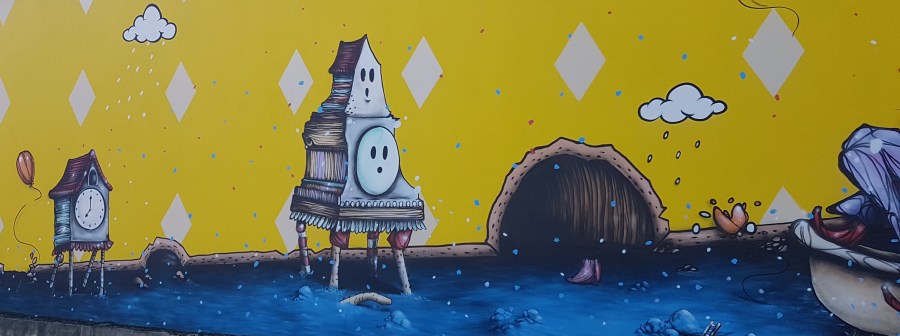
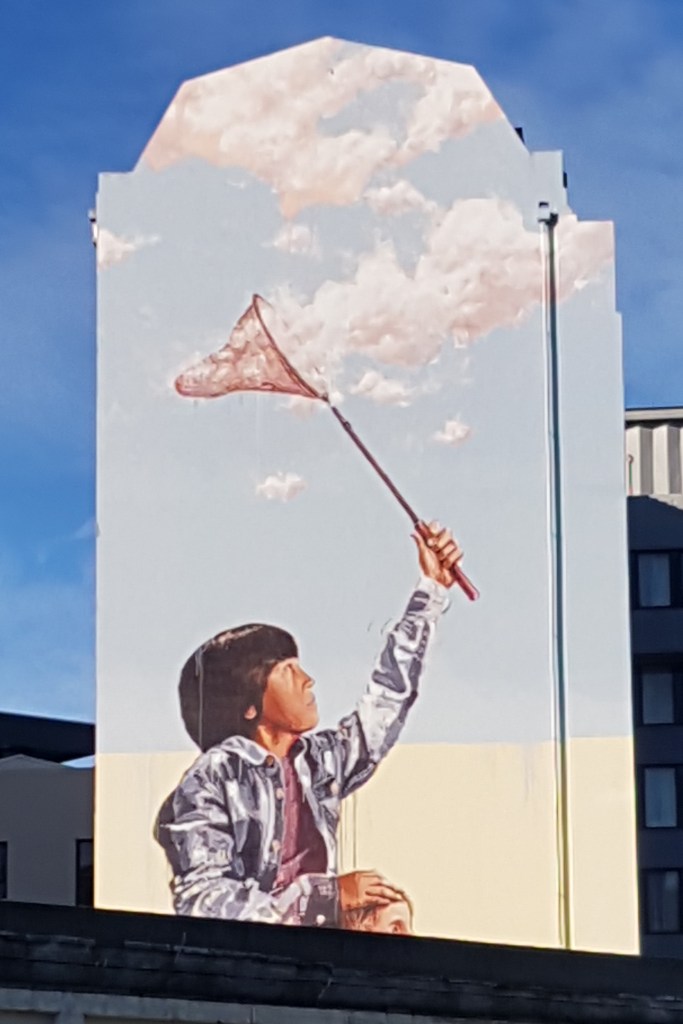
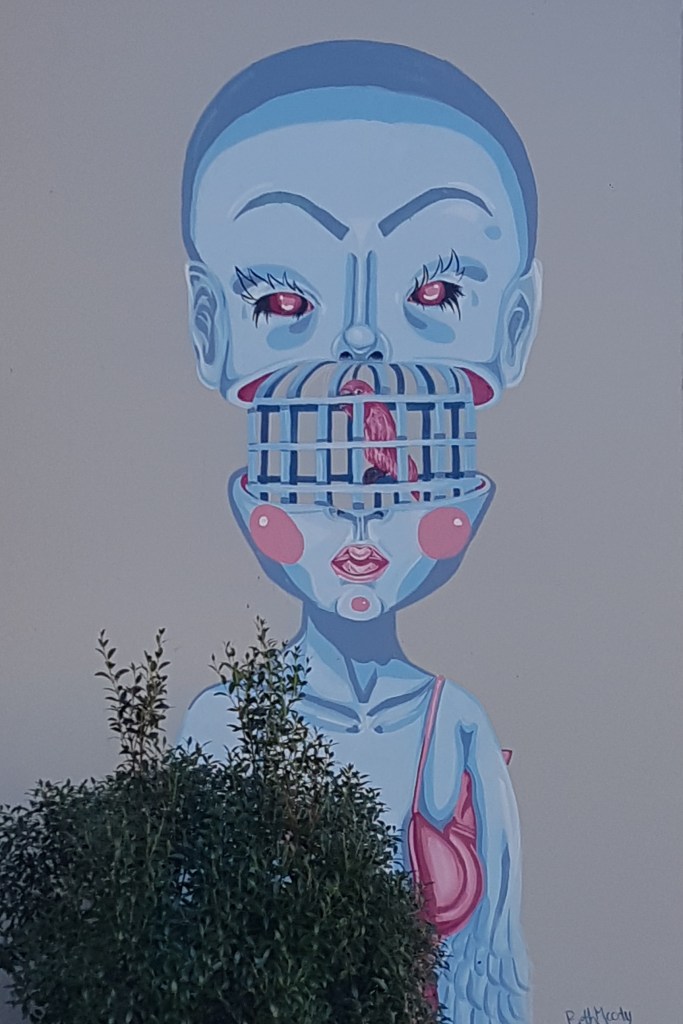
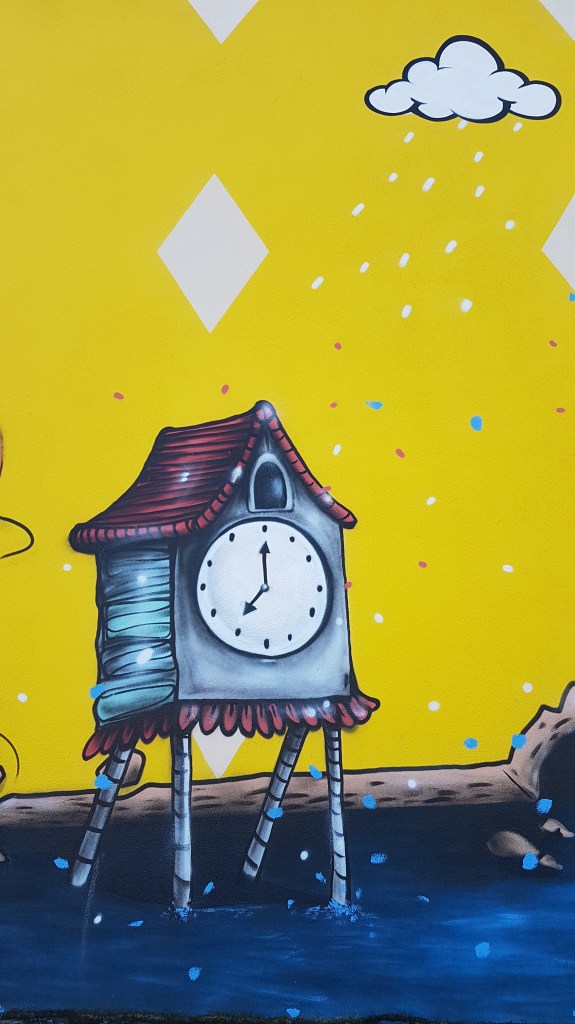
Dunedin also has an art walk trail that goes around the city. Before heading out for my heritage walk, I marked some of them down on the map so I could check them out as I go. My favourite is the bright yellow mural with the rain cloud over the clock. I think it’s the sunny yellow I am drawn to.

I then head to Tūhura, the Otago Museum. I hadn’t planned to go here, but I have some free time. It is well worth the visit. There is a planetarium which I have heard is excellent and a tropical indoor forest with butterflies. Unfortunately I only have 30 minutes and you need to pay for these exhibits, so I decide to give them a miss. Next time I will check it out, it sounds amazing!

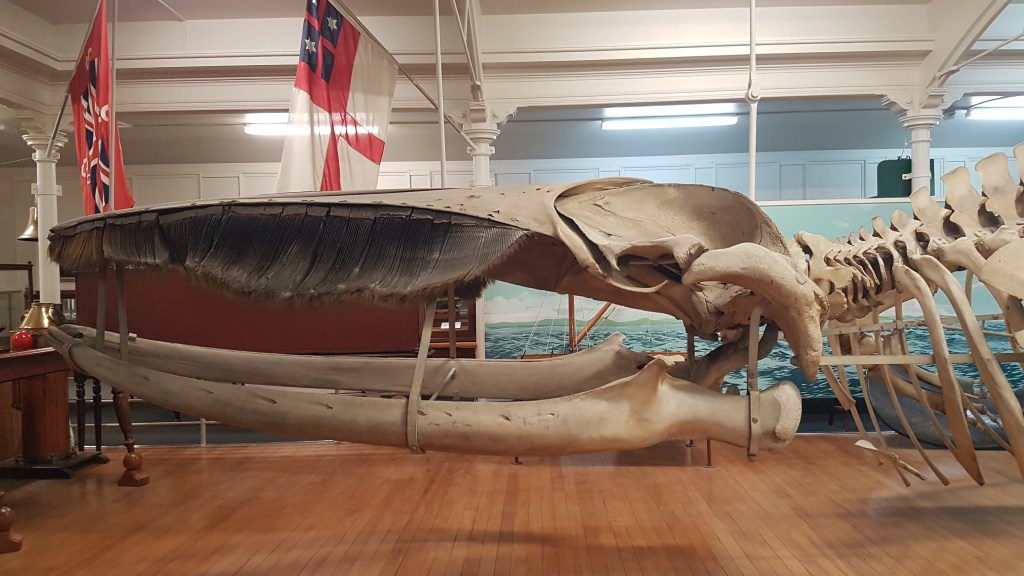
I instead spend my time wandering around the free exhibitions, pacific history, maritime and nature. The nature section has a full skeleton of a juvenile fin whale. Its size has quite the impact on me. I know whales are large, but their actual size is hard to comprehend. I start at its fluke and walk. Past the tail vertebrae, the fins and then finally, after what seems like quite some time, I reach its head. I try to imagine what it would be like to be in the water next to a creature of this size – and this one is only a baby. It really puts things into perspective.

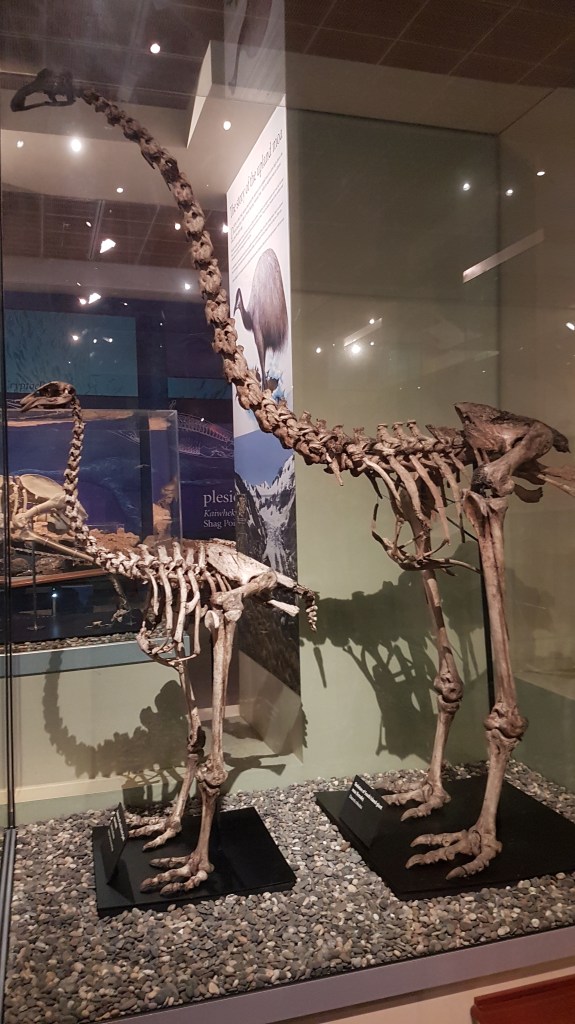
I also really enjoy the exhibit of birds, in particular, the moa collection. Moa are extinct, flightless birds that were native to Aotearoa. They came in various sizes, some very large. Again, I knew they could be big, but when you see them up close, the scale is overwhelming. Coming face to face with a bird like this would be scary. I also loved seeing the taxidermy huia, another of our beautiful, flightless, native birds that is sadly extinct. I hadn’t intended to spend so much time among old bones and taxidermy, but found this section really interesting.

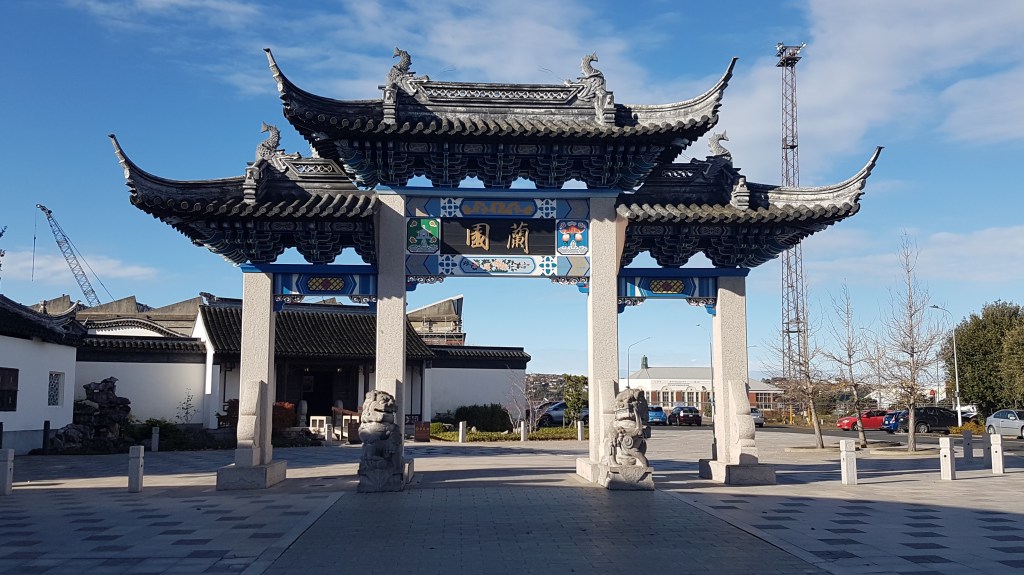
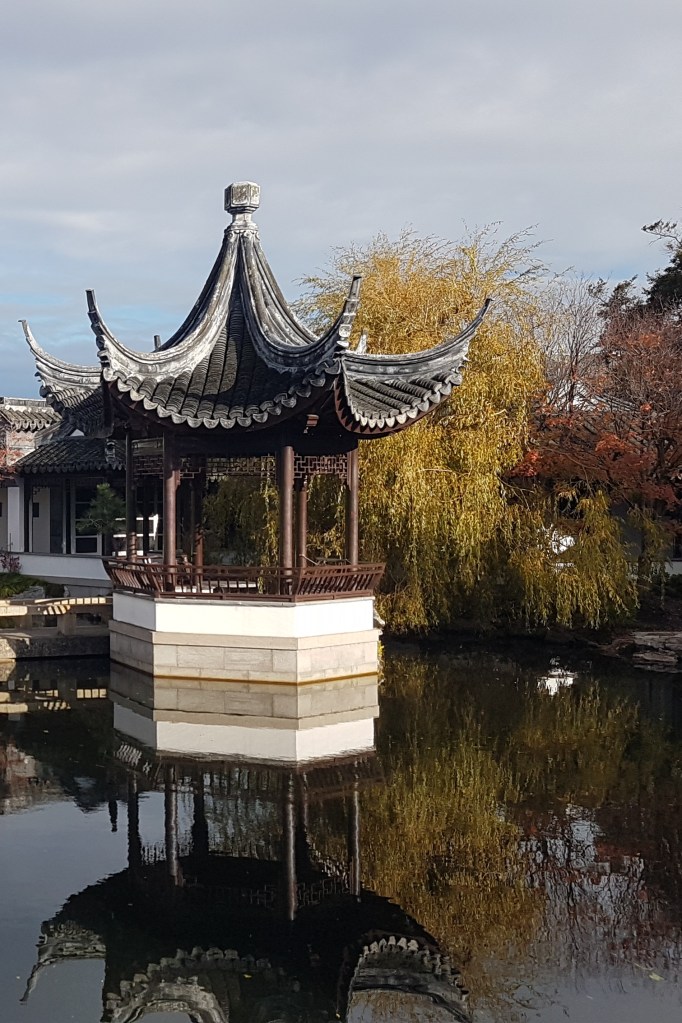
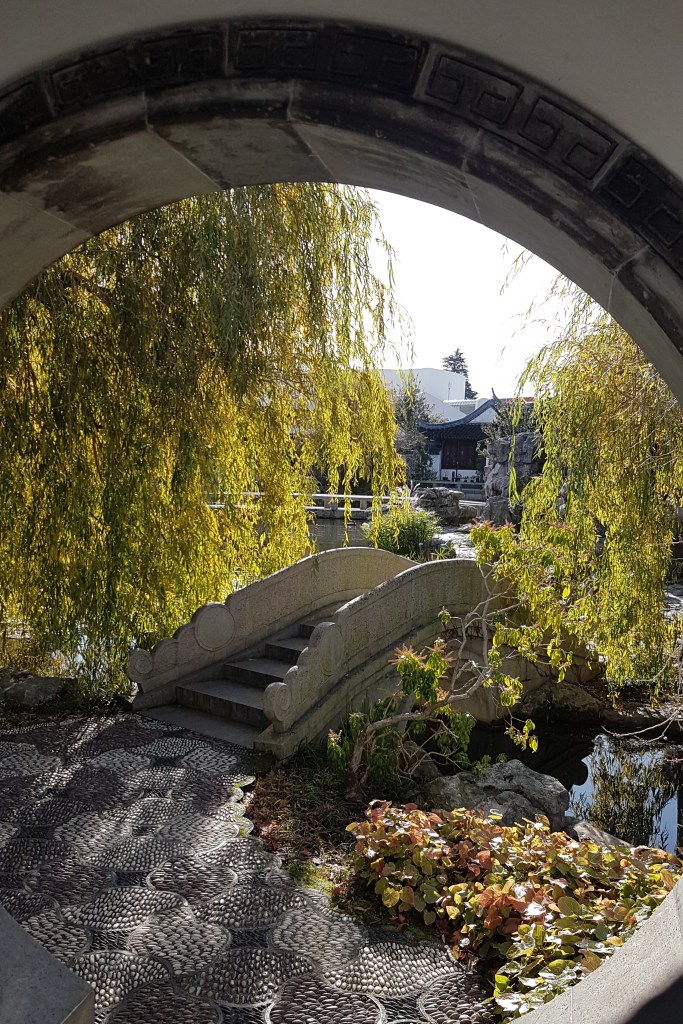
I meet back up with Mum for the next stop – Lan Yuan Dunedin Chinese Garden. Our guide yesterday told us that Dunedin’s sister city is Shanghai. This particular garden was designed and made in Shanghai then shipped to Dunedin. The garden is in the city, but it’s a very peaceful place and inside its walls you feel a world away from the hustle and bustle of city life. The running water over the rocks is soothing and I love the autumn colours of the tree leaves. It’s designed in a way that you don’t see everything at once, I like this. It helps you to focus on the beauty right in front of you. We take our time wandering around, soaking up the tranquility.

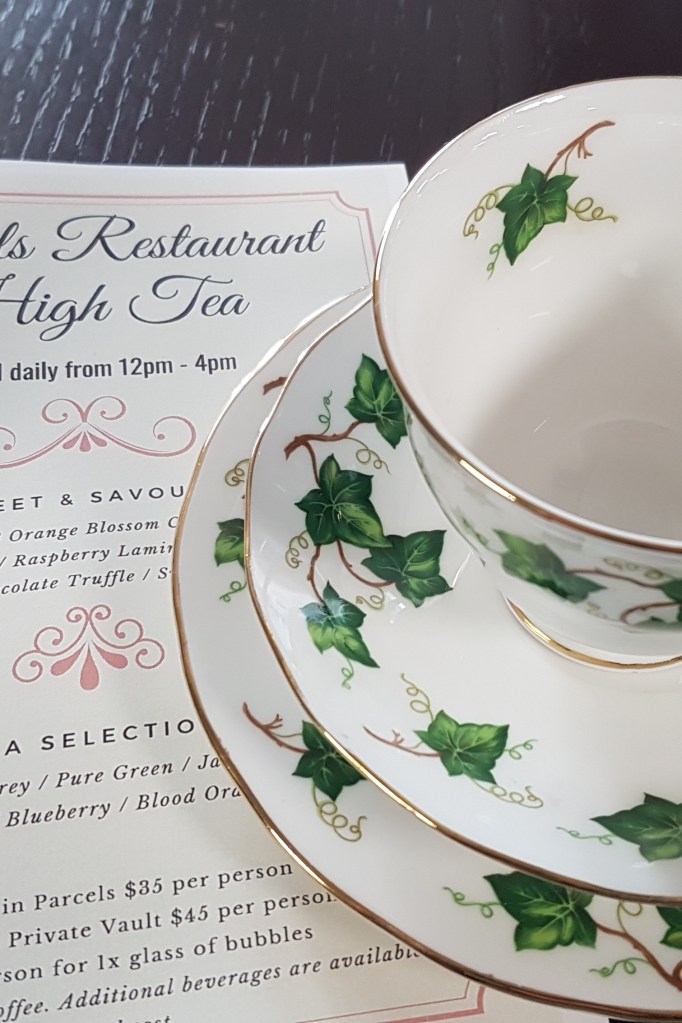
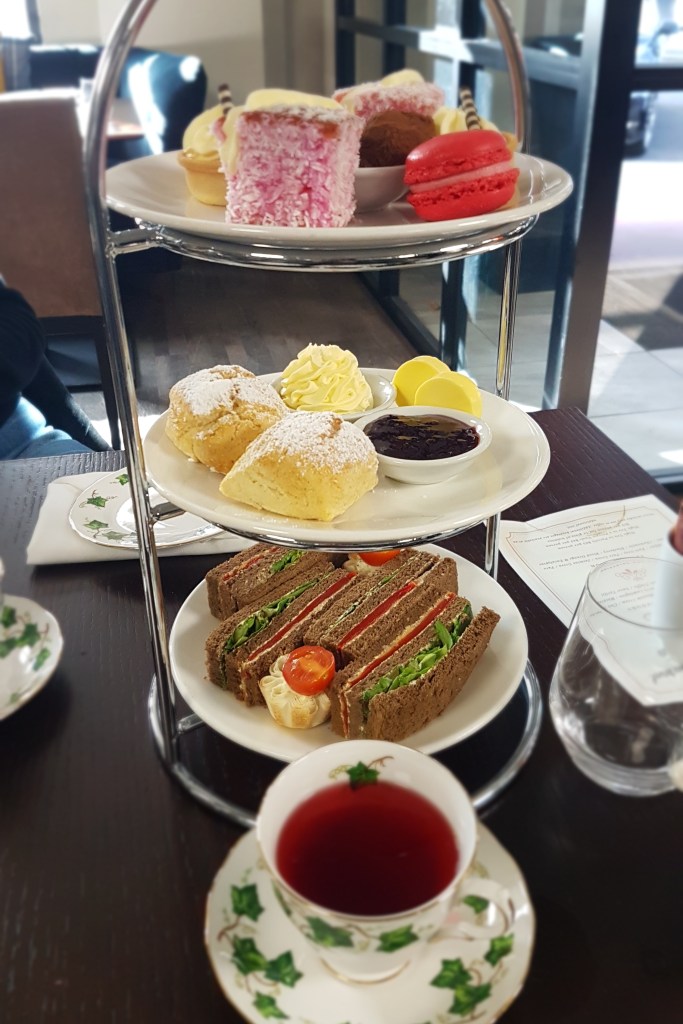
Our final stop is the Distinction hotel, we are ending our holiday with their high tea. After a fast paced couple of days it is nice to slow down. Over a hot cup of tea and some delicious little treats, we reflect on our time in Dunedin.

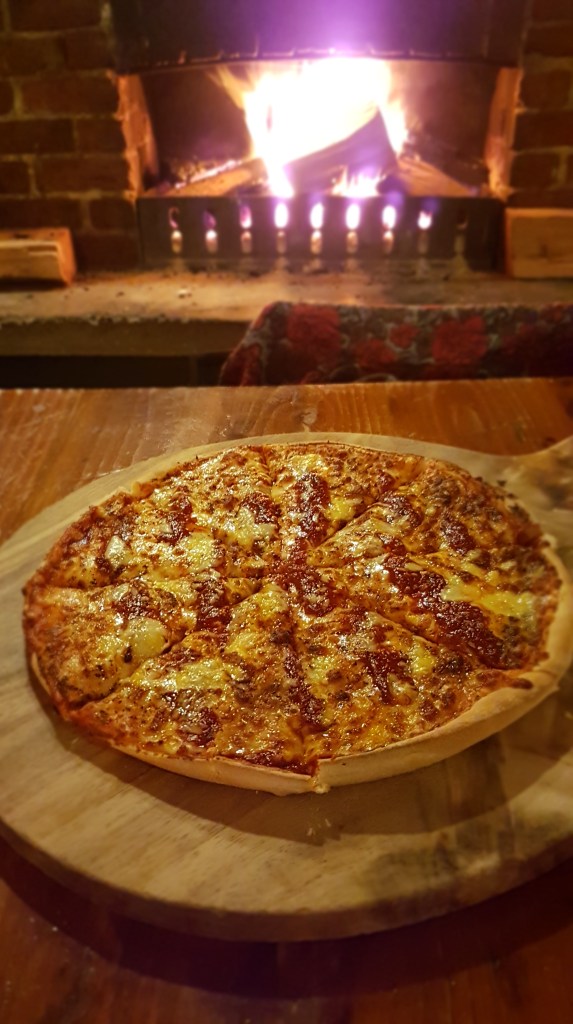
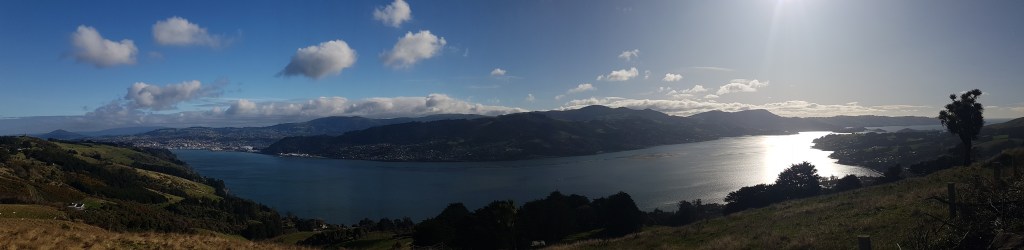
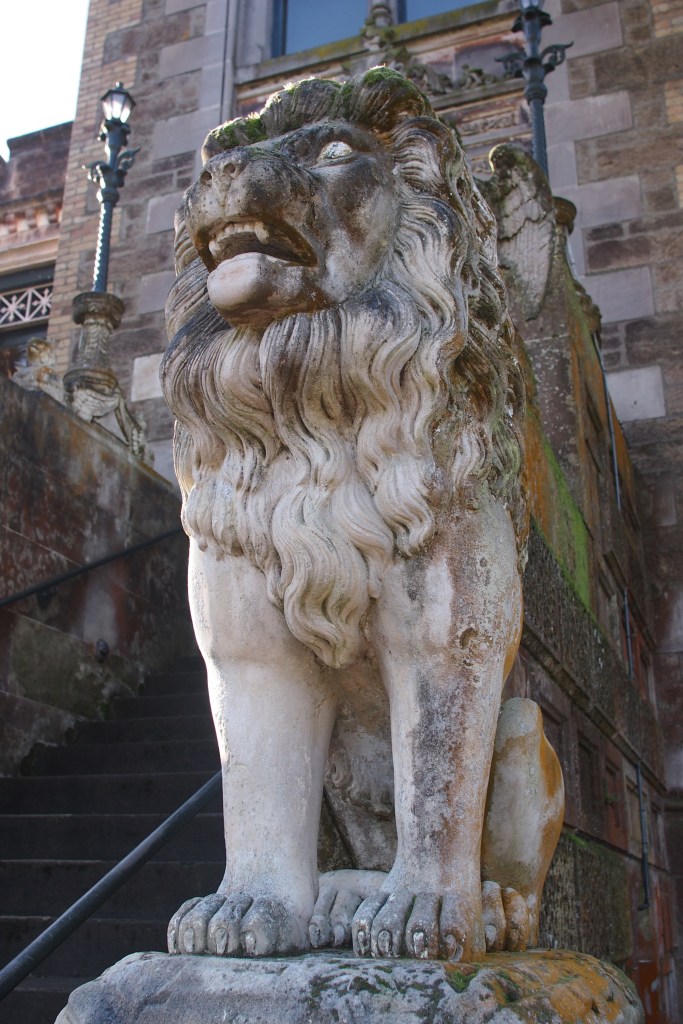
Mum asks what my favourite thing has been. It’s hard to decide. As I reflect, I realise that it’s not a particular activity, but moments. You know those moments that only last a second or 2, but in that time, the world seems to stop. You are so caught up in those few seconds, so captivated by a sight or a feeling. On this trip, there were many of those; a very moving scene in Romeo & Juliet, looking up the grand entrance steps, past the lion statues, up to Larnach Castle. The stunning views over Otago Peninsula. Watching albatross effortlessly glide through the air with their massive wingspan. The warmth of a roaring fire with a pizza for dinner and being awestruck at the mighty size of a juvenile fin whale. Our world is full of marvelous, incredible, awe inspiring things that can so easily be missed. I love that I am able to be captivated by the beauty in the simple.

Watching Albatross

When we are done exploring Larnach Castle, we get back on the van and continue heading out further along the peninsula, which is home to many creatures. As it’s almost an island, it was very easy to put up a predator fence to protect its residents. Seals, sea birds, penguins and sea lions all call this place home.

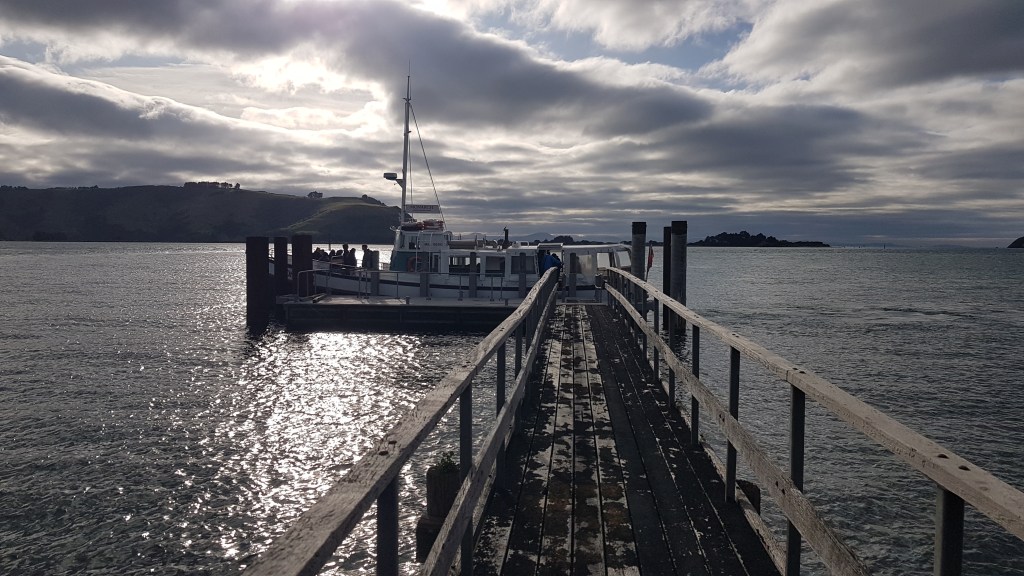
We arrive at the wharf and join up with another group for this part of the tour. We board the boat and follow the coastline out to the point where the Northern Royal Albatross nest. Up on the hill I can see little white dots of fuzzy chicks in their nests.

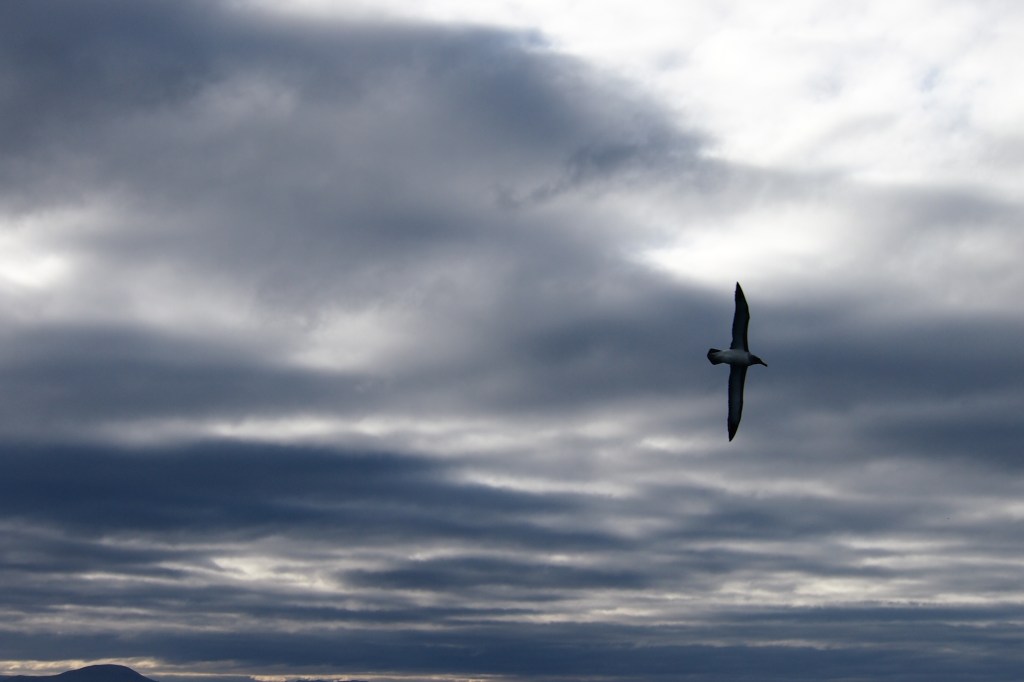
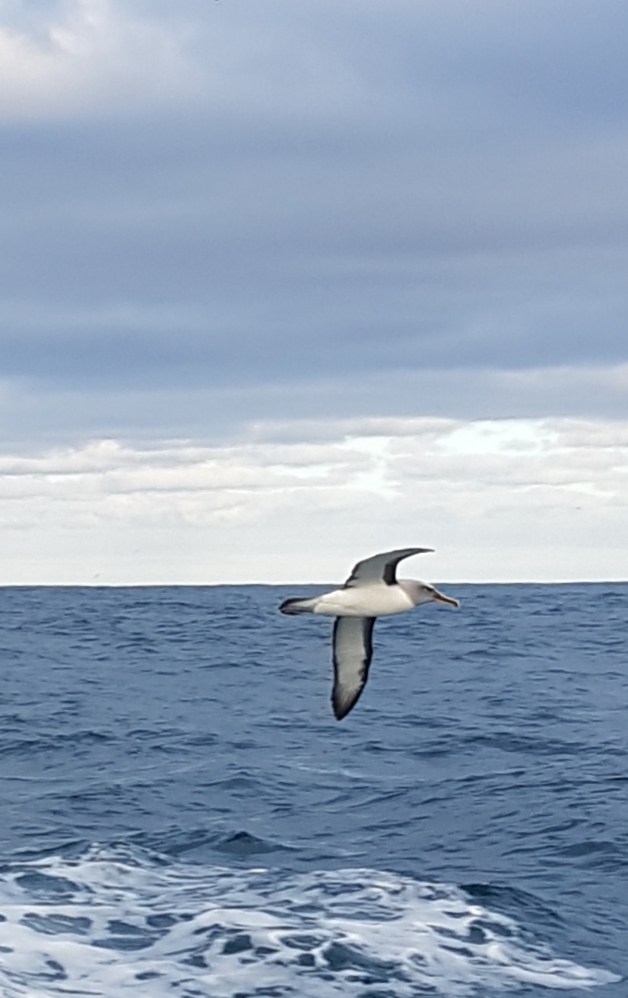
Gliding through the air, we spot our first albatross. They are an incredible animal to witness. This is my 3rd time seeing them and it takes my breath away every time. Their wingspan is impressive and such a sight to behold. We learn that they are able to lock their wings. This enables them to glide without effort and the reason they can travel such distances. We watch one albatross for a while as it circles the boat, soars high and then glides down and across the sea.

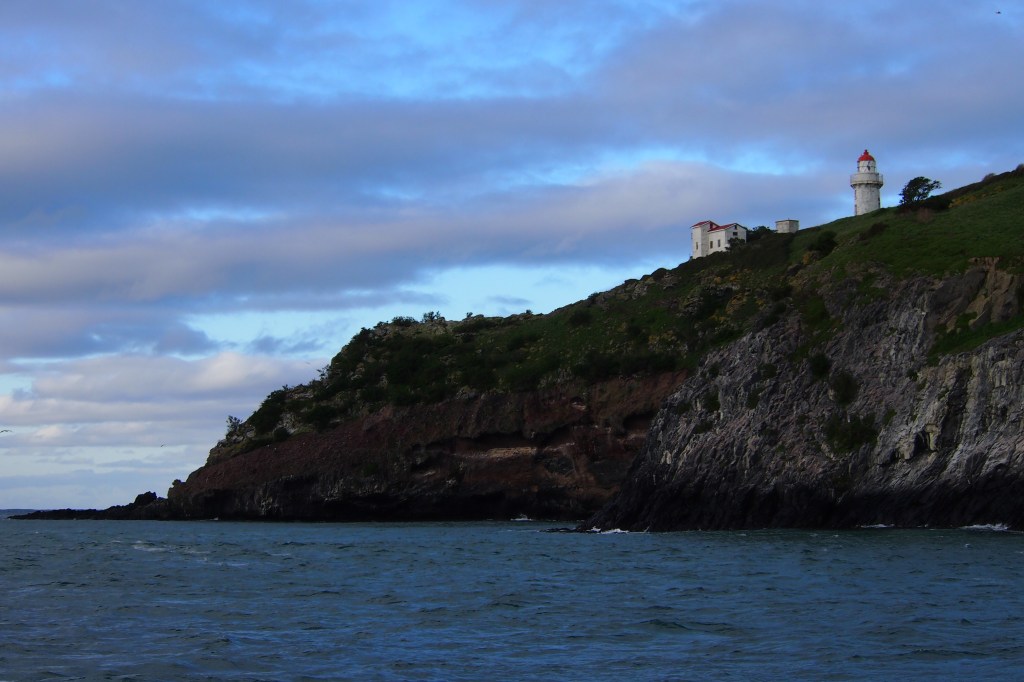
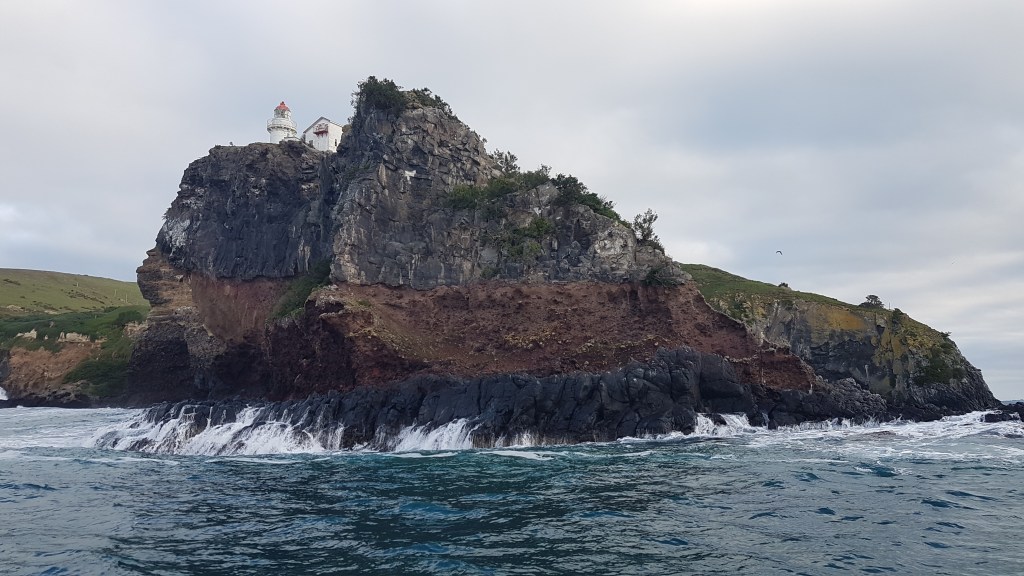
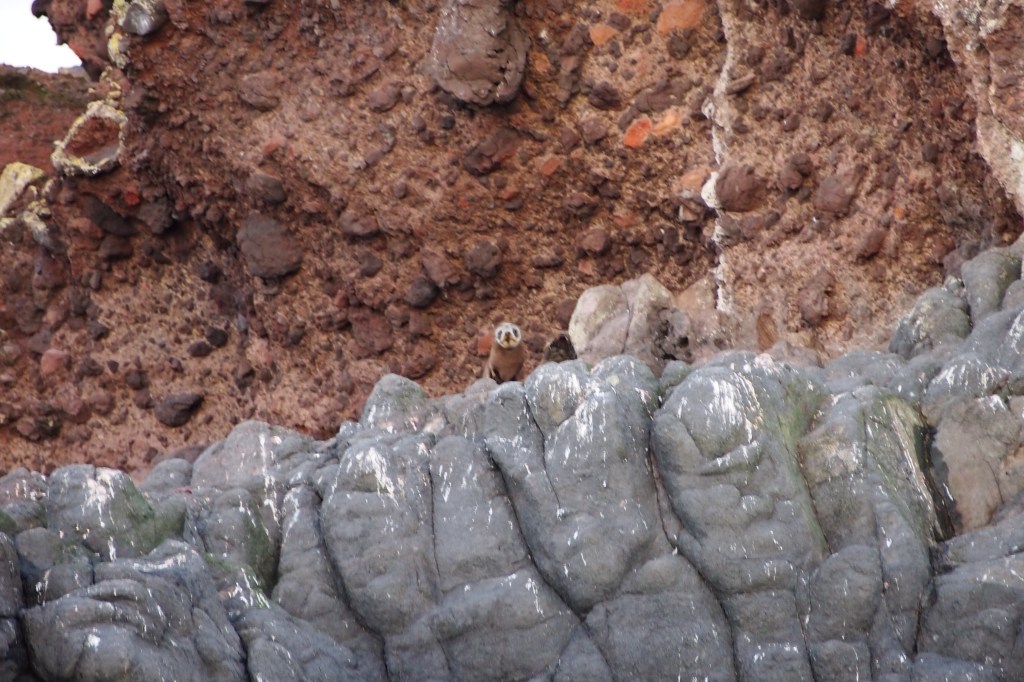
We then head further out around the coast. We have lost the protection and shelter of the inlet and the boat begins to rock back and forth in the swell. We spot some seals on the rocks. They are hard to see as they blend in so well, but there is a pup with white marking on its face that makes it stand out. It’s very small and we watch as it navigates the rocks. Above, a lighthouse sits perched on the hill, very picturesque.

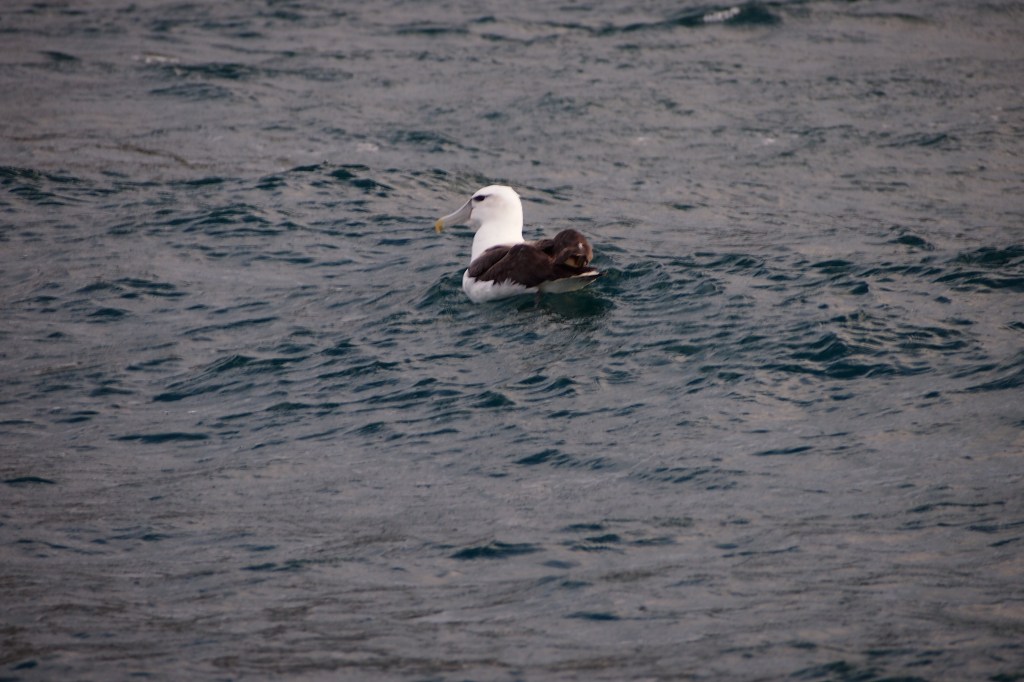
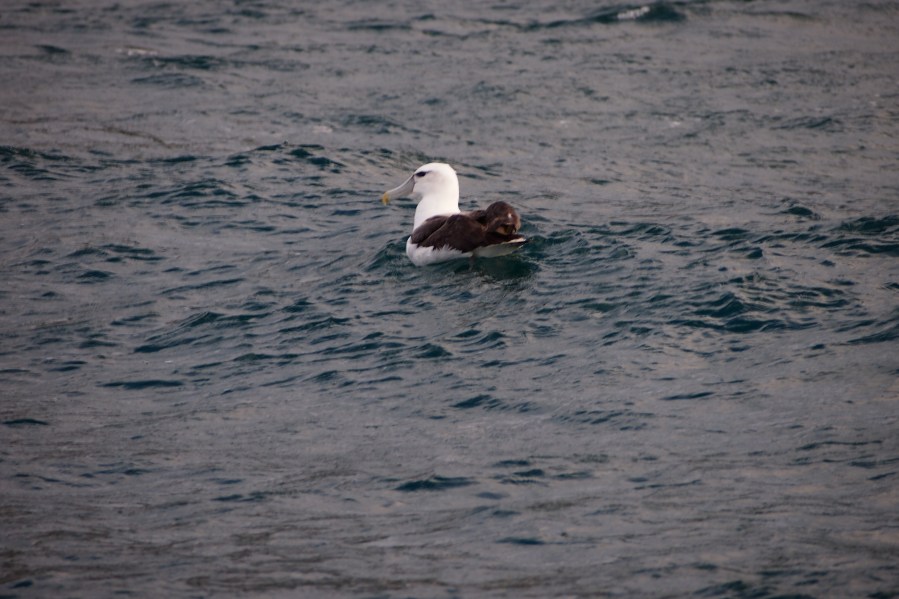
As we travel even further out, we see several more albatross of different species. There must be some fish or krill as they are all gathered in one place. They are majestic birds – the way they glide through the air, it’s so calming. It’s really special to see them up close. We get some great sightings. It’s hard to get photos as the boat is bobbing up and down so much, but I manage to snap a couple.

When we return to the hotel, we spend some time defrosting with the heater on and a hot cup of tea. But dinner is calling so we brave the cold and head out to Biggies Pizza. Thursday to Saturdays it’s a nightclub from 10pm, a place that is very popular with the students. But we are here on a Sunday evening, when the town is quiet and sleepy. We almost have the place to ourselves. The restaurant is deliciously warm with a roaring fire and playing a ‘best of the 80s playlist’. The perfect setting to enjoy a delicious pizza.

Stepping back in time at Larnach Castle

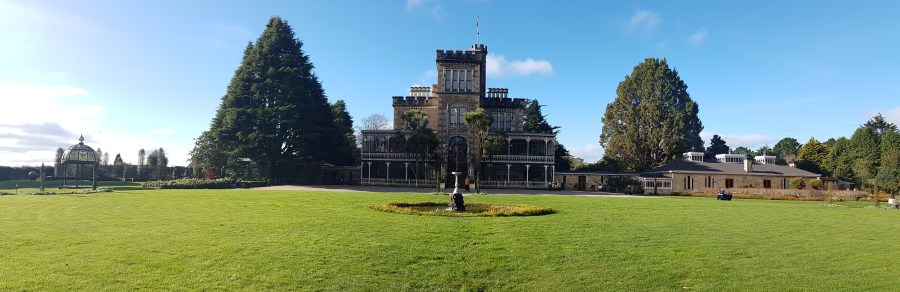
It’s beautiful today, the rain has cleared, the sun is out and the air is still – perfect for our tour. We are collected from our hotel by Monarch Wildlife Cruises & Tours. Rob is our guide for the day. We will be heading out to the peninsula to explore Larnach Castle followed by a nature cruise to spot albatross and seals. It’s a private tour for us this morning – we are the only ones booked.

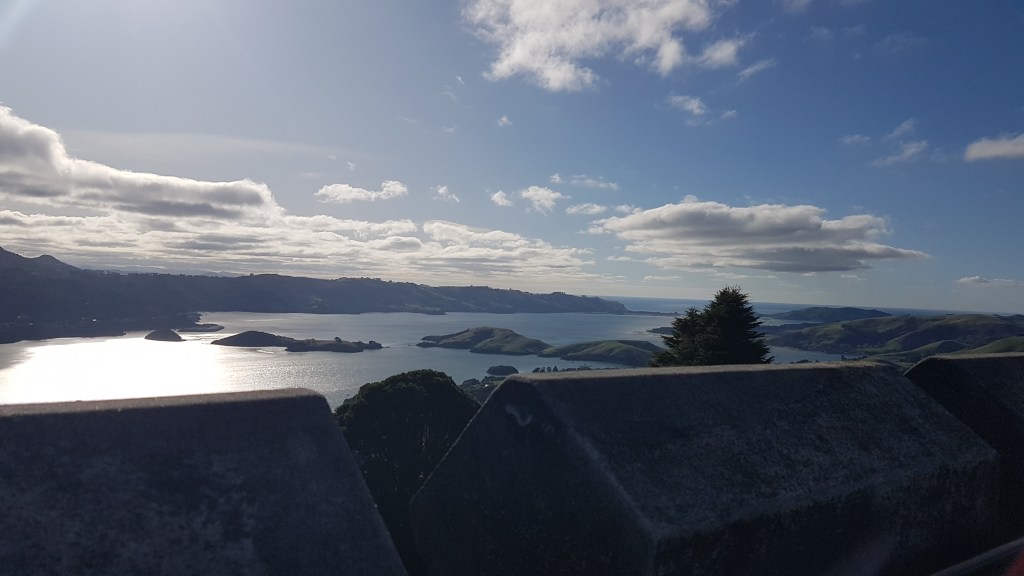
Our journey to the castle begins with a drive over the hills on the peninsula, with some impressive views of the inlet. Sunlight is catching the water and reflecting, making it look like a mirror. It’s such a perfectly still day. Rob has a wealth of knowledge of the area, which he happily shares with us on the drive.

We head down a long driveway surrounded by tall trees – I can’t wait to see the castle, it is the only one we have in New Zealand. Rob stops briefly to point out the old gates which were made from a whale’s jaw bone. I know whales are big, but when you see things like this, it really puts it into perspective!

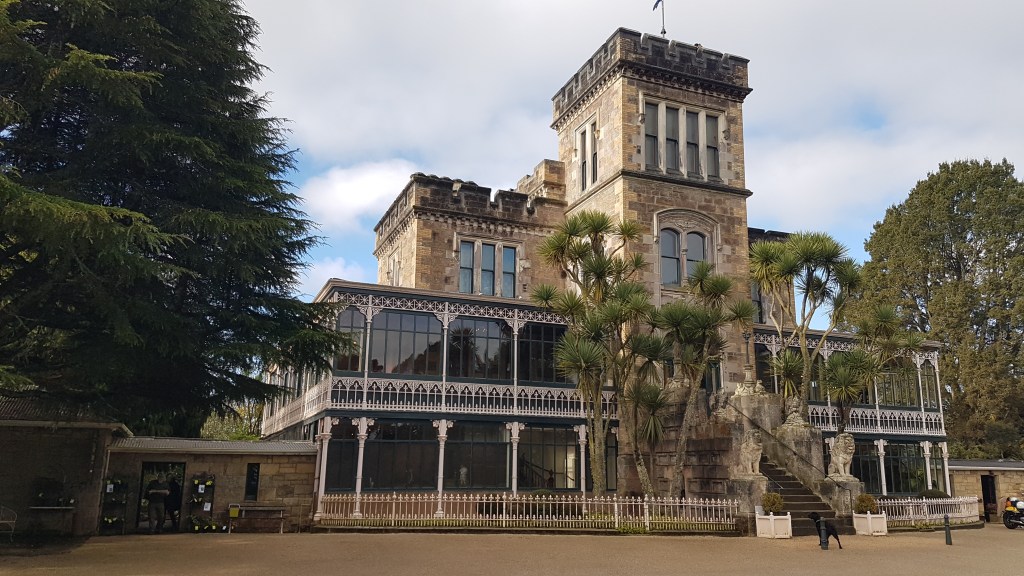
Finally the forest driveway ends and there it is, standing in all its grandeur. What a sight.

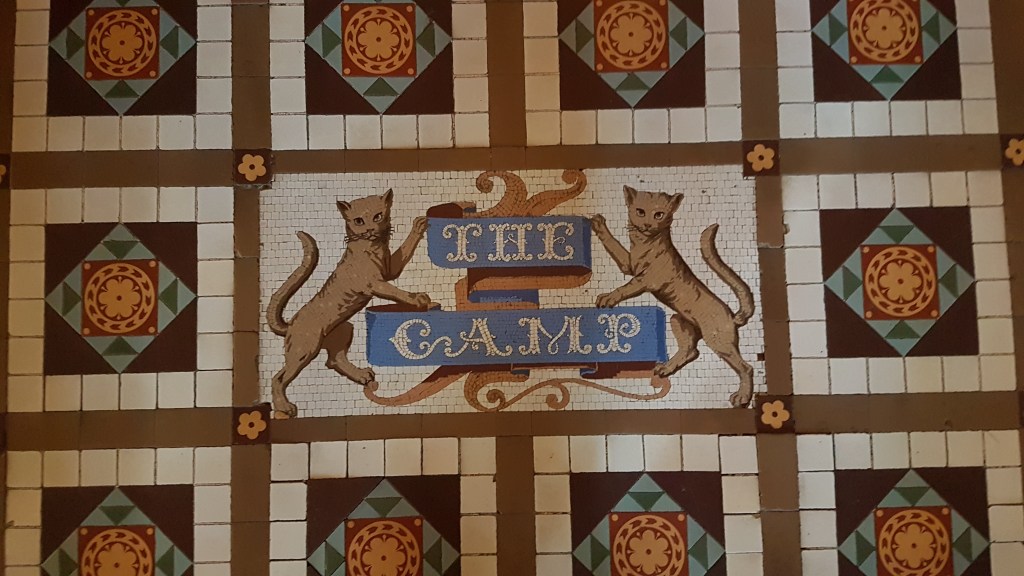
Larnach Castle was built for William Larnach in the latter half of the 19th century and took 12 years to complete. The family and workers lived in tents on the land but after 4 years, they had had enough of tent life and moved in while it was still being built. It was never known as Larnach’s Castle to the family, but always referred to as ‘The Camp’.

We walk up the stairs, marveling at the impressive stone work. A pair of lions and an eagle statue guard the steep steps to the entrance.

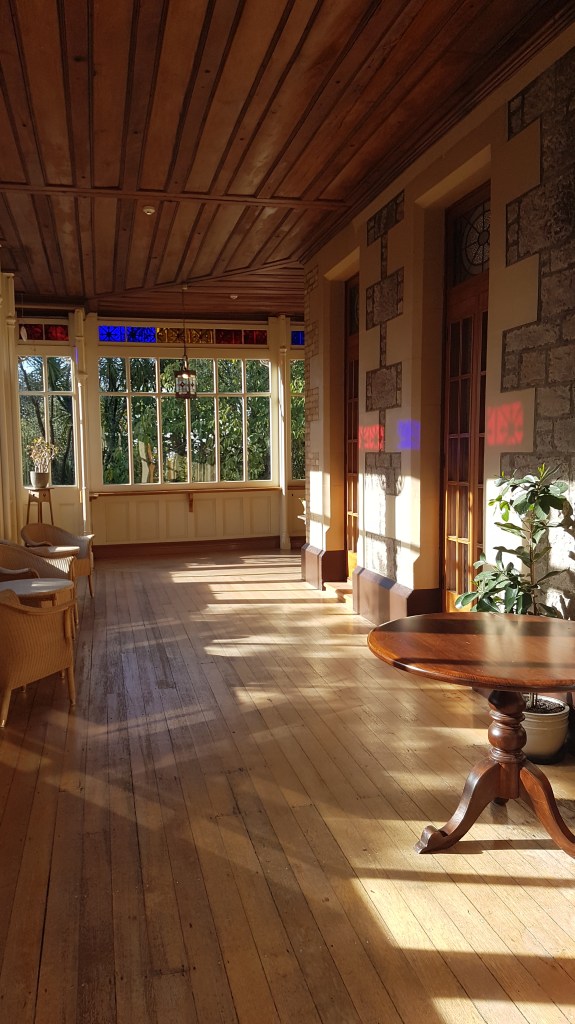
We begin on the porch, a large, gloriously sunny room that has been closed in with windows. I would love to find a spot here to curl up in and read a book. Rob guides us through the castle, room by room, sharing stories and history of the castle, its furniture and residents.

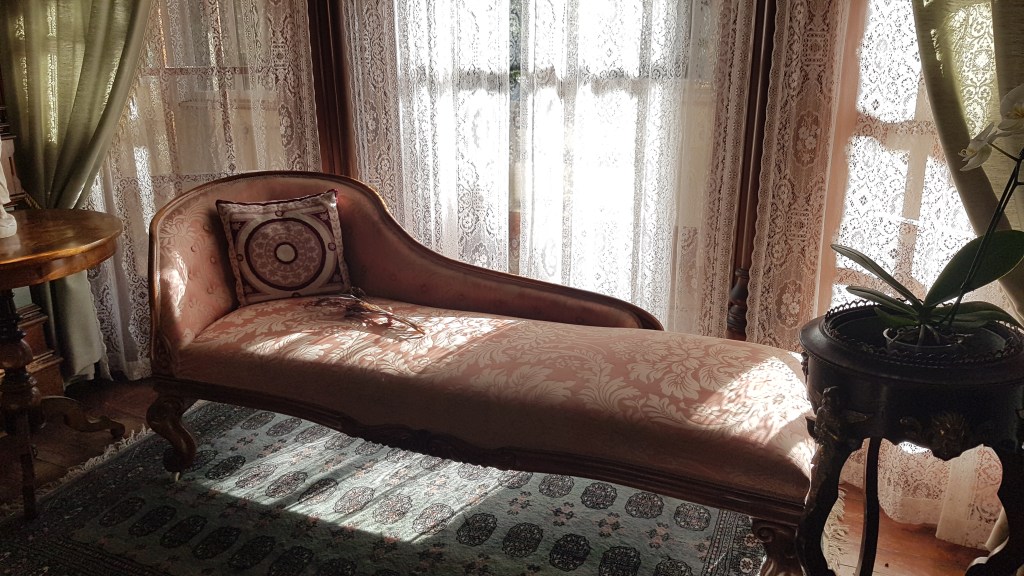
While on the tour we visit the dining room, ladies parlor, bedrooms, breakfast room and more. Each room has its own stories to tell. There is so much detail everywhere, from the wooden carvings, to the chandeliers and tiled floors, not to mention all the beautiful furniture.

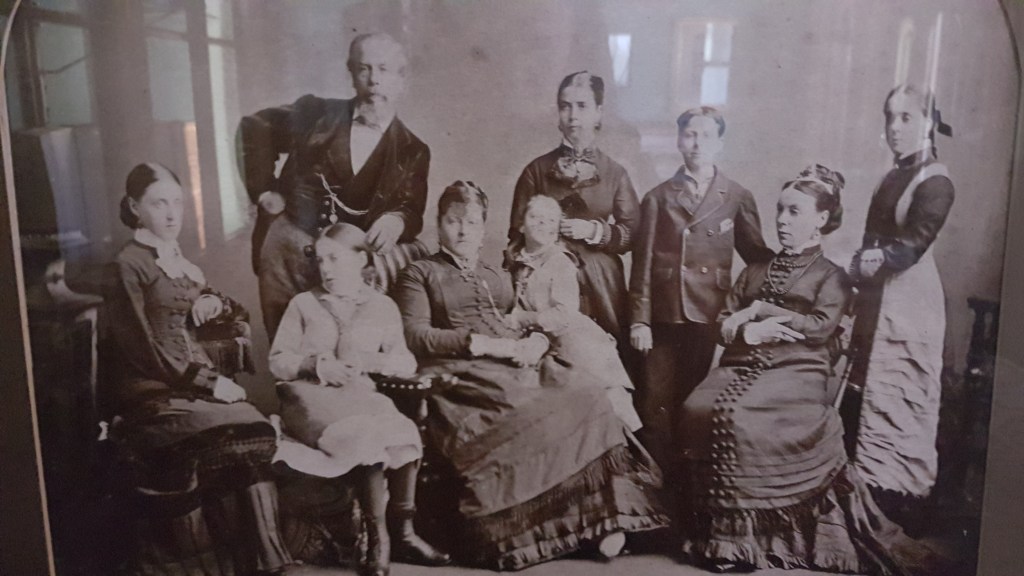
In one room, there is a photo of the Larnach family. Rob tells us about the dark history of Williams’ rise and fall, his 3 wives and his suicide. It’s a sad and tragic story. He was a hard worker and contributed a lot to the early development of Dunedin.

In the final part of our guided tour, we climb the steep and narrow spiral staircase up to the balcony of the turret and are rewarded with spectacular 360 degree views. We can see Dunedin City, right out across the peninsula. It’s breathtaking. After marveling at the views, we are given free time to wander around the gardens and explore on our own.

Today, the castle is owned by the Barker Family, who purchased the property in 1967. It was in a terrible state and the family have worked tirelessly to bring it back to its former glory. This includes purchasing back original pieces of furniture when they can. Larnach Castle is a fascinating place to explore.

Exploring Dunedin

It’s an unusually still day for Wellington, raining, but still. I have been day dreaming lately about moving away from Wellington, somewhere warmer, sunnier, like Nelson perhaps. But even on wet days like today, when there is stillness, it’s a beautiful place to live.

Once we take our seat on the plane, I go straight for the in-flight magazine, Kia Ora. It’s one of my favourites and I have been looking forward to an uninterrupted hour with it. It doesn’t disappoint. I am so engrossed in the articles that I hardly even look out the window. There is one on Fiji which gets me very excited for my upcoming trip and another one on Japan, a place that is moving higher up on my bucket list.

It’s a pretty smooth flight and when we land, I have only made my way through half of the magazine, the rest will be a good read for the flight home. We disembark the aircraft and walk across the tarmac to the terminal. There is a bit of rain in the air, but it’s not too cold. Mum and I catch a shuttle to the city, drop our bags off at the hotel and set out to explore.

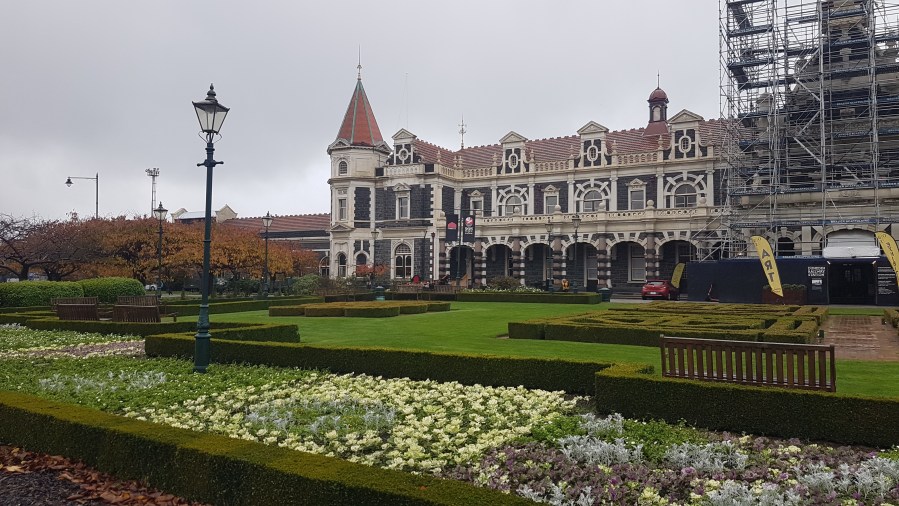
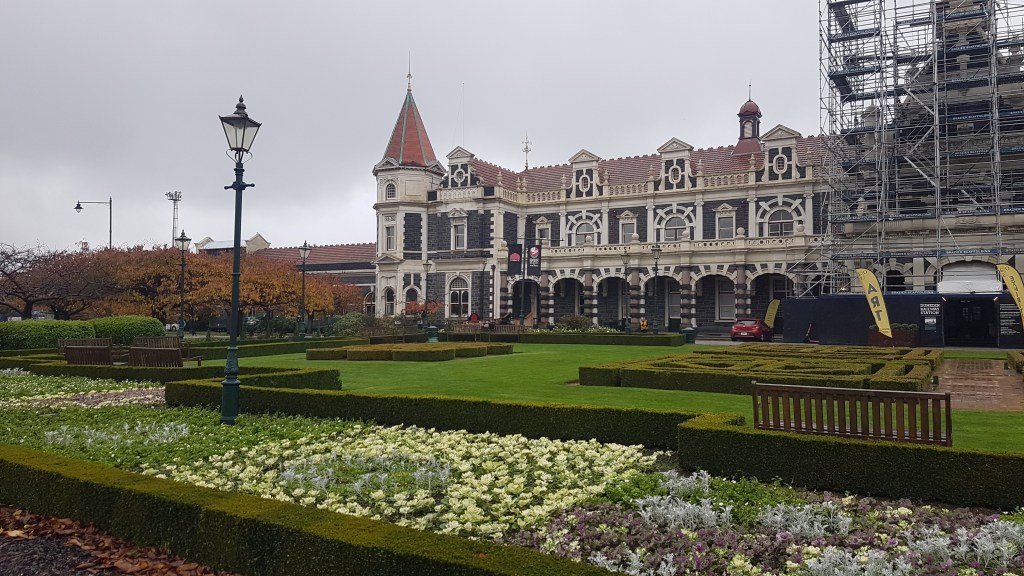
We are in Dunedin. The last time I was here was 20 years ago! I am excited to not only explore the city centre, but also the peninsula. Our first stop is the old historic railway station. I have been looking forward to seeing some of the old buildings. Dunedin has strong Scottish heritage and some well preserved Edwardian architecture. Unfortunately, half the station is behind scaffolding, but I can still enjoy the beautifully manicured gardens out front and some of the architecture. It’s a magnificent building.

We are there on market day so we take the opportunity to wander around the farmer’s stalls. There is fresh produce, like fruit and vegetables, but at least half of the stalls are selling artisan breads, pastries, chutneys and even gin. There is a delectable selection of goods.

We then wander up towards The Octagon. Otago University Graduation is on. The students are walking in a parade and family and friends have gathered to celebrate this milestone. We then carry on with our walk, consulting a map every now and again, arriving at our next destination, Ocho.

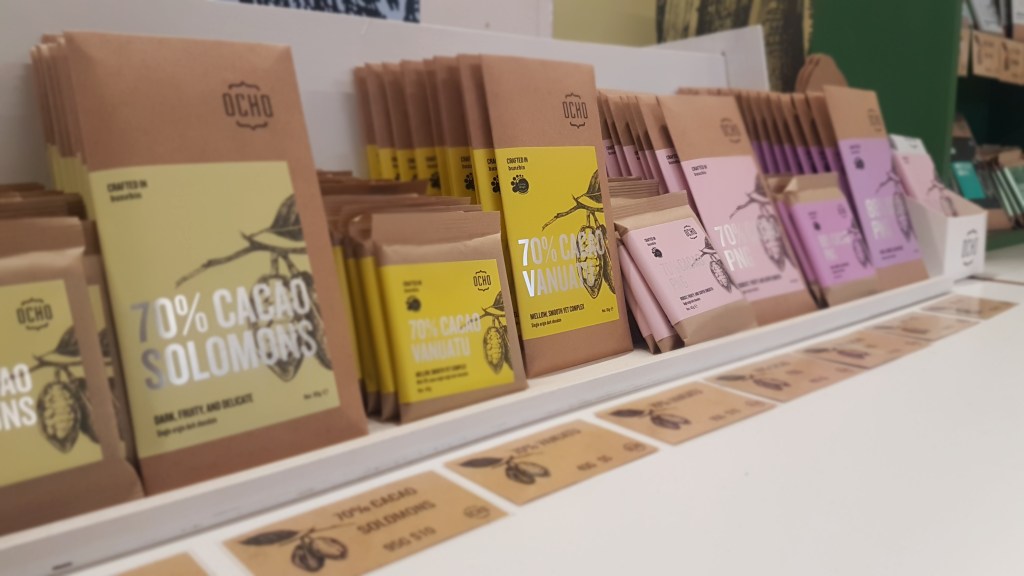
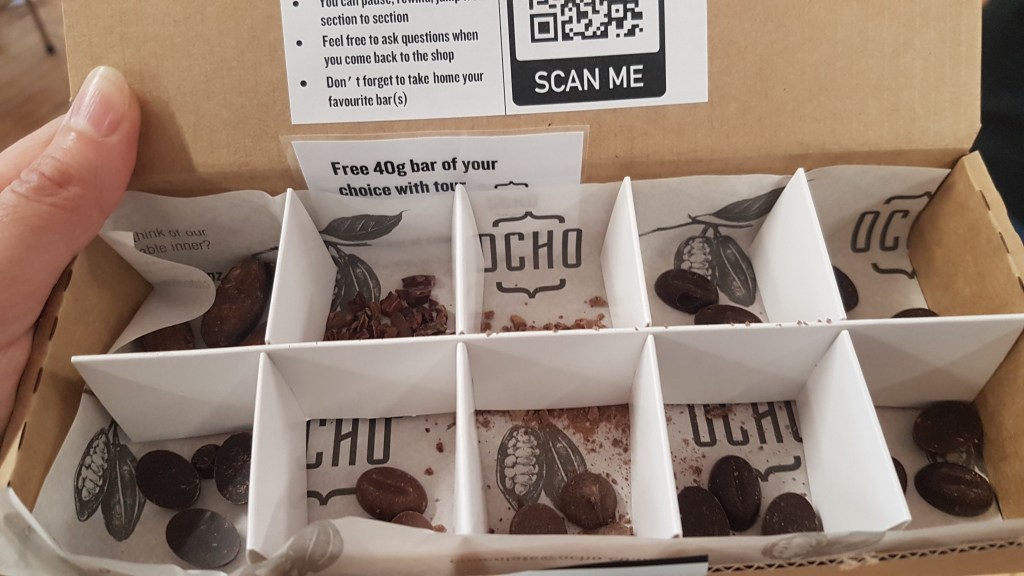
Ocho is a local artisan chocolate company and we are booked on one of their tours. As we step inside, we are greeted with a warm, comforting smell of chocolate, very different to the overly sweet, sickly smell of Cadbury (a tour I did when I was here last). The chocolate smell at Ocho is refined, it draws you in, inviting you to taste its delights. We are a little early so we wander around the shop and have a chat with the staff. All of their beans come from the Pacific, mainly Paupa New Guinea, Solomon Islands and Vanuatu, but only 1% of all the cacao beans grown actually come from this region. The majority are from Africa.

As we begin our tour, we are given a tasting box with 10 samples and led into a hexagonal room with big glass windows so you can see all the machinery. It’s not operating today, but our host talks us through the process, pointing out the different machines and what they do. Our guide then leaves us to watch a video that takes you through the bean to bar process. The samples in our box line up with the different stages. I first try the roasted bean and accidentally eat the husk, which isn’t very nice. Once I realise and remove it, its much better. We then move onto the cacao nibs followed by un-tempered chocolate. It’s bitter, but there are some beautiful flavours that shine through. Best of all, it’s actually good for you – filled with antioxidants.
We then get to the 70% PNG and Vanuatu chocolate. They are made from the same variety of bean, but the different soil and growing conditions create quite different flavours. I love the Vanuatu chocolate and the fact that they each have their own unique taste.

Next in the box is a more standard, off the shelf, commercial chocolate. It is one I am familiar with and generally enjoy, but in comparison to the other two, it doesn’t taste so good. The texture is gritty and feels waxy in my mouth.

The last samples we try are Ocho’s salted caramel and beekeeper chocolate. The salted caramel is devine and my favourite of all we try. The beekeeper one is interesting – a strong cocoa taste that finishes with very distinctive honey notes. Although the tour has now officially finished, the host lets us try a few more flavours that weren’t in the tasting box. 70% Solomon Islands, horipito & kawakawa, (very kiwi), hotcross bun and an 88% and 100% cocoa. I walk out of the shop with 4 different flavours to take home.

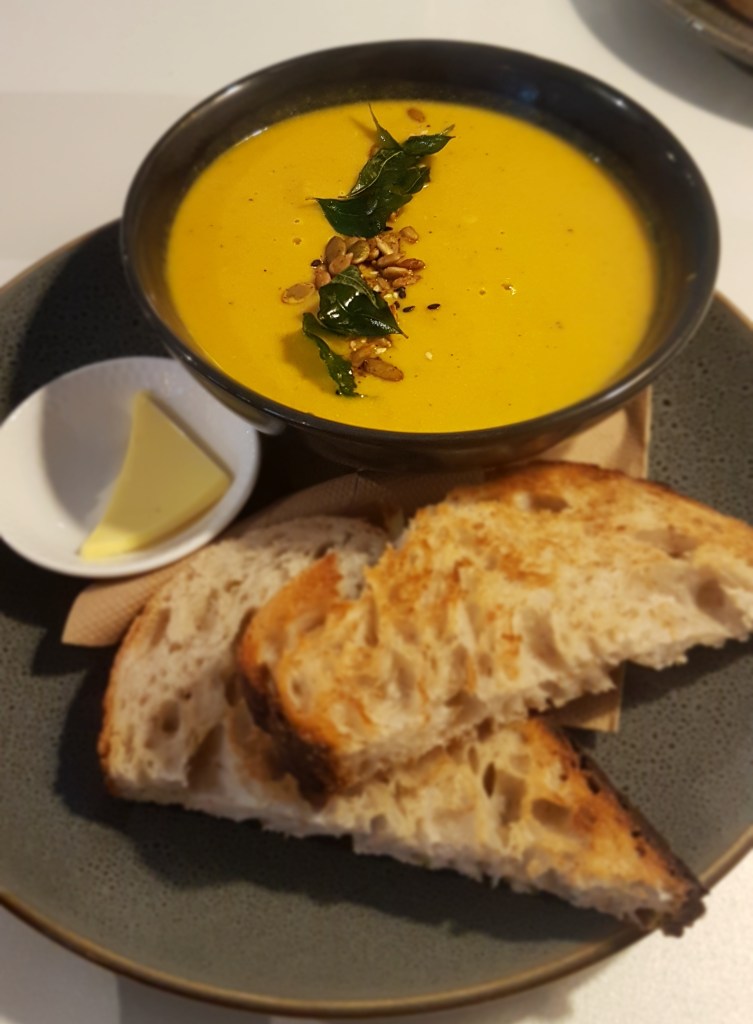
After all that chocolate tasting, we are ready for some lunch. We find a nice little cafe near The Octagon called The Corner Store Cafe. I get a delicious pumpkin, chilli & lemongrass soup with sour dough. It’s beautifully presented and certainly hits the spot.

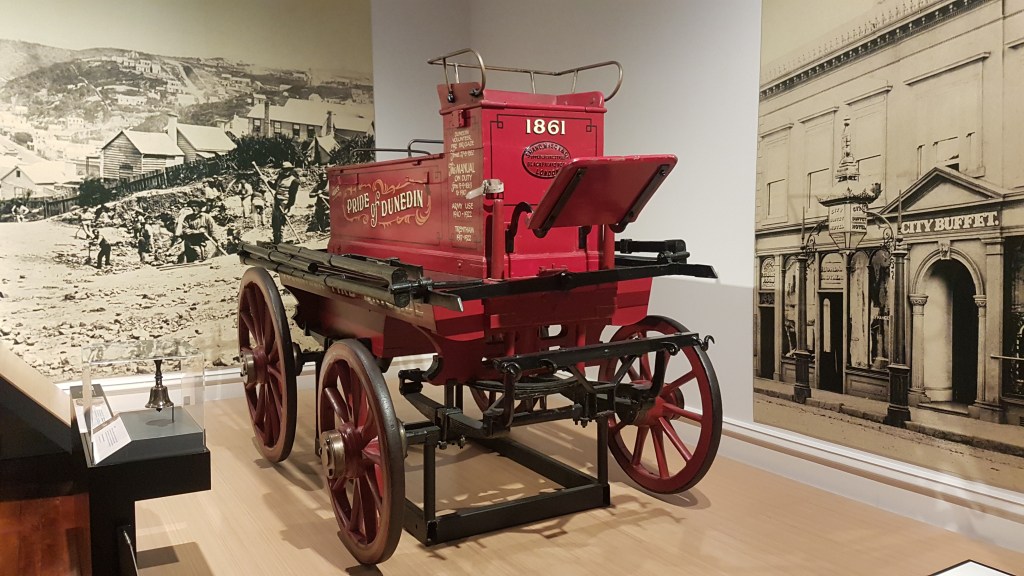
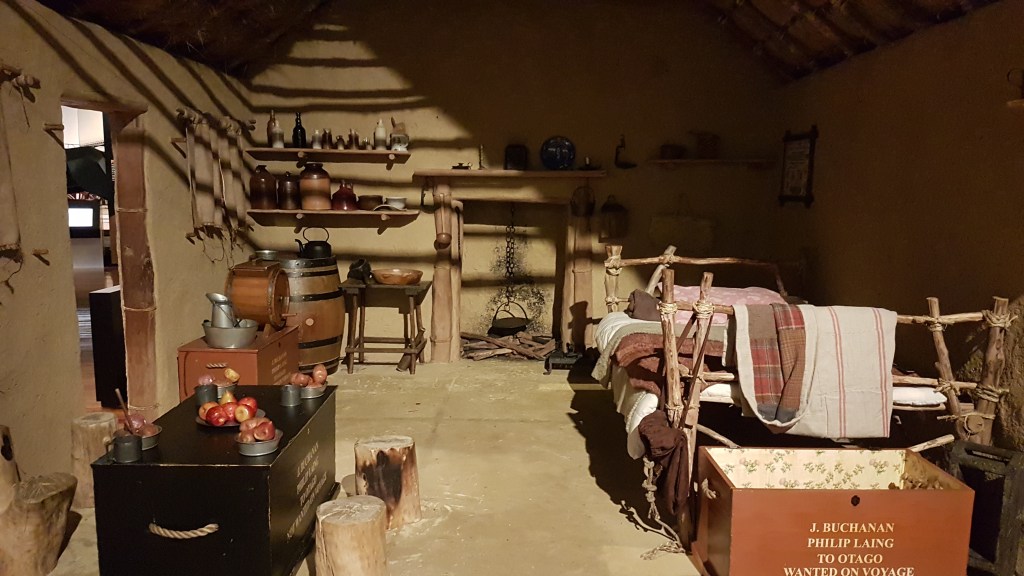
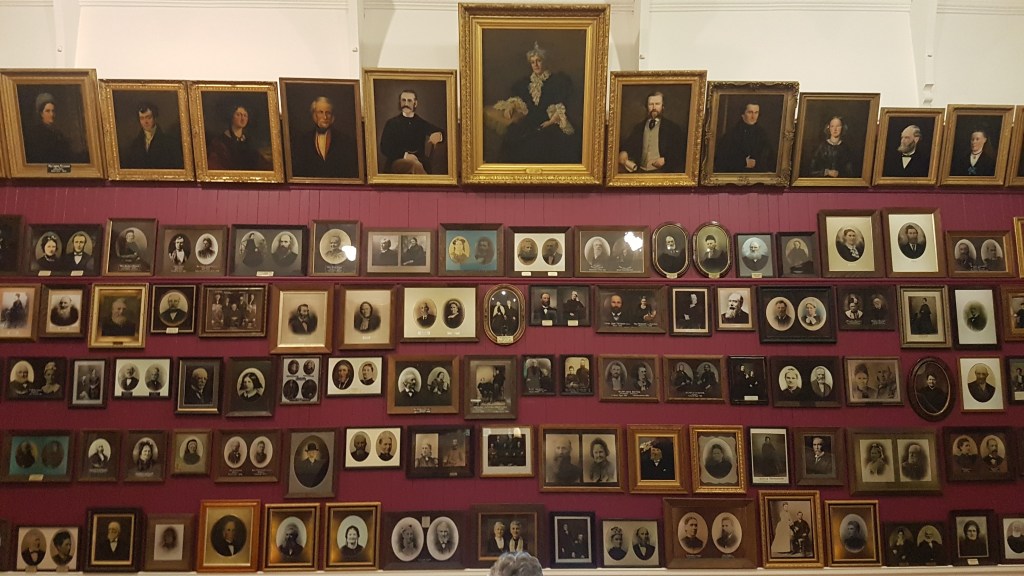
We check into our hotel, The Levaithan. It’s basic, but clean and comfortable and the building is beautiful, decorated with old furniture and stained glass windows. But there is still more to explore, so we head across the road to the Toitū – Otago Settlers Museum. It has a really interesting collection, including a room filled with portraits of early settlers. On the digital boards, you can look them up to find out their names and some have further information about them. I even find a Geary among them and wonder if they were related to my husband’s family.

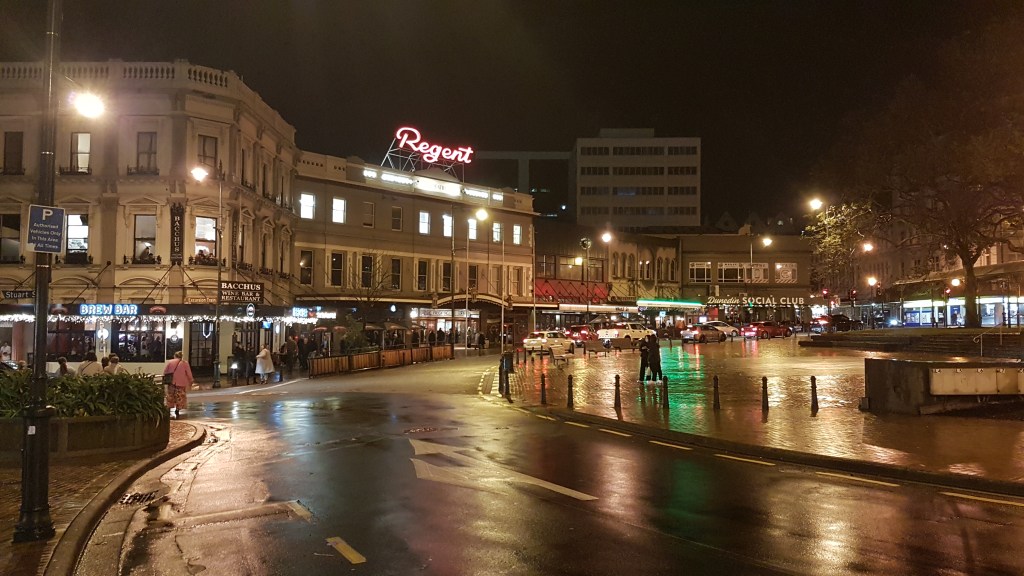
After dinner we head back to The Octagon. This afternoon it was filled with students, this evening it is filled with smudged lights reflecting on the watery surfaces. Bars and restaurants are packed and despite the cold, patrons are still enjoying their meals and drinks outside.

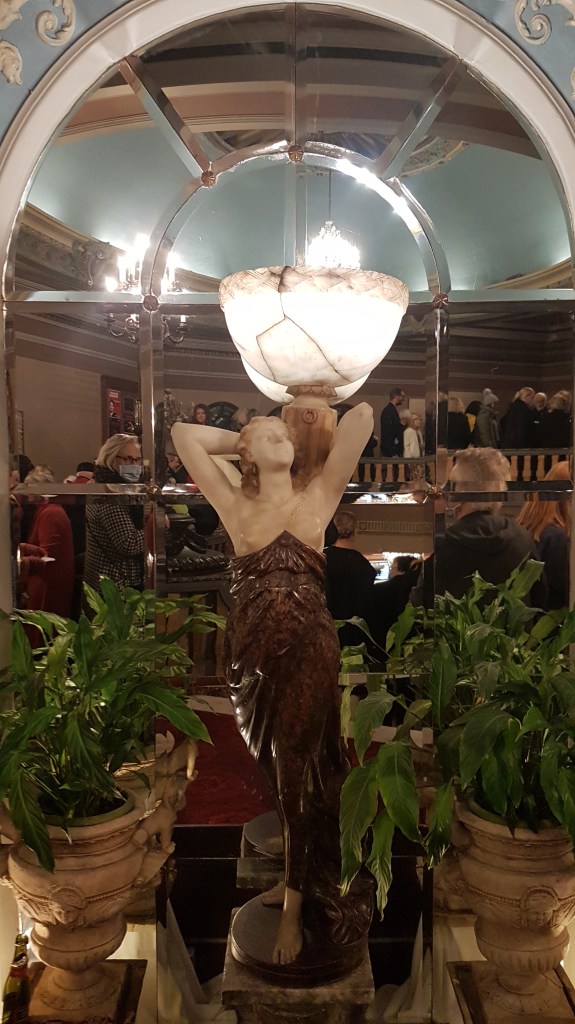
We step off the street and head into the opulent Regent Theatre. It’s beautiful inside with chandeliers and ceiling roses – a bygone era frozen in time. We are here to see the Royal NZ Ballet perform Romeo & Juliet. It’s a perfect venue to watch this tragic love story unfold. The costumes are vibrant, floaty and mesmerizing. The dancers are expressive, passionate and the story is so moving. It was a wonderful evening out.

A Locals Tail

It’s been raining most of the day but as it clears, we take the opportunity to quickly walk to our last activity for the trip. We make our way around Half Moon bay and up the hill to Bunkhouse Theatre. We are booked in to see ‘A Local’s Tail’.

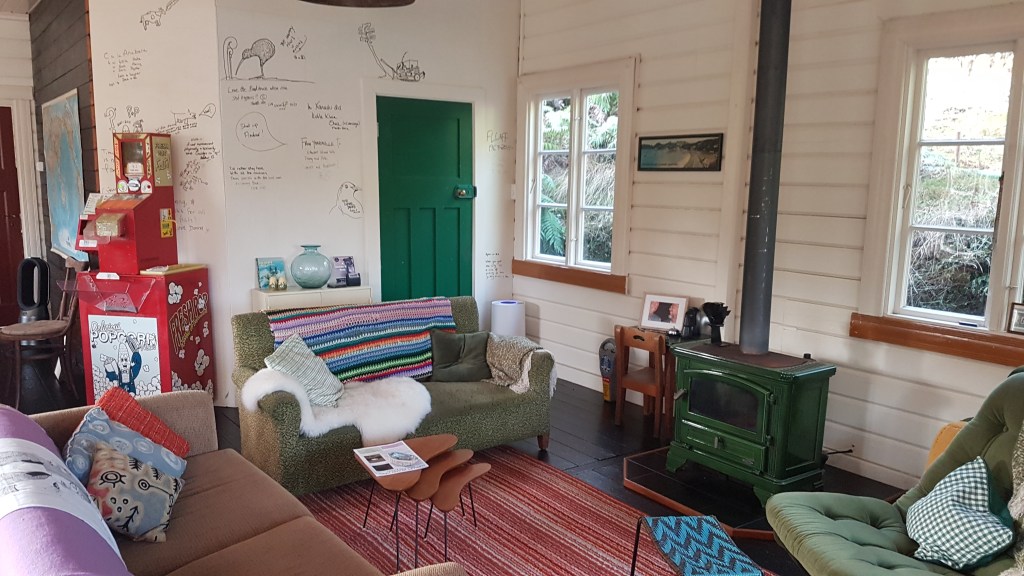
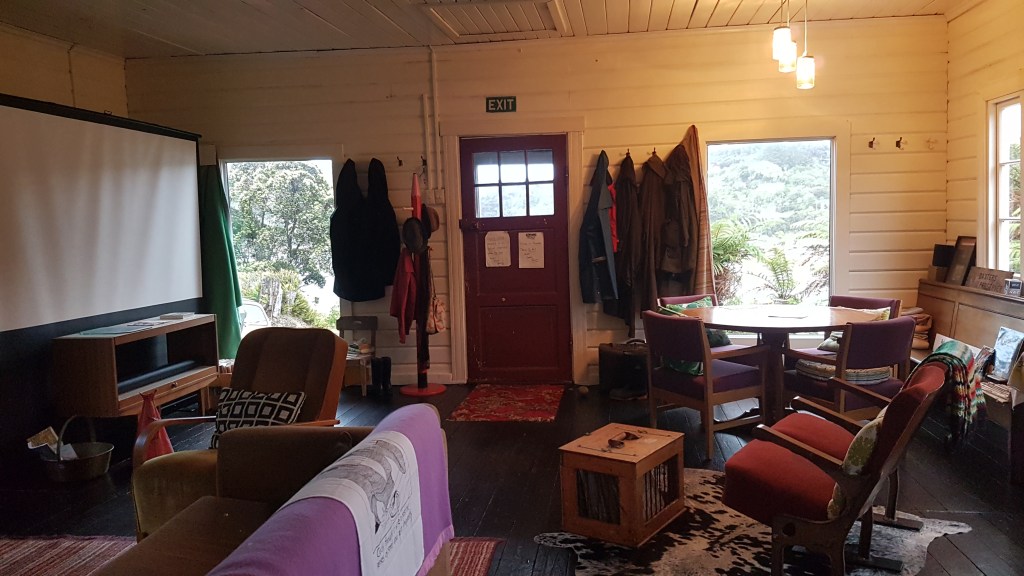
We are greeted by Penny and welcomed into her home. Penny lives in an old Norwegian whaling bunkhouse that was moved over from the original Rakiura whaling settlement. The cottage oozes charm. There is so much history in these floors and walls.

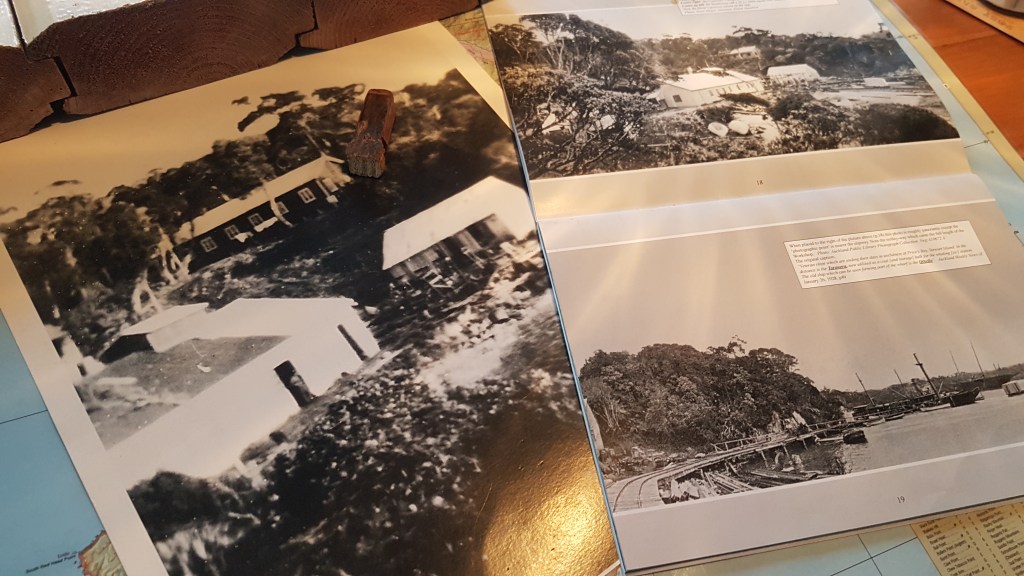
We are offered tea and coffee and take a seat in the kitchen to chat about life on the island. Penny has old maps and photos laid out for us to look at as she shares some of the island’s history and the story of the Bunkhouse.

When the whaling era came to an end, the local church purchased the bunkhouse for 100 pounds and had it moved to its current site to be used as the church hall. The bunkhouse was originally brought over from Norway as a kit set, so it was able to be dismantled, moved across the island and then reassembled. It still retains its beautiful old flooring. Bench seats have been made from rimu that was sourced from the island and old Sunday school chairs have been fixed to the wall to act as an open pantry. Looking around the bunkhouse is candy for the eyes. There are so many stories within these walls.

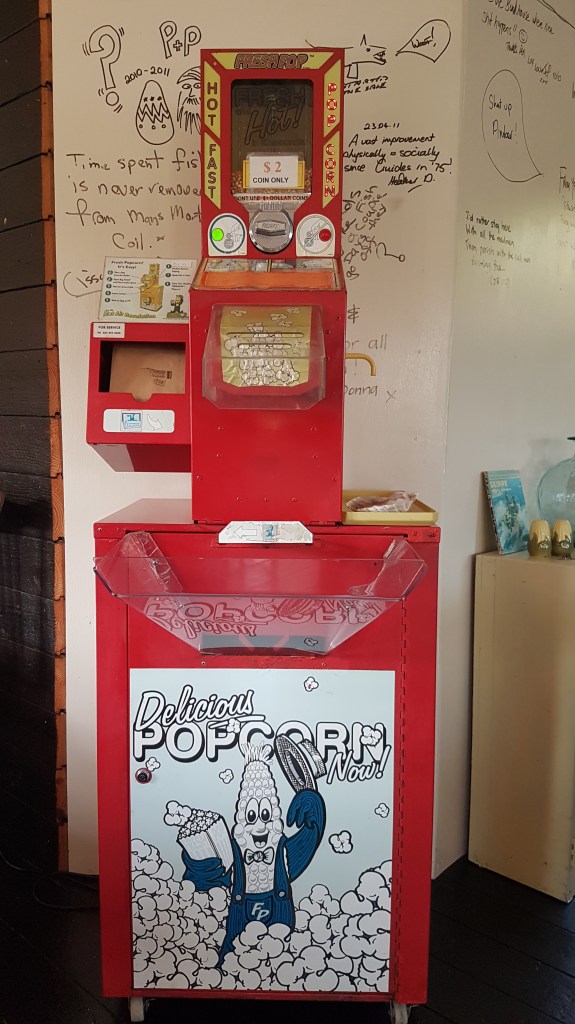
After chatting for half an hour or so, we make some popcorn in the old retro machine and take a seat to watch A Local’s Tail. It’s a short film that shares stories and history of the island, narrated by Lola, Penny’s beloved dog. Lola takes you on a journey from the fishy depths of the ocean to the tops of the trees, giving a glimpse into local life in times gone by.

It’s a fun and interesting way to get an understanding of the people and events that have helped to shape this island into what it is today. After 4 days of adventures, history and stories on the island, this film was a wonderful way to wrap up our stay in this stunning place.

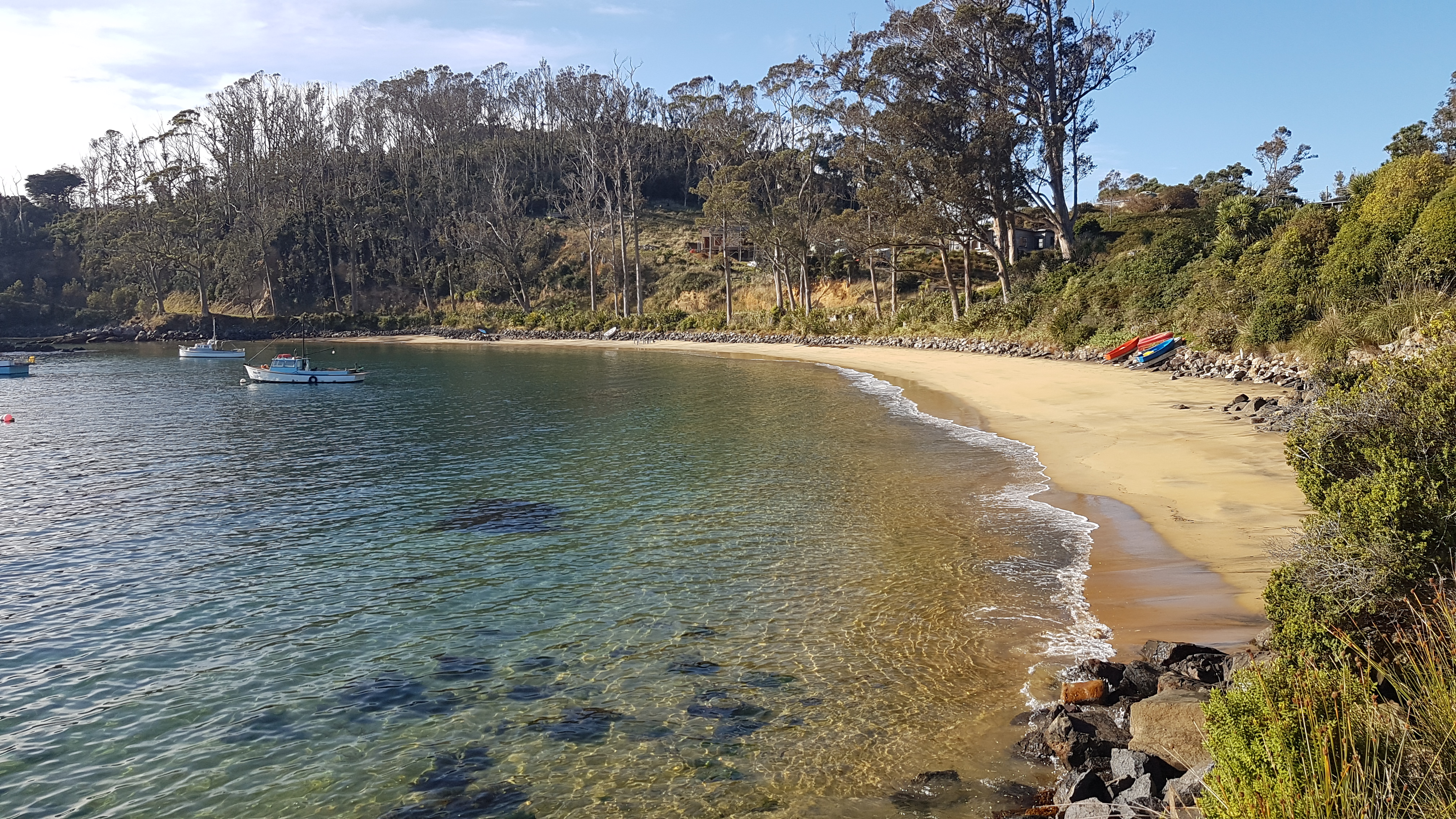
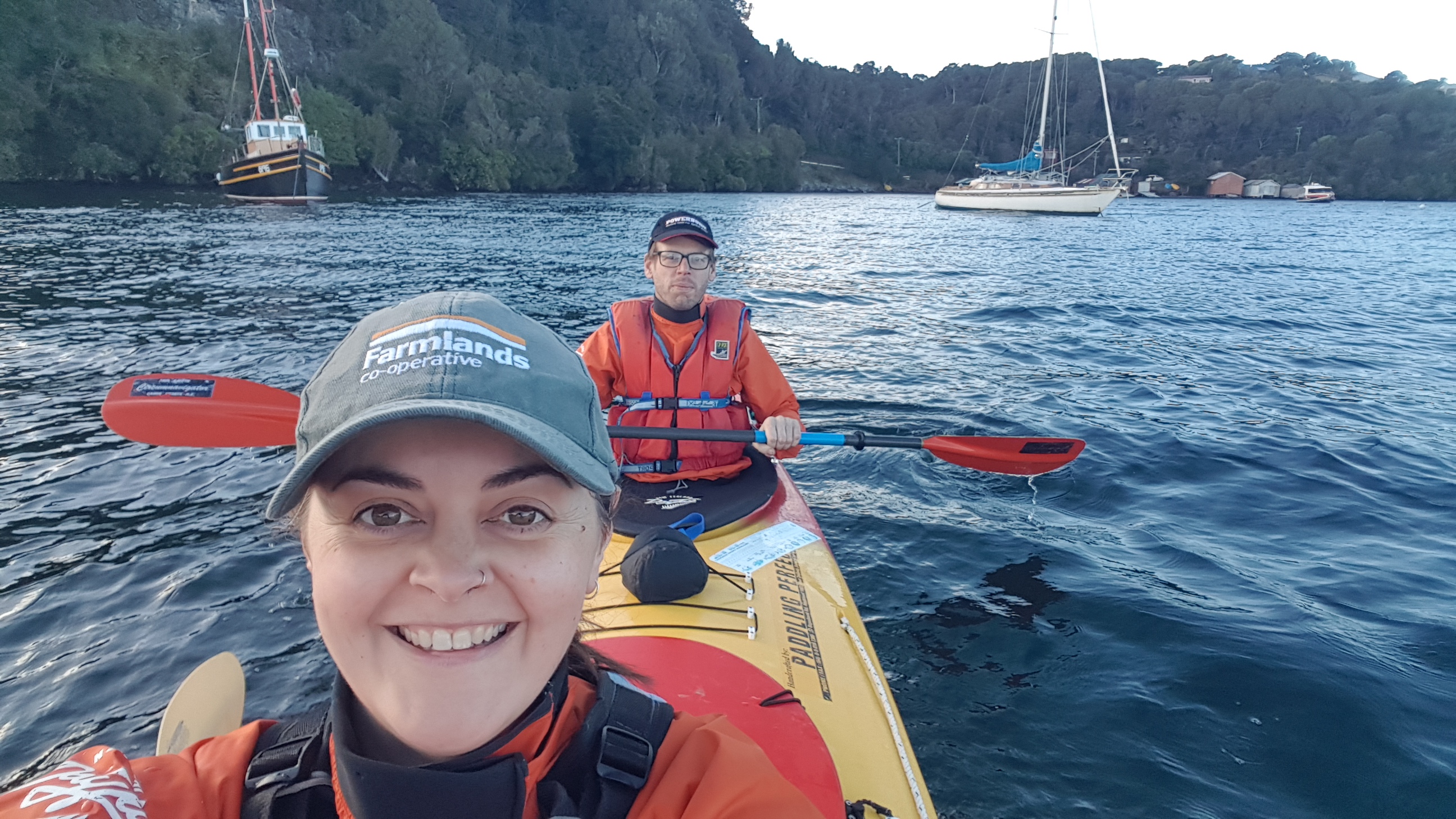
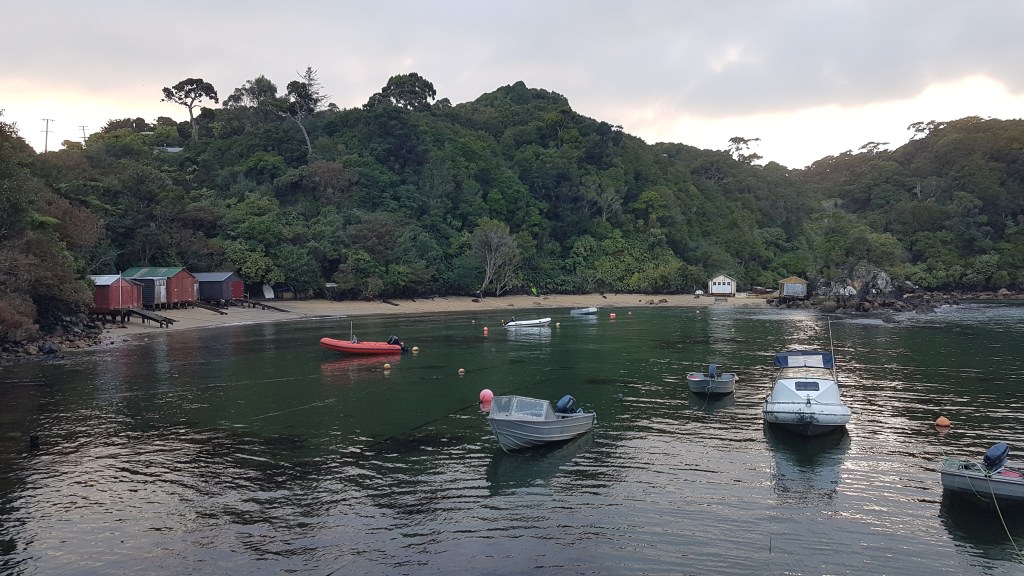
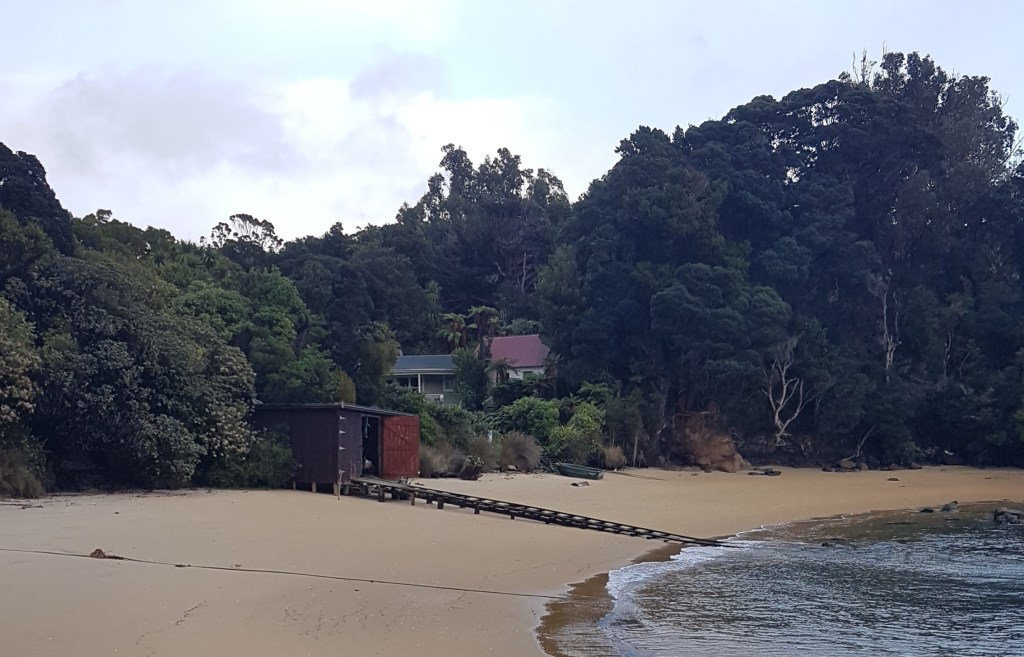
This is my 8th post on Rakiura and we were only there for 4 nights. We managed to pack so much into this trip! It was right for our first visit, I wanted to see and experience as much of the island as I could. If I am lucky enough to visit again, I would slow it right down. Soak in the forest, listen to the birds, read a book in the sun, relax on the beach.

When I initially told friends and family we were heading here, I was asked a few times – is there much to do there? The answer of course is YES!

But I would say, you need to love the outdoors. If resorts, cities and shopping is more your thing, this isn’t the place for you. But if you love to immerse yourself in nature, marvel at the stars, listen to the rhythmic sounds of the ocean and hear dawn’s chorus, then put this place on your bucket list.

You will fall in love with Rakiura, just like I have.

Ulva Island

It’s our last full day on Rakiura and after a late night out kiwi spotting we have our earliest start yet. We are both pretty tired, but looking forward to our tour. We layer up and walk to Golden Bay Wharf to meet up with Ulva’s Guided Walks.

Ulva Island is a nature reserve situated in Paterson Inlet. I am looking forward to spotting some of our less common birds and hopefully some I have never seen before. We had been told that winds up to 50 knots were expected today and in fact, other companies were not operating, but Ulva’s guided walks operate a catamaran which is able to manage the weather. It’s actually a very calm morning and so far, no rain.

It’s a short 5 minute boat trip and before we know it, we are disembarking at Post Office Bay. It seems strange that the original post office would have been out here. We learn that when Rakiura was first settled, people lived in settlements scattered around Rakiura and its islands, not all in Oban like today. So this location was actually quite central! When the post ship came (only once every 3 months) a flag would fly at the top of the island to let everyone know. Locals would put on their Sunday best and row out to Ulva Island to collect their mail and catch up on the gossip.

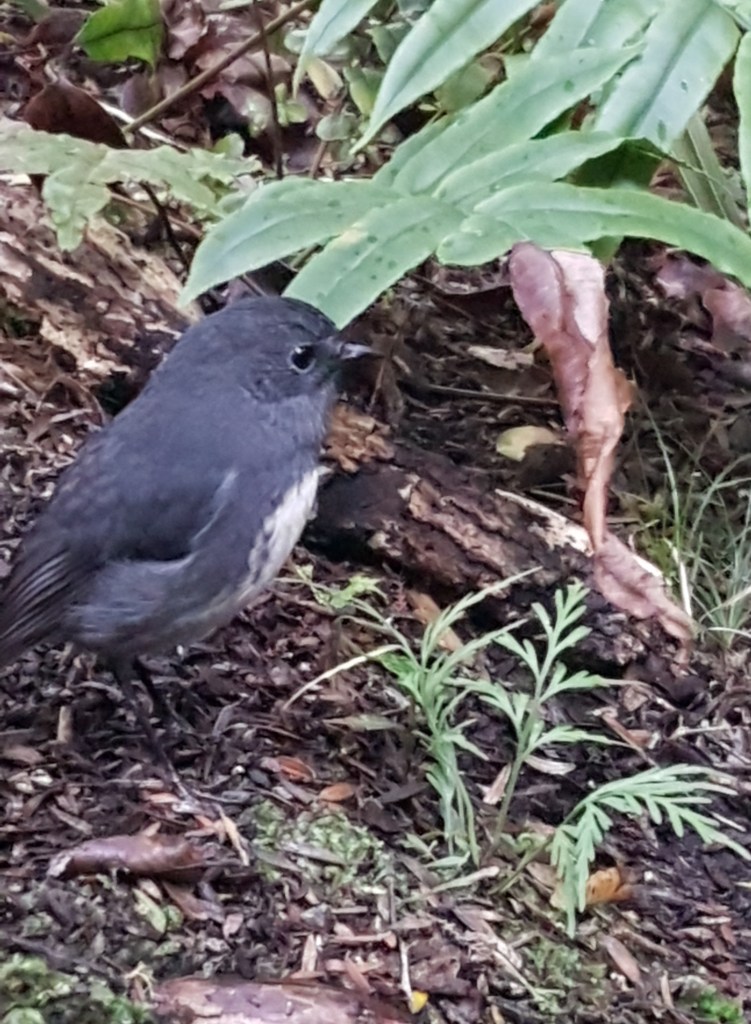
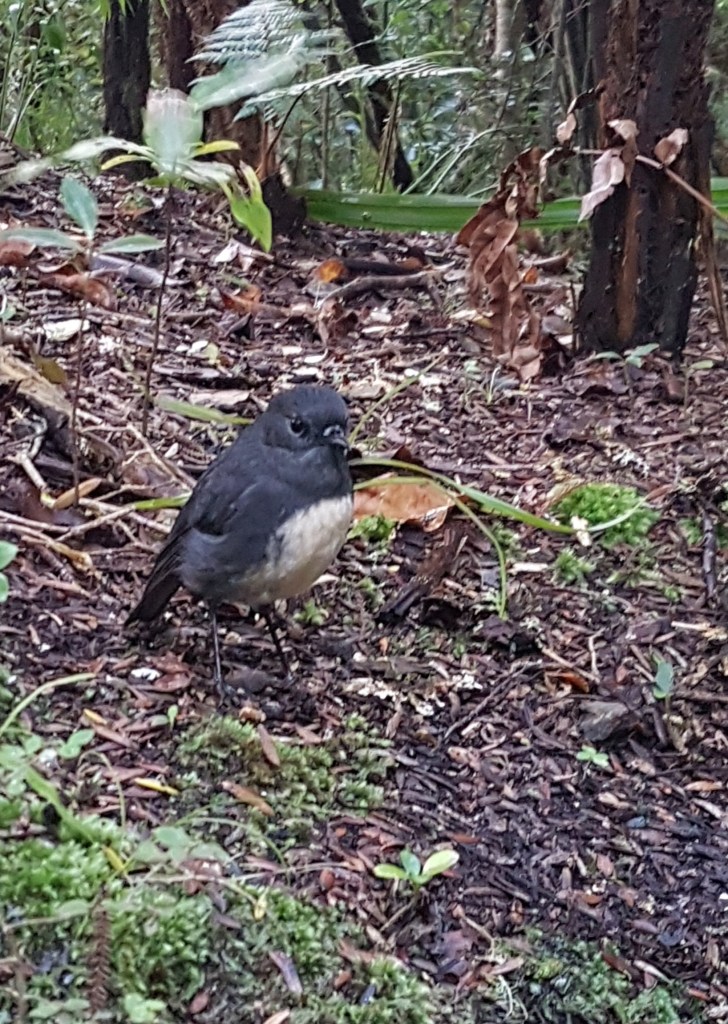
About a 1/3 of the island has walking tracks, the rest of the forest left undisturbed for the birds. With the 5 others in our group we set off along one of the tracks and begin exploring. The first little bird we encounter is the Kakaruwai (Stewart Island Robin). A sweet, curious little bird that comes very close. Our guide, Emma, explains that they often come close because they like to graze for bugs in the leaf litter and when we walk, we disturb it, making it easier for them. While we are standing around watching, Emma rustles up some leaves with her hand and the little robin dives right in looking for food.

The first part of the forest we explore is called exotic forest, planted by the Post Office Owners to remind them of home. Fortunately, they were botanists and understood the importance of native forest and didn’t clear the entire island. In fact, they even petitioned and managed to make it a reserve, one of the earliest in the country. Most of the forest on this island today is still native forest thanks to them. I am grateful. It’s stunning.

While the exotic forest still stands today, it won’t be forever. Local conservationists remove the new exotic seedlings. Pine needles are particularly bad, their acidity preventing our native ferns and mosses from growing. One day, the whole island will be returned to native forest.

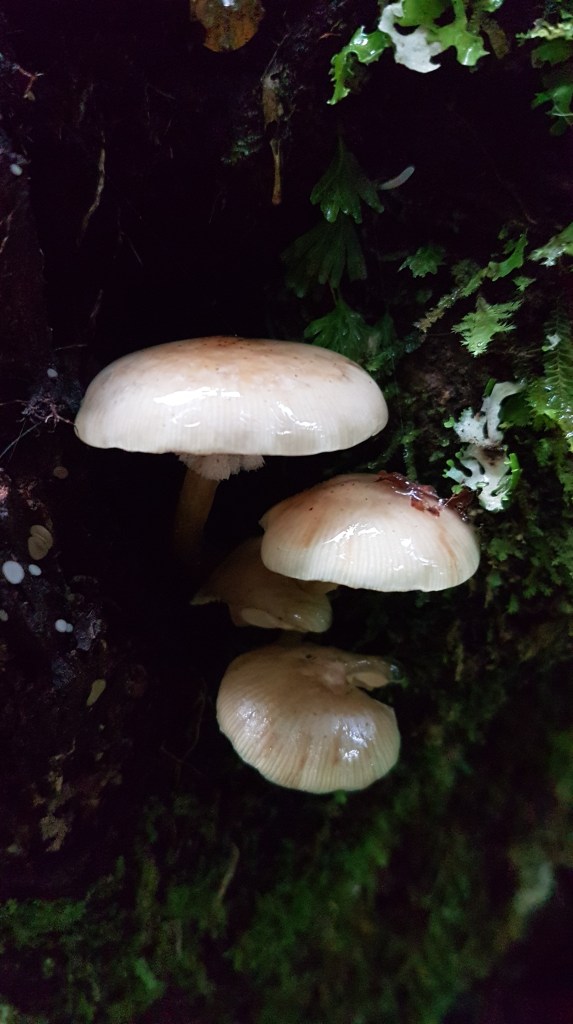
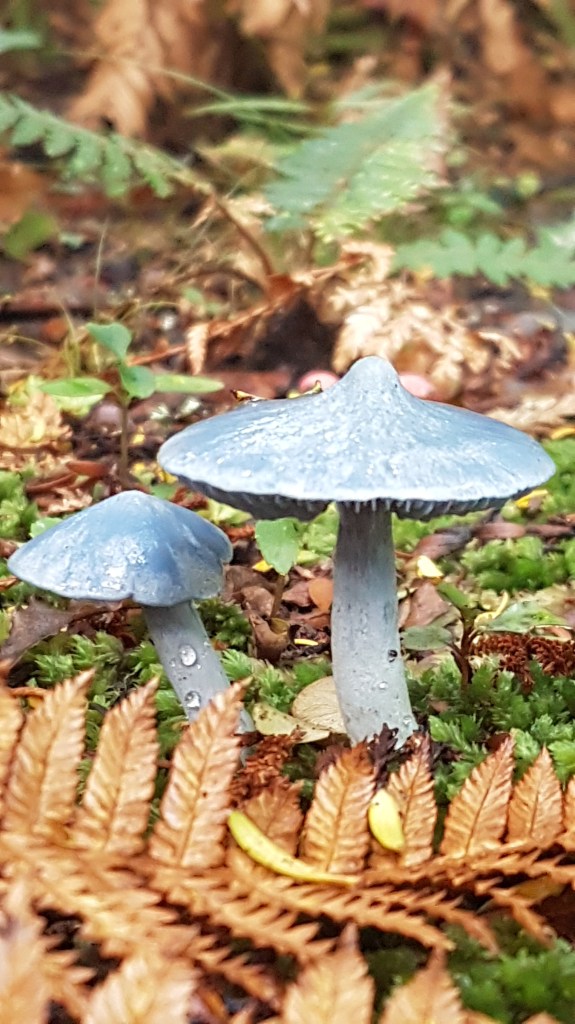
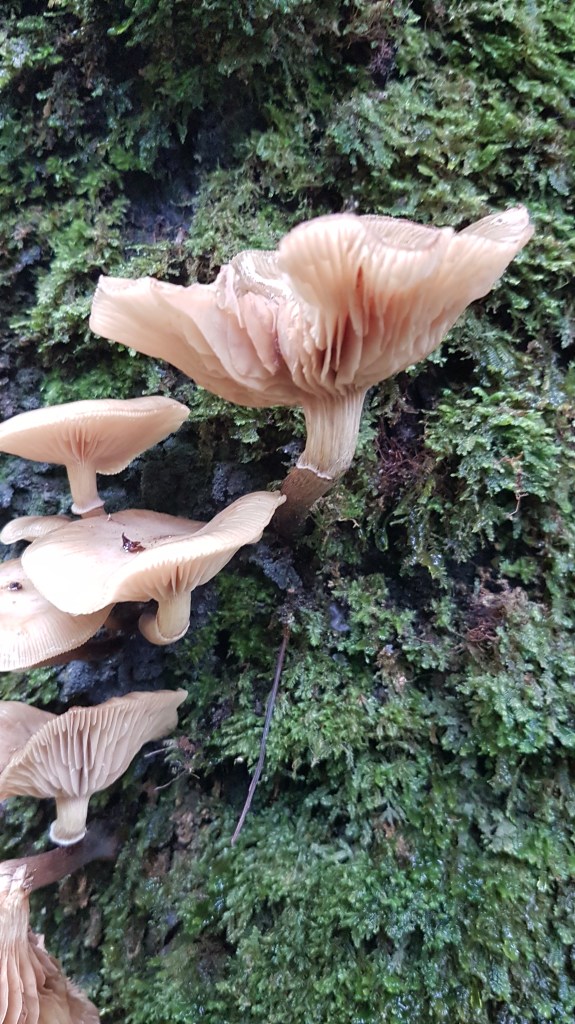
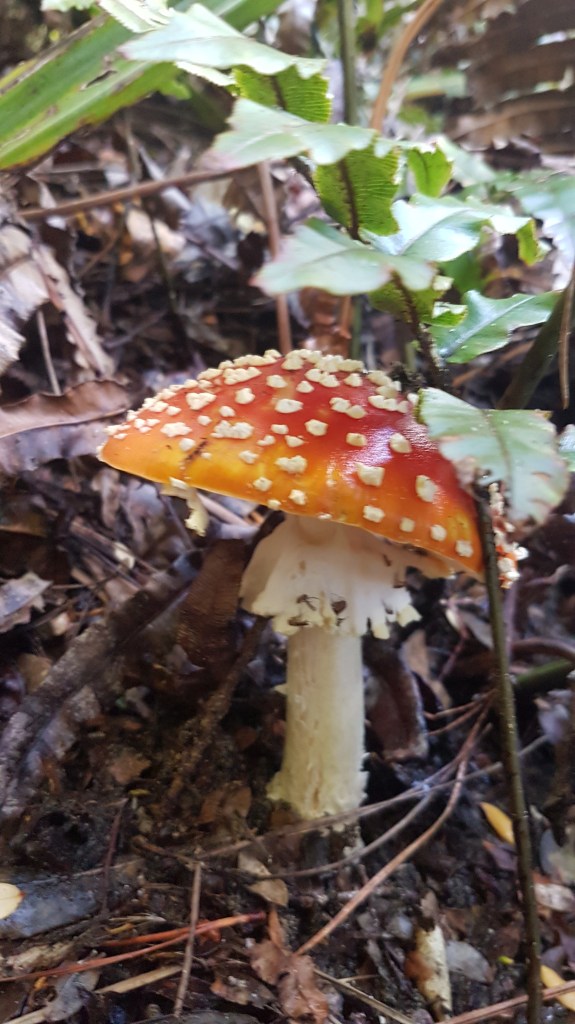
We spend the next 3 hours wandering through some exquisite native bush, so lush and vibrant. You could look at it and say it’s just a bunch of green trees, but for those that take the time to be still and really look, you will begin to see the intricate layers that exist. From the ground cover ferns and moss to the mighty rimu and totara, there is so much magic in this place. Emma points out different toadstalls and mushrooms along the way, the colours and shapes are awesome. I love the little blue ones. I have never seen anything like this before.

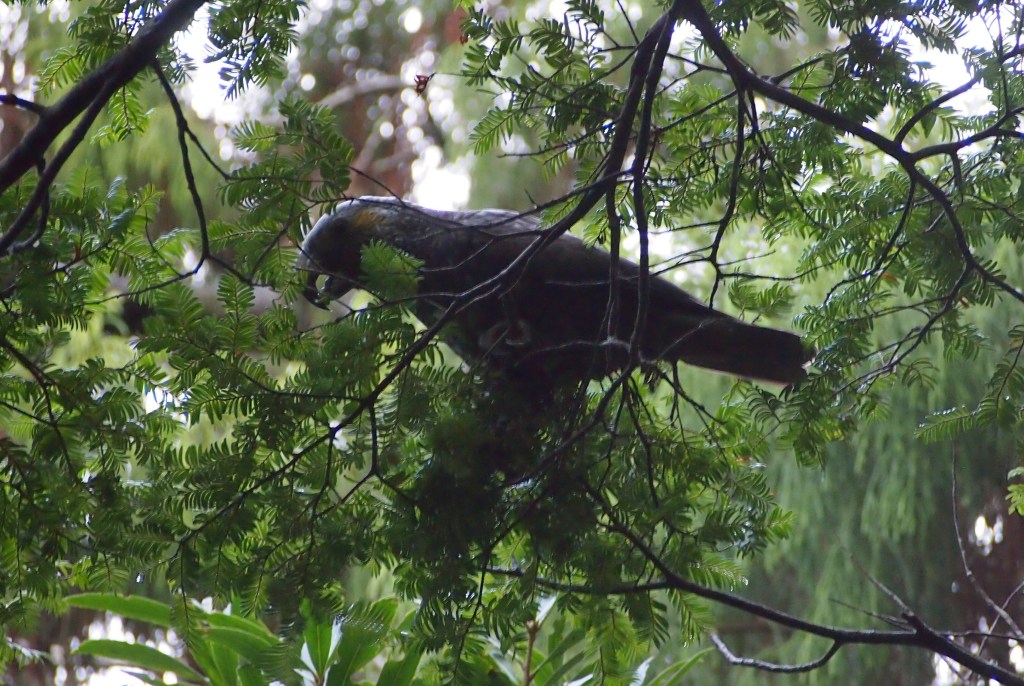
We then spot a kaka, a parrot that is found in low lying areas. They have beautiful red plumage under their wings. It sits up in the tree, cracking seeds out of the miro berries and dropping the shells on the ground. Emma says that these birds are like naughty teenagers and love getting up to mischief. In the town they will un-peg your washing from the line and are able to remember your breakfast routine, turning up to tap on your window, just as you are sitting down to eat. Emma also said some cheeky kaka learnt how to use a cat flap by watching the family cat and her grandmother came home to find 5 kaka on her dining room table helping themselves to the fruit bowl!

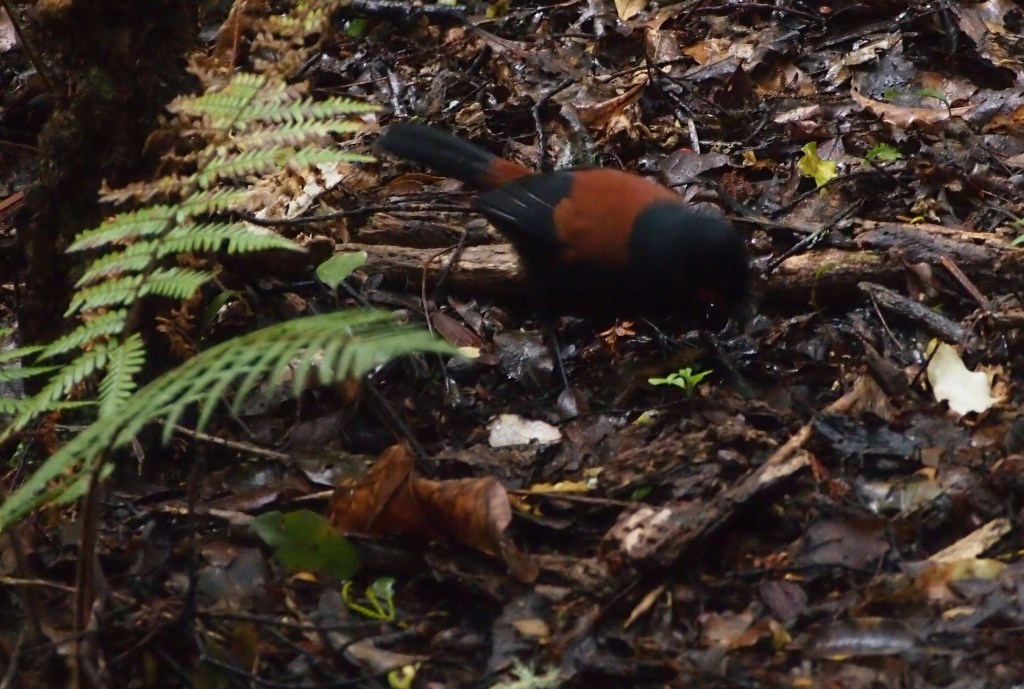
We also see weka, red crested kakariki, kereru & korimako (bell birds). The korimako are known for the dawn chorus, they are one of the first to start singing in the mornings. Emma then points out 2 birds I have never seen before; the hurukōwhai (yellowhammer) and tīeke (saddleback). The little hurukōwhai flutter about in the trees. They are a mossy colour except for their bright yellow head & chest which creates splashes of colour about the forest. I find the saddleback interesting because they look like they should be able to fly and belong high up in the trees, but they mostly stay low to the ground, rustling about in the leaf litter looking for food. They also make their nests low to the ground which makes a easy breakfast for pests. It was so special to see these birds, a first sighting for me.

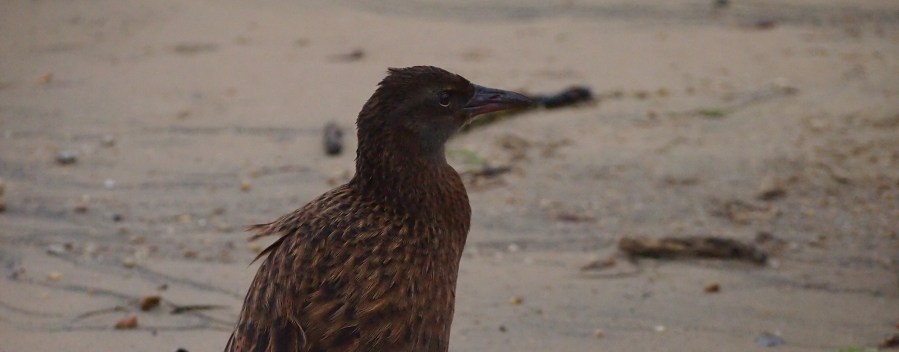
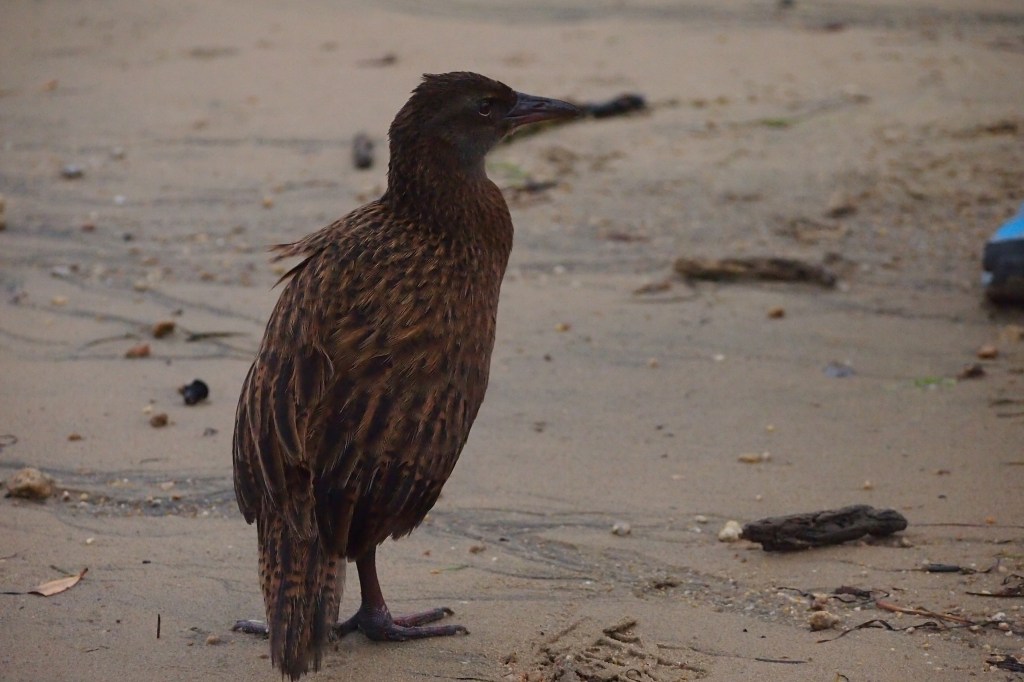
So far, we have only followed the forest trails, but we now find ourselves on one of the beaches. It is very exposed and windy here, so after snapping some photos of a very curious weka, we head back into the sheltered forest. Emma points out some interesting trees – the miro which produces its own writing ink when water pools in its trunk hollows. She shows us the turpentine plant which will light on fire even when it’s wet (apparently quite popular with the kids who what to make bonfires on the beach to toast their marshmallows). We see more of the mutton bird scrub that was used as paper for writing and posting letters on. Nature is so amazing!

I love that we also get to see baby rimu trees. I am used to seeing them stand so tall and strong, it was interesting to see these delicate little saplings. The rimu trees are linked to our endangered kākāpō birds. They only fruit every 3 years and the kākāpō will only nest when they are fruiting.

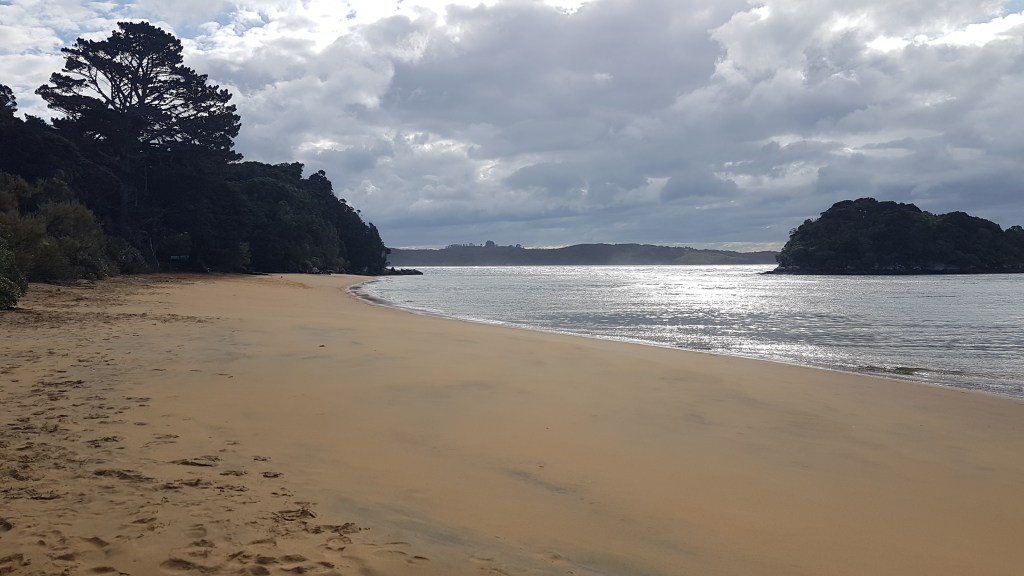
We then make our way down to Sydney Bay. This beach is on the other side of the island and much more sheltered with beautiful golden sand and sea lions resting up on the shore. We are careful not to get too close so as not to disturb them.

As we head back to Post Office Bay, our tour comes to an end. We watch an albatross sailing in the wind as we wait for our boat. If you are on a budget, you can just pay for the ferry ride across and explore on your own. I did consider this, but because of the Day & Night Special I decided to do the guided walk option. We saw so many birds that I am sure we would have missed if we were self guided. I also learnt so much about the forest and area. I am so pleased I booked a guided tour, it was well worth the money. It has been a very enjoyable and informative morning.

Searching for Kiwi

With a ratio of 5:1 sheep to humans, Aotearoa is well known for its abundance of these woolly mammals. A more interesting, but less known fact is that Rakiura has a ratio of 30:1 kiwis to humans. If you are hoping to see one of our quirky national icons, you will have a much higher chance here. Due to the shorter nights and longer day time hours this far south, it’s not uncommon to spot kiwi during the day. I have heard stories of people on the Rakiura trek seeing kiwi wander out onto the path in front of them – in broad daylight! Another reason to put Rakiura on your bucket list.

After the sun has gone down, we meet our guide Dan and head out on our kiwi spotting adventure with Ulva’s Guided Walks. We are heading towards Lee Bay and the Mamaku Reserve. On the drive out, Dan brakes suddenly and we all hop out of the van to witness our first kiwi. It’s on the side of the road, casually having a feed. I can’t believe it. The tour hasn’t even really started yet and we have already seen a kiwi.

A single kiwi can consume as many as 200-250 worms in one evening! They use their sense of smell and vibrations to seek them out, probing the soil with their long beaks. She is very absorbed in her feeding and not at all aware of our presence. We are using red lights which apparently they can’t see. We watch her for a while and then she wanders into the bush. We pile into the van to carry on our journey.

We arrive at Lee bay and spend some time wandering around on the beach and the grassy area where Daniel and I had our picnic earlier that day. Dan knows where their burrows are so has taken us here to see if any of them are out feeding. We see tracks on the beach but no kiwi so we make our way up to the reserve and Dan lets us in through the gate.

Kiwi are one of the many flightless bird species we have in Aotearoa. Long ago, there were no natural predators in our country so they had no need to fly. They evolved, their wings became stumps, their bones became dense (not hollow like other flying birds) and their feathers changed to be more downy than aerodynamic. Fortunately, there aren’t many predators on Rakiura and the Stewart Island Kiwi is really flourishing here.

Kiwi lay huge eggs for their size and the incubation period is 90 days. When they hatch, they are fully formed, feathers and all. They are able to hunt for themselves but remain with their parents for 1 – 3 years depending on the species.

This is a tour that requires patience. There is a lot of standing still, listening to the night. The forest floor is squishy underfoot. It’s raining. We are standing in the open, getting quite wet, but it’s also thrilling. The anticipation of seeing more kiwi outweighs the discomfort of being wet and cold. We walk slowly, every step carefully taken so not to make too much noise.

Then, under our red light, along the fence line, we see two more kiwi. A male and a female. Dan tells us this is uncommon. While they share burrows, they feed alone. We feel very privileged to see two at once. There is a noticeable size difference, the female much larger. This was clearly visible when we saw them side by side.

But then, something unusual happens. The male kiwi lets out an almighty squawk that pierces the silence of the night. I just about leap out of my skin, it gives me such a fright. He has seen us, sent out a warning call and before we know it, he and the female have disappeared into the bush. Now, I know I said earlier that kiwi can’t see red light, and this is true, except for one male in the reserve who does seem to be able to see it. No one is sure why or how he can see it, but he can. It seems that this is the kiwi we have encountered tonight.

We continue standing in the dark waiting to see if they will reappear. Dan has a heat sensor that he uses to help spot kiwi. After some time, I hear a subtle rasping noise and then the female reappears – on her own this time. She isn’t bothered by us. We follow her along the fence line, she moves quickly, bouncing along. Dan explains that this is how they graze. As she moves she can sense if there is any food underneath so she doesn’t need to stop and poke around. She will only put her beak down when she knows something is there. We eventually lose track of her, she was moving very quickly.

Some more interesting information we learn is that on the couple of occasions they have seen the Southern Lights on the tour, they haven’t seen kiwi. Dan said that other local guides have reported this too. There are no studies on this, the kiwi do so well on Rakiura that conservation money goes to other projects. However, their theory is that the high geomagnetic activity keeps them tucked away in their burrows.

We make our way back to the beach but no sign of any more kiwi, we still all feel lucky to have seen 3. We head back to the town in the van but as we approach Horseshoe Bay, Dan makes a stop – he has seen another kiwi. It’s not even bothered by the van headlights. We watch it for a while before calling it a night.

We arrive home rather wet and ready for bed. We have been out on tours the last 3 nights. I am grateful we are here in April when the sun goes down a bit earlier. In the peak of summer, these tours don’t even depart until around 10 – 10:30pm.

Rakiura is a fantastic location for kiwi spotting. You could head out on your own to look for them, but being on a tour, you get the expert knowledge of a guide who can teach you so much about these curious birds. I highly recommend Ulva’s Guided Walks Day and Night Special. It covers 2 tours – kiwi spotting and a guided walk on Ulva Island, which I will be sharing about next week.

Sorry, no photos for this one. I am no good at taking night photos and didn’t want to risk a flash going off. Sometimes, it’s just best to take memory photos to tuck away in your mind. This is one of those occasions.

Port William Day Walk

So far, we have been incredibly lucky with the weather and it’s been amazing exploring Rakiura in the sun. However, today we get to experience what it’s like in the rain.

This morning we are heading out to do a self guided, half day walk from Port William. But before we venture out on a walk, we need to fuel up with some breakfast, so we head back to The Snuggery, it’s a shame they aren’t doing dinners at the moment, we would have loved to have come back here for that. Today, breakfast is a bagel with cream cheese and jam. Delicious. I love that combo! It’s a bit of a rushed breakfast as we need to get down to the wharf to catch the water taxi.

On our way to the wharf, we stop at the supermarket to pick up our pre-ordered lunches, then meet up with Dan, who is our skipper this morning. We get chatting and find out that he is also our guide for the kiwi tour this evening. We are joined by a group of 6 and then get on the water taxi. The water at the wharf is so clear. Although deep, you can easily see the bottom.

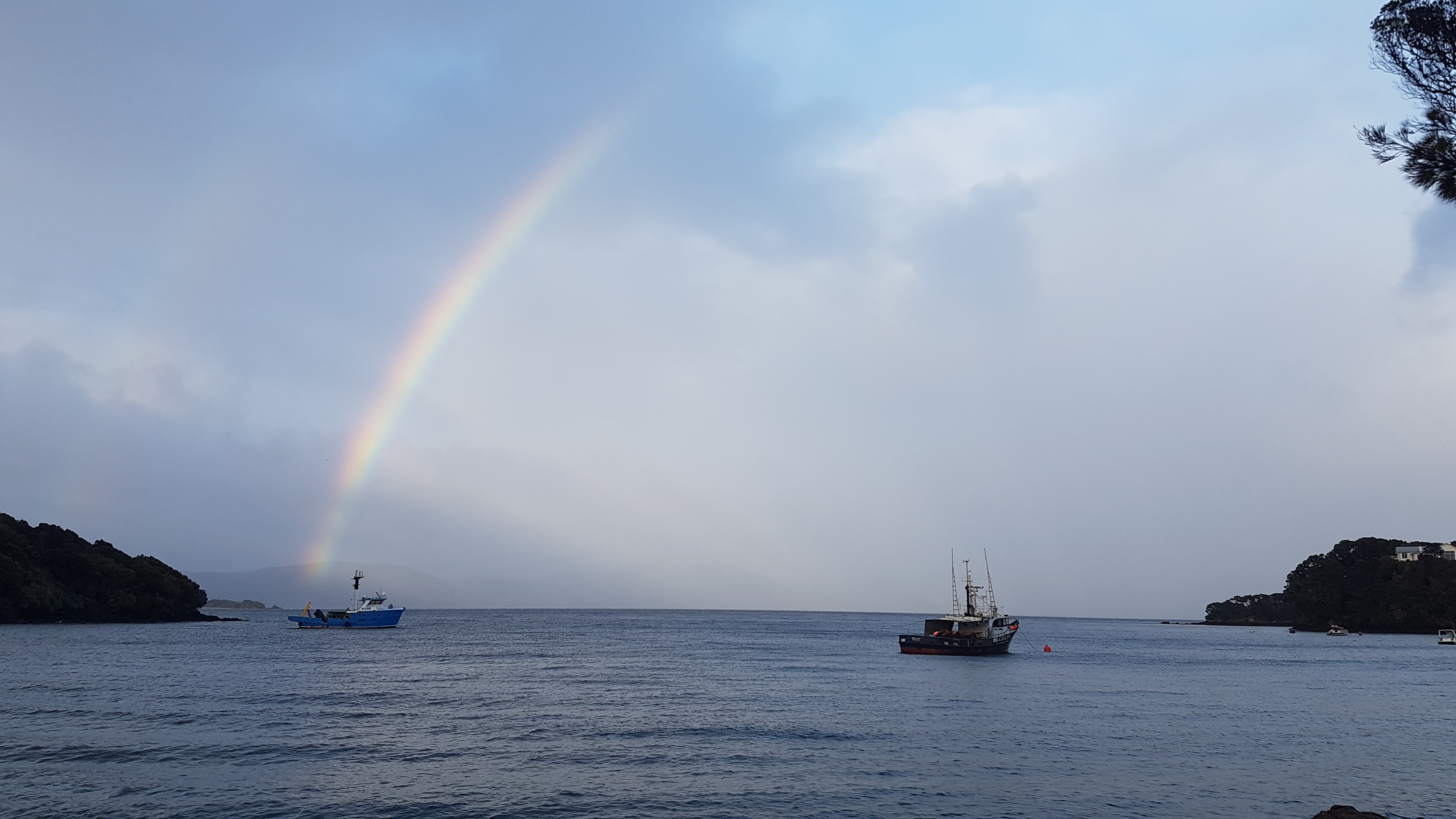
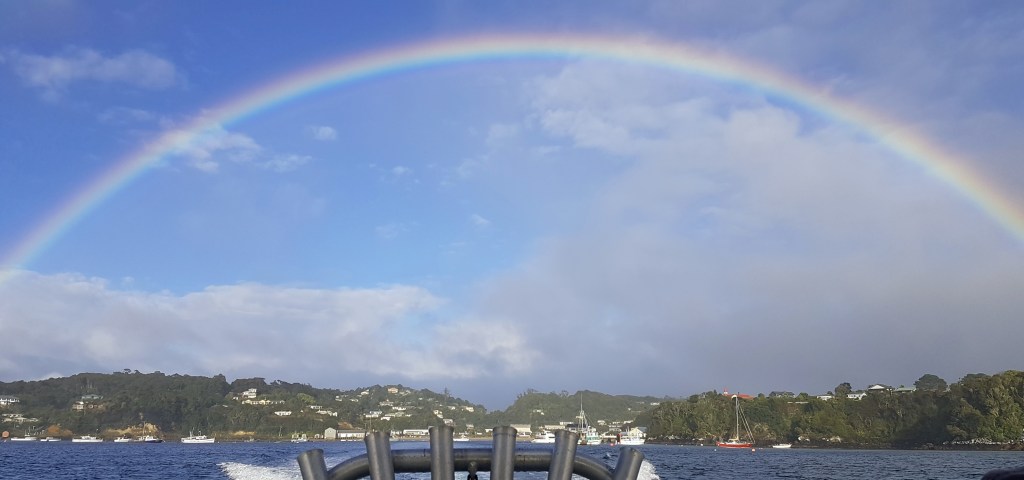
Dan tells us we are lucky that it’s a pretty calm day so our trip will be nice and cruisy. As we leave the wharf, we are treated to brilliant views of a huge rainbow stretching right across the bay. We are in a prime position and can see both ends. Gosh, this is a magical place.

For a calm, still day, our water taxi is bumping up and down a lot. There are a number of times we rise up and then slap back down into the water. I am fortunate not to have much of an issue with sea sickness, but my tummy is reminding me of the bagel sitting in it. I’m not too sure I want to know what a ride out here would be like on a rough day. We follow the coastline around and Dan makes a couple of stops on the way, the first being Lee Bay, to show us where the walk ends and instructions on how to call for a taxi (You have to stand in a certain spot to get reception). The second stop is at Maori Bay which he informs us is approximately half way and with today’s tides, if we arrive there after 11am we should take the high route. Useful information!
We arrive at our first destination, Port William, and get off the boat. We will spend the next 3- 4 hours walking back towards Lee Bay.

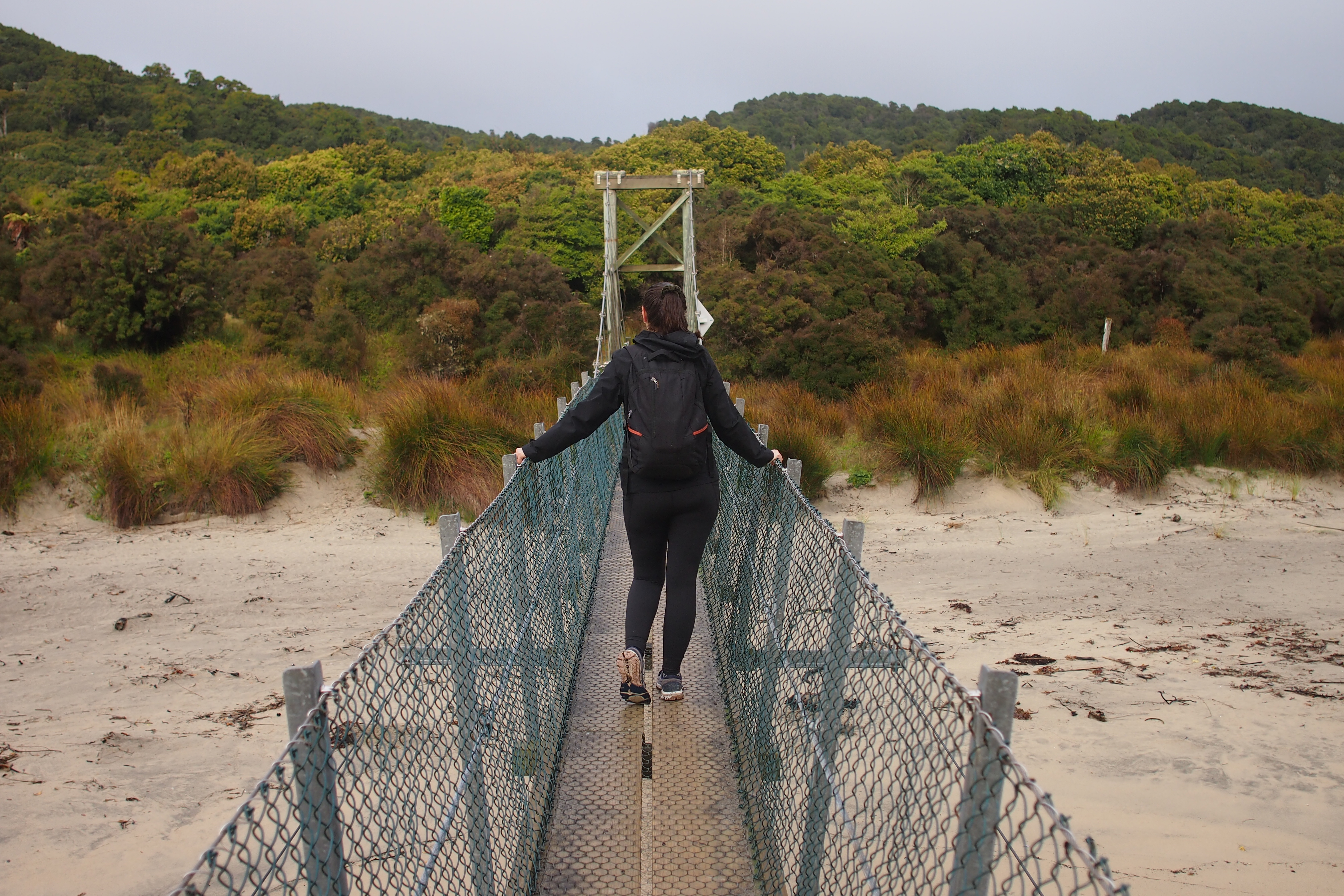
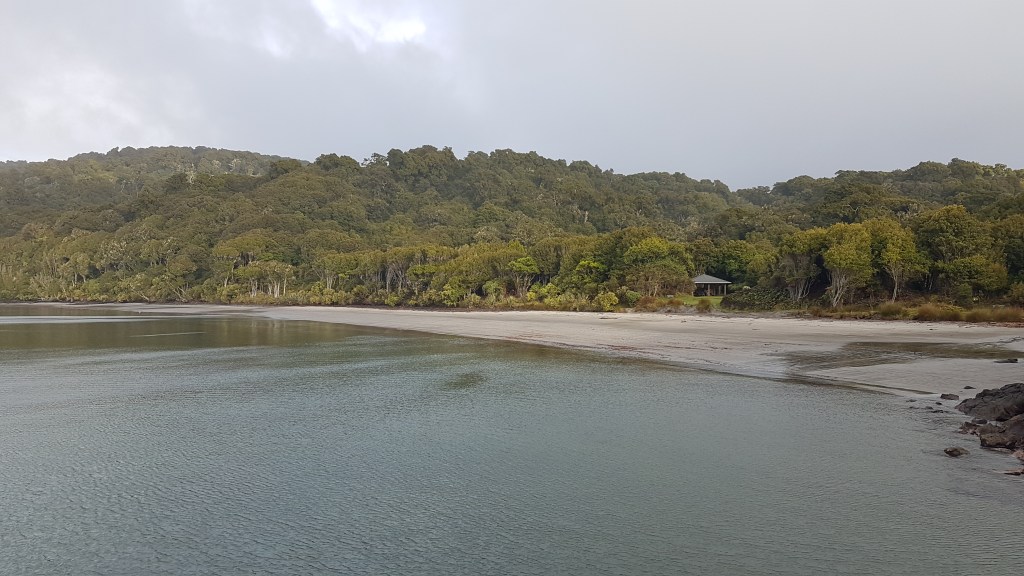
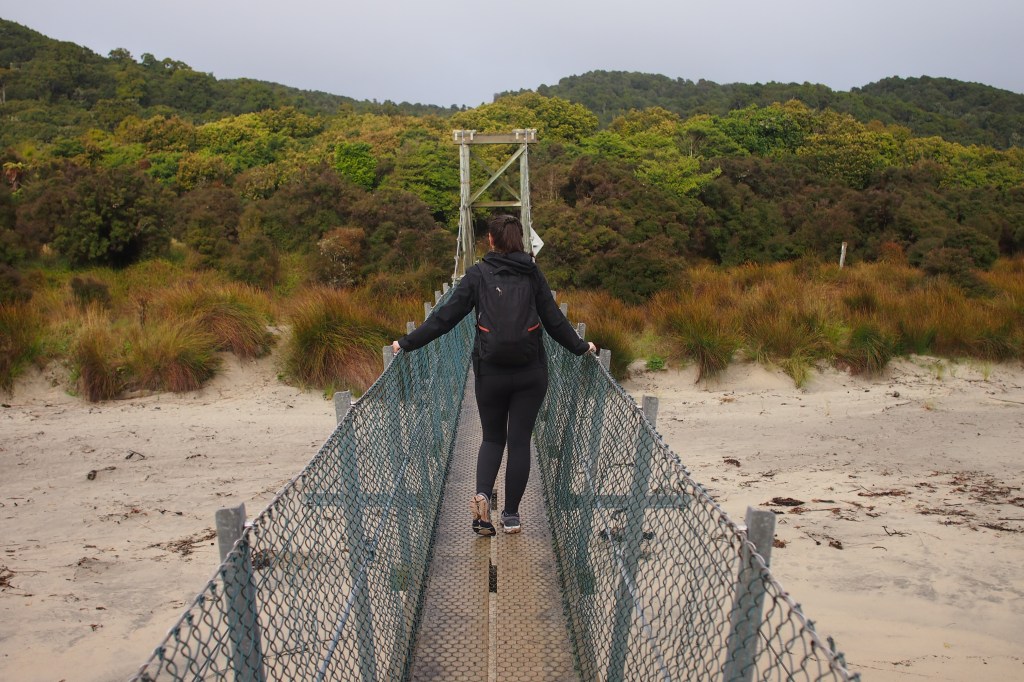
Port William is situated on another picture perfect bay surrounded by bush, which we venture straight into. And like a lot of New Zealand bush, it is lush and green. The walk we are doing makes up part of the 3 day Rakiura great walk. Although I really enjoy walking, neither Daniel or I are really trampers and I love that we can experience some of this Great Walk without having to carry packs and sleep in tents.

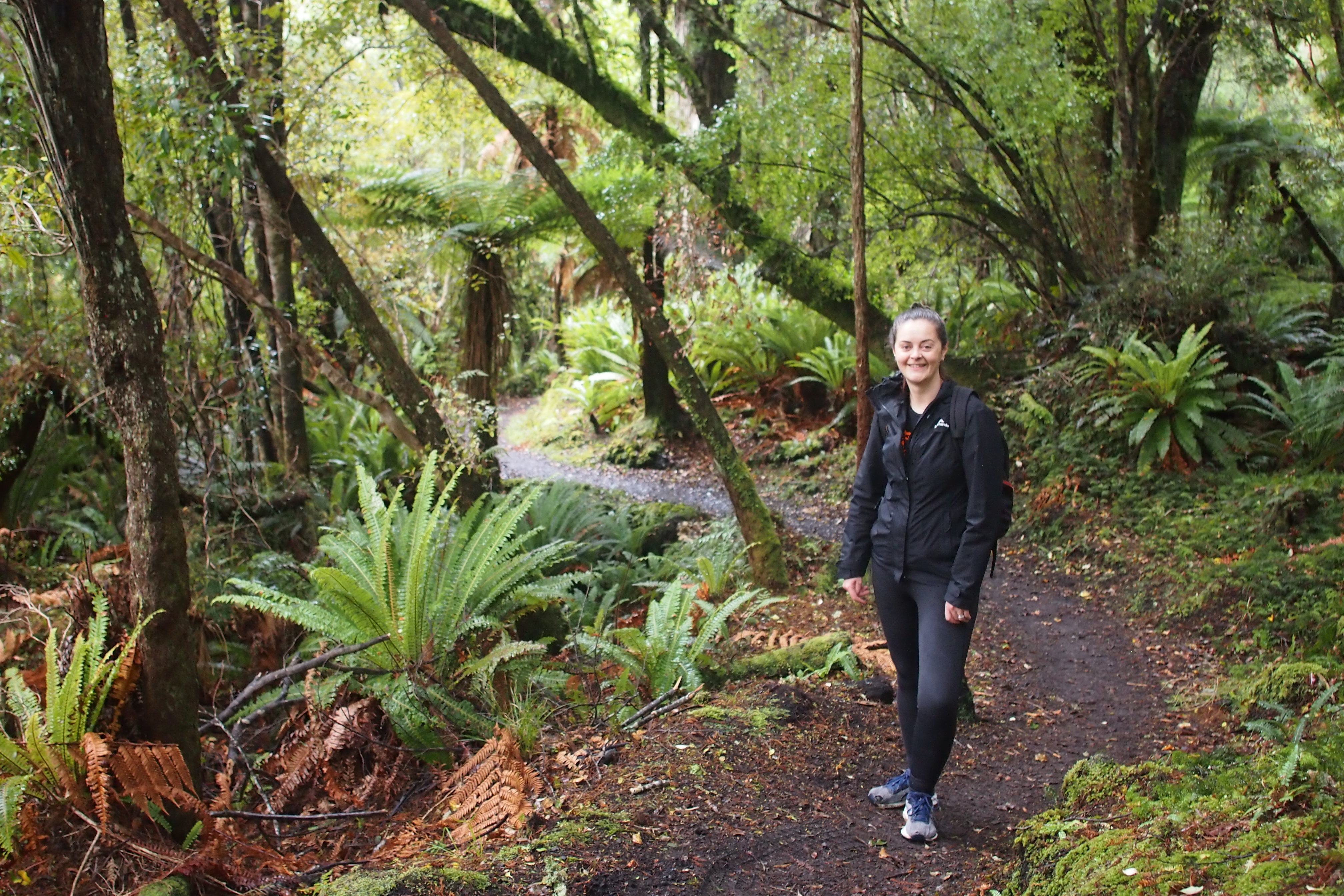
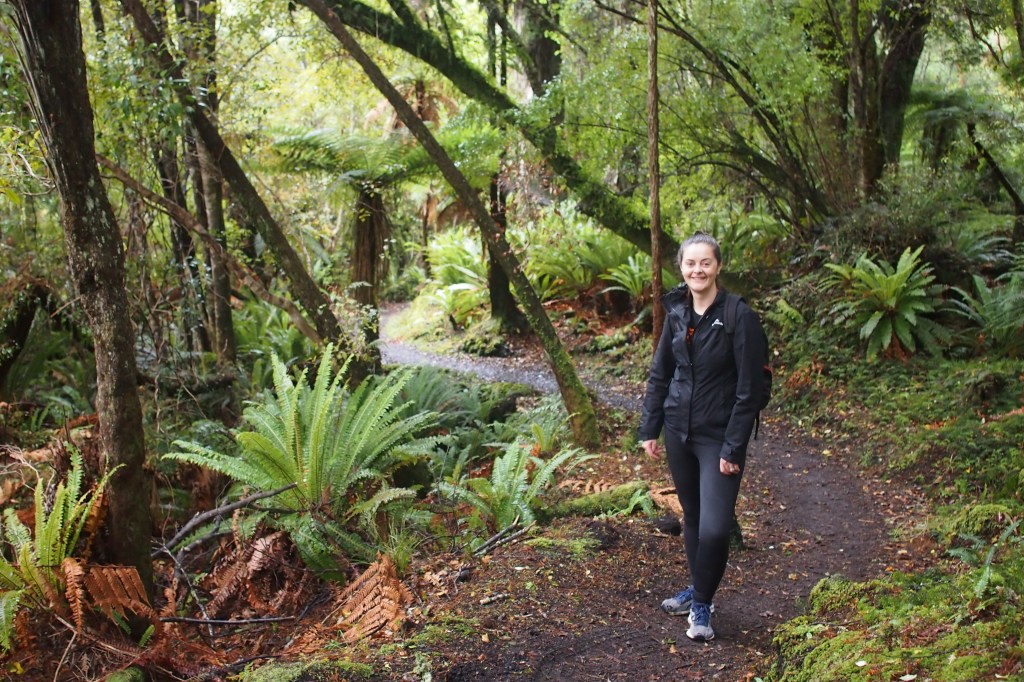
This Great Walk is very popular and can be walked all year round. Because of its popularity, the track is really well maintained and signposted. We trek up for a while, getting quite high and then drop back down into the valley. The forest is beautiful. I love the forest when it rains, it becomes even more alive. The little dewy water droplets and the smell makes it magical. In some ways I prefer it to a walk on a hot sunny day.

I love looking at all the layers in the forest too, the way all the different plant species support one another and the birds. The forest canopy is doing a great job of protecting us from the rain, but every now and again a gentle breeze blows through, rustling the leaves and dumping heavy droplets of water on us.

After a couple of hours walking, we reach Māori Beach. Another gorgeous bay. I really had no idea how gorgeous the Rakiura coastline was. On the beach I notice some tracks that I think might be kiwi, so I take a photo to show our guide tonight.

It’s still raining so we take shelter at the DOC kitchen (Department of Conservation) and decide to stop for a snack. It’s amazing how quickly you can cool down. I was very warm while we were walking but now we have stopped, it’s not long before I am feeling the cold and reaching for my sweater.
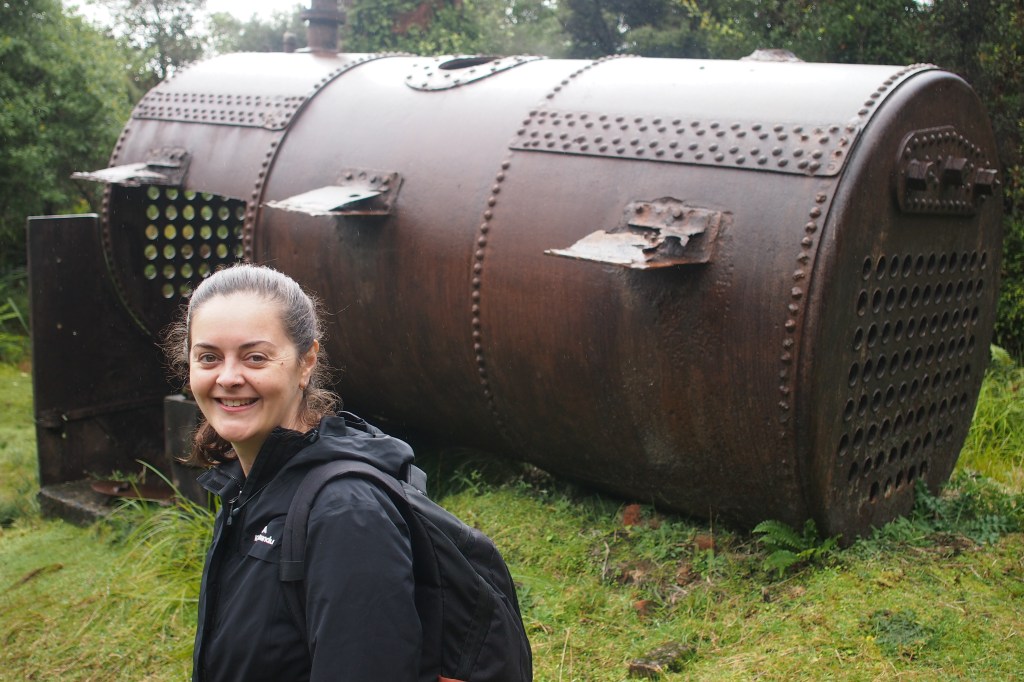
After having a bit of a rest, we carry on with our walk, taking a short detour up to the old sawmill site. Back in the day, there was quite a large Scottish logging settlement here. Now all that remains are the relics of their sawmill equipment. This would have been a beautiful place to live but very challenging, remote and cold in the winters.
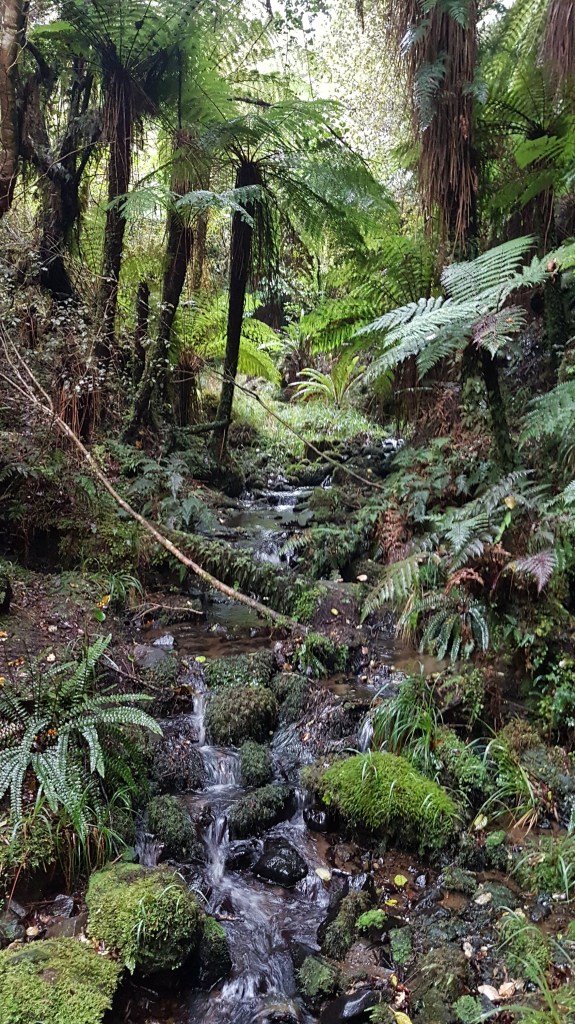
Back in the forest, I am glad for the shelter it provides us, but am also loving the cool, misty rain that manages to get through and land on my face. When I am not distracted by my heavy breathing, I am listening to the forest. The soft pitter patter of rain on the canopy, rushing water from the nearby stream, the rhythmic rolling ocean, the tui’s melodic song and the little peeps from a fantail. Even the trees are speaking, creaking as they sway in the wind. I love it when I slow down and take in what’s around me. There is so much to notice and so much that’s missed when we rush through life.

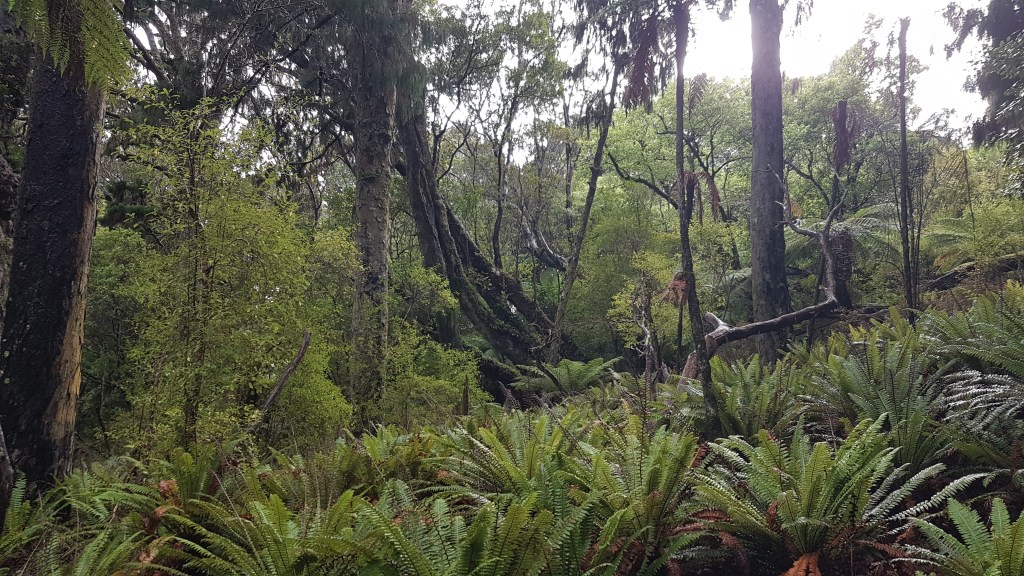
As Daniel said, it looks like New Zealand forest. But there is also so much variety. Some areas are dotted with tall, lanky trees that sway in the wind. Other parts are thick and dense. Large trees are covered in smaller plants and some low lying areas covered in ferns and moss. It’s pretty special.

When we emerge from the bush at Lee Bay, the rain has stopped. We decide to sit at the picnic table and have some lunch. We are joined shortly after by more rain and a little bird. I am not sure what it is, she is black with a white chest, shy but also curious. I am sure our guide for Ulva Island tomorrow will be able to tell us what sort of bird it is.

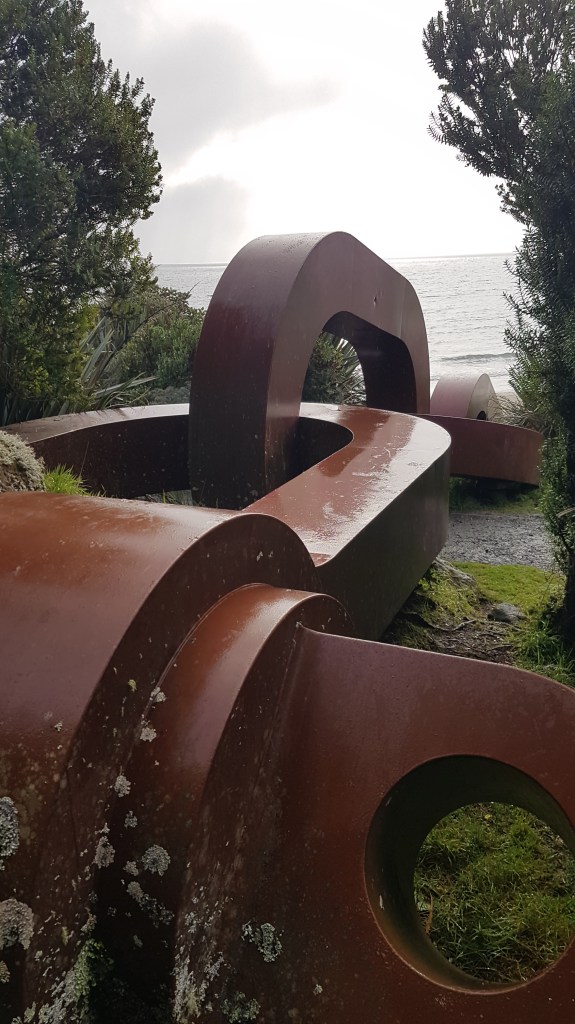
As we head to the car park, we see ‘The Anchor’ sculpture. It is inspired by the story of Māui who fished up Te Waipounamu (The South Island) and anchored it with Rakiura (Stewart Island). There is a matching sculpture in Bluff (the bottom of Te Waipounamu) which we saw on a previous trip. This sculpture is a lovely end to our half day walk exploring Rakiura National Park.