On this wet, rainy, summer morning, I read back over my blog from the start of the year, Travel Dreams for 2023. I wasn’t expecting them all to happen and they didn’t. Cost of living has made it less affordable to travel this year. While I have traveled more in previous years, I have made it to a few epic bucket list locations. It has been a wonderful year of travel.
My favourite place I have been to in Aotearoa this year (and quite possibly ever) is Rakiura, Stewart Island. What an incredible place to celebrate my 40th birthday. I fell in love with the incredible beaches, slow, relaxed way of life, the abundance of birds and the stunning starry night sky. It is a nature lover’s paradise. While getting there does take a bit of planning, those who make the effort will be rewarded. It is spectacular.
Travelling has taught me many lessons, but the key learning is the importance of being present in the moment. I do plan quite full itineraries, but I have learnt to stop, take a moment and absorb my surroundings.
Hearing 2 male kiwis fighting (honestly, that’s a sound you will never forget!)
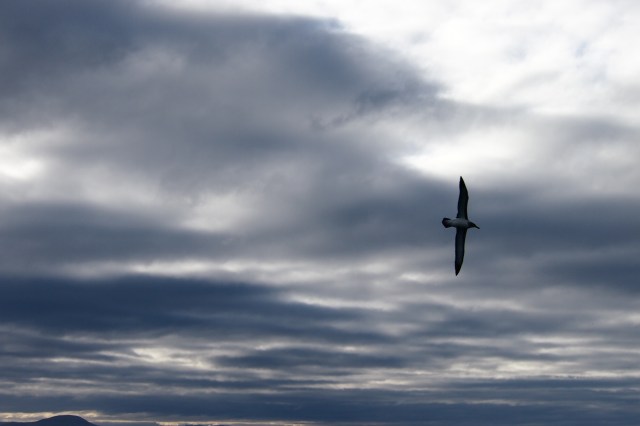
Watching albatross effortlessly glide through the sky. Watching Albatross
They are all but moments, ones that could have been easily missed, but I have learnt that when you consciously seek out the beauty in the simple, there are extraordinary moments to be had everyday. Travel has helped open my eyes to the awe and wonder that constantly surrounds us.
I started my little blog 4 years ago, the first post landed 1st January 2020. And now, 134 posts later, on 31st December, 2023, it feels like the right time to end. I have loved sharing my adventures with you and having these stories and photos to look back at is so special. But everything has its season, and it feels like the right time to bring this one to a close.
Thank you for taking the time to read the words of a 40 year old kiwi girl, living in the most beautiful place on earth. It really means a lot. If you haven’t made it to Aotearoa yet, put it on your bucket list. The Long White Cloud is a remarkable place that will take your breath away.
Wishing you all an extraordinary 2024 with many beautiful moments that take your breath away.
It’s been raining most of the day but as it clears, we take the opportunity to quickly walk to our last activity for the trip. We make our way around Half Moon bay and up the hill to Bunkhouse Theatre. We are booked in to see ‘A Local’s Tail’.
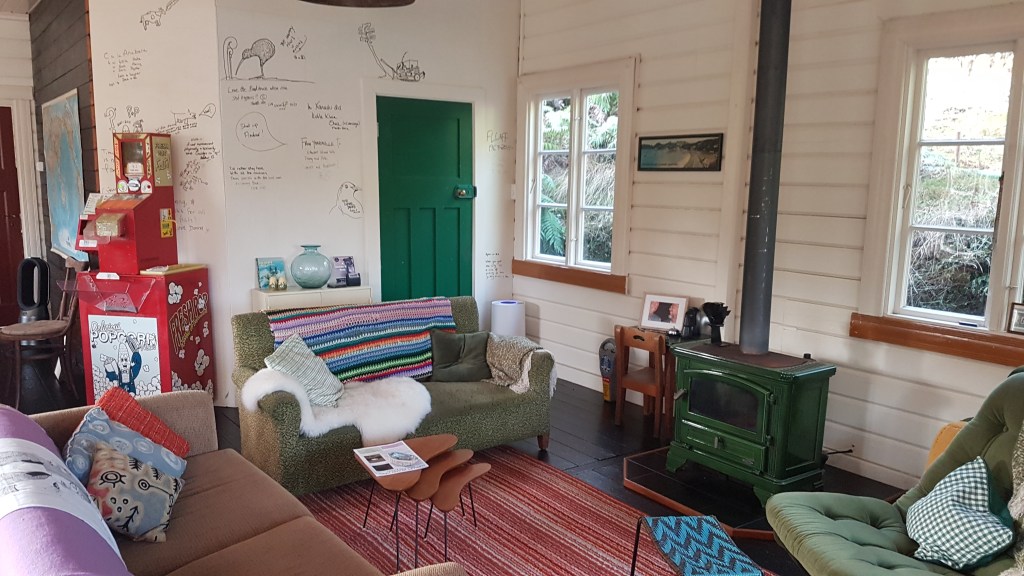
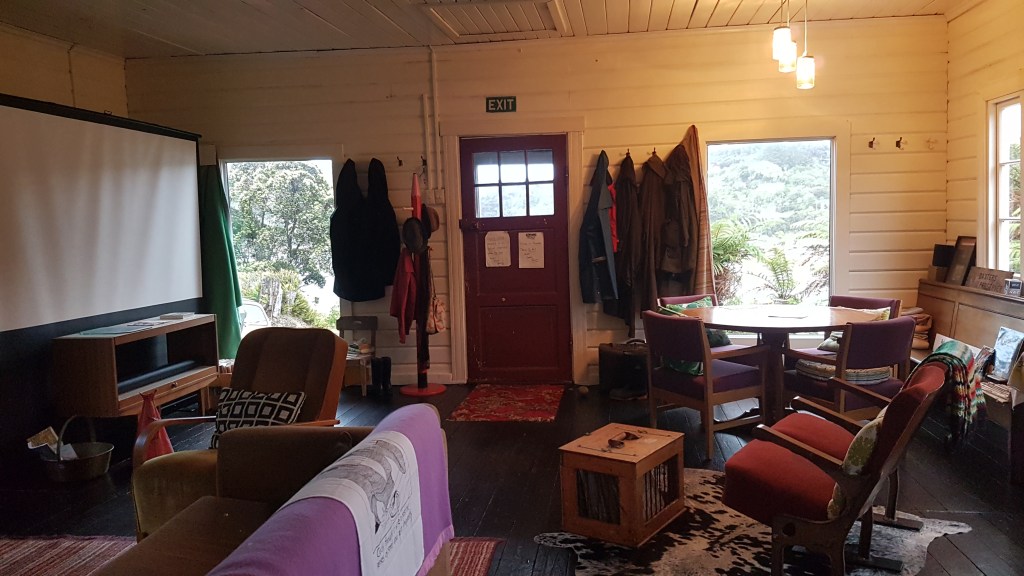
We are greeted by Penny and welcomed into her home. Penny lives in an old Norwegian whaling bunkhouse that was moved over from the original Rakiura whaling settlement. The cottage oozes charm. There is so much history in these floors and walls.
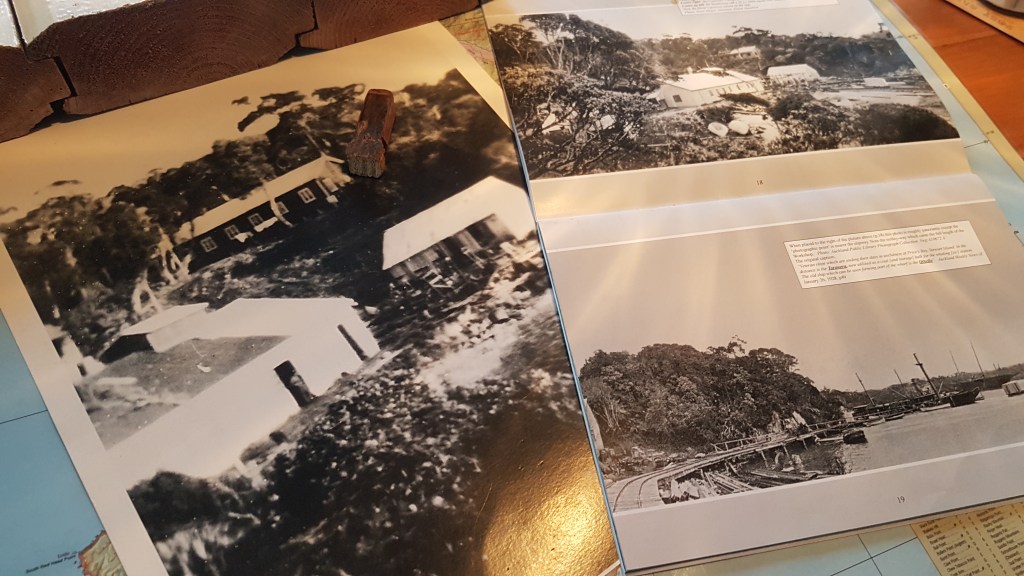
We are offered tea and coffee and take a seat in the kitchen to chat about life on the island. Penny has old maps and photos laid out for us to look at as she shares some of the island’s history and the story of the Bunkhouse.
When the whaling era came to an end, the local church purchased the bunkhouse for 100 pounds and had it moved to its current site to be used as the church hall. The bunkhouse was originally brought over from Norway as a kit set, so it was able to be dismantled, moved across the island and then reassembled. It still retains its beautiful old flooring. Bench seats have been made from rimu that was sourced from the island and old Sunday school chairs have been fixed to the wall to act as an open pantry. Looking around the bunkhouse is candy for the eyes. There are so many stories within these walls.
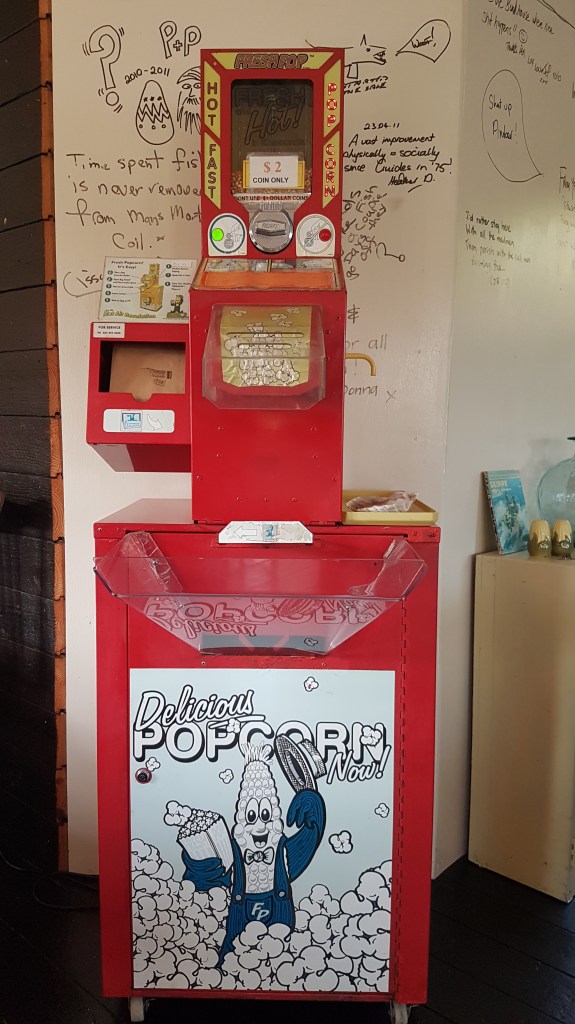
After chatting for half an hour or so, we make some popcorn in the old retro machine and take a seat to watch A Local’s Tail. It’s a short film that shares stories and history of the island, narrated by Lola, Penny’s beloved dog. Lola takes you on a journey from the fishy depths of the ocean to the tops of the trees, giving a glimpse into local life in times gone by.
It’s a fun and interesting way to get an understanding of the people and events that have helped to shape this island into what it is today. After 4 days of adventures, history and stories on the island, this film was a wonderful way to wrap up our stay in this stunning place.
This is my 8th post on Rakiura and we were only there for 4 nights. We managed to pack so much into this trip! It was right for our first visit, I wanted to see and experience as much of the island as I could. If I am lucky enough to visit again, I would slow it right down. Soak in the forest, listen to the birds, read a book in the sun, relax on the beach.
When I initially told friends and family we were heading here, I was asked a few times – is there much to do there? The answer of course is YES!
But I would say, you need to love the outdoors. If resorts, cities and shopping is more your thing, this isn’t the place for you. But if you love to immerse yourself in nature, marvel at the stars, listen to the rhythmic sounds of the ocean and hear dawn’s chorus, then put this place on your bucket list.
You will fall in love with Rakiura, just like I have.
With a ratio of 5:1 sheep to humans, Aotearoa is well known for its abundance of these woolly mammals. A more interesting, but less known fact is that Rakiura has a ratio of 30:1 kiwis to humans. If you are hoping to see one of our quirky national icons, you will have a much higher chance here. Due to the shorter nights and longer day time hours this far south, it’s not uncommon to spot kiwi during the day. I have heard stories of people on the Rakiura trek seeing kiwi wander out onto the path in front of them – in broad daylight! Another reason to put Rakiura on your bucket list.
After the sun has gone down, we meet our guide Dan and head out on our kiwi spotting adventure with Ulva’s Guided Walks. We are heading towards Lee Bay and the Mamaku Reserve. On the drive out, Dan brakes suddenly and we all hop out of the van to witness our first kiwi. It’s on the side of the road, casually having a feed. I can’t believe it. The tour hasn’t even really started yet and we have already seen a kiwi.
A single kiwi can consume as many as 200-250 worms in one evening! They use their sense of smell and vibrations to seek them out, probing the soil with their long beaks. She is very absorbed in her feeding and not at all aware of our presence. We are using red lights which apparently they can’t see. We watch her for a while and then she wanders into the bush. We pile into the van to carry on our journey.
We arrive at Lee bay and spend some time wandering around on the beach and the grassy area where Daniel and I had our picnic earlier that day. Dan knows where their burrows are so has taken us here to see if any of them are out feeding. We see tracks on the beach but no kiwi so we make our way up to the reserve and Dan lets us in through the gate.
Kiwi are one of the many flightless bird species we have in Aotearoa. Long ago, there were no natural predators in our country so they had no need to fly. They evolved, their wings became stumps, their bones became dense (not hollow like other flying birds) and their feathers changed to be more downy than aerodynamic. Fortunately, there aren’t many predators on Rakiura and the Stewart Island Kiwi is really flourishing here.
Kiwi lay huge eggs for their size and the incubation period is 90 days. When they hatch, they are fully formed, feathers and all. They are able to hunt for themselves but remain with their parents for 1 – 3 years depending on the species.
This is a tour that requires patience. There is a lot of standing still, listening to the night. The forest floor is squishy underfoot. It’s raining. We are standing in the open, getting quite wet, but it’s also thrilling. The anticipation of seeing more kiwi outweighs the discomfort of being wet and cold. We walk slowly, every step carefully taken so not to make too much noise.
Then, under our red light, along the fence line, we see two more kiwi. A male and a female. Dan tells us this is uncommon. While they share burrows, they feed alone. We feel very privileged to see two at once. There is a noticeable size difference, the female much larger. This was clearly visible when we saw them side by side.
But then, something unusual happens. The male kiwi lets out an almighty squawk that pierces the silence of the night. I just about leap out of my skin, it gives me such a fright. He has seen us, sent out a warning call and before we know it, he and the female have disappeared into the bush. Now, I know I said earlier that kiwi can’t see red light, and this is true, except for one male in the reserve who does seem to be able to see it. No one is sure why or how he can see it, but he can. It seems that this is the kiwi we have encountered tonight.
We continue standing in the dark waiting to see if they will reappear. Dan has a heat sensor that he uses to help spot kiwi. After some time, I hear a subtle rasping noise and then the female reappears – on her own this time. She isn’t bothered by us. We follow her along the fence line, she moves quickly, bouncing along. Dan explains that this is how they graze. As she moves she can sense if there is any food underneath so she doesn’t need to stop and poke around. She will only put her beak down when she knows something is there. We eventually lose track of her, she was moving very quickly.
Some more interesting information we learn is that on the couple of occasions they have seen the Southern Lights on the tour, they haven’t seen kiwi. Dan said that other local guides have reported this too. There are no studies on this, the kiwi do so well on Rakiura that conservation money goes to other projects. However, their theory is that the high geomagnetic activity keeps them tucked away in their burrows.
We make our way back to the beach but no sign of any more kiwi, we still all feel lucky to have seen 3. We head back to the town in the van but as we approach Horseshoe Bay, Dan makes a stop – he has seen another kiwi. It’s not even bothered by the van headlights. We watch it for a while before calling it a night.
We arrive home rather wet and ready for bed. We have been out on tours the last 3 nights. I am grateful we are here in April when the sun goes down a bit earlier. In the peak of summer, these tours don’t even depart until around 10 – 10:30pm.
Rakiura is a fantastic location for kiwi spotting. You could head out on your own to look for them, but being on a tour, you get the expert knowledge of a guide who can teach you so much about these curious birds. I highly recommend Ulva’s Guided Walks Day and Night Special. It covers 2 tours – kiwi spotting and a guided walk on Ulva Island, which I will be sharing about next week.
Sorry, no photos for this one. I am no good at taking night photos and didn’t want to risk a flash going off. Sometimes, it’s just best to take memory photos to tuck away in your mind. This is one of those occasions.
So far, we have been incredibly lucky with the weather and it’s been amazing exploring Rakiura in the sun. However, today we get to experience what it’s like in the rain.
This morning we are heading out to do a self guided, half day walk from Port William. But before we venture out on a walk, we need to fuel up with some breakfast, so we head back to The Snuggery, it’s a shame they aren’t doing dinners at the moment, we would have loved to have come back here for that. Today, breakfast is a bagel with cream cheese and jam. Delicious. I love that combo! It’s a bit of a rushed breakfast as we need to get down to the wharf to catch the water taxi.
On our way to the wharf, we stop at the supermarket to pick up our pre-ordered lunches, then meet up with Dan, who is our skipper this morning. We get chatting and find out that he is also our guide for the kiwi tour this evening. We are joined by a group of 6 and then get on the water taxi. The water at the wharf is so clear. Although deep, you can easily see the bottom.
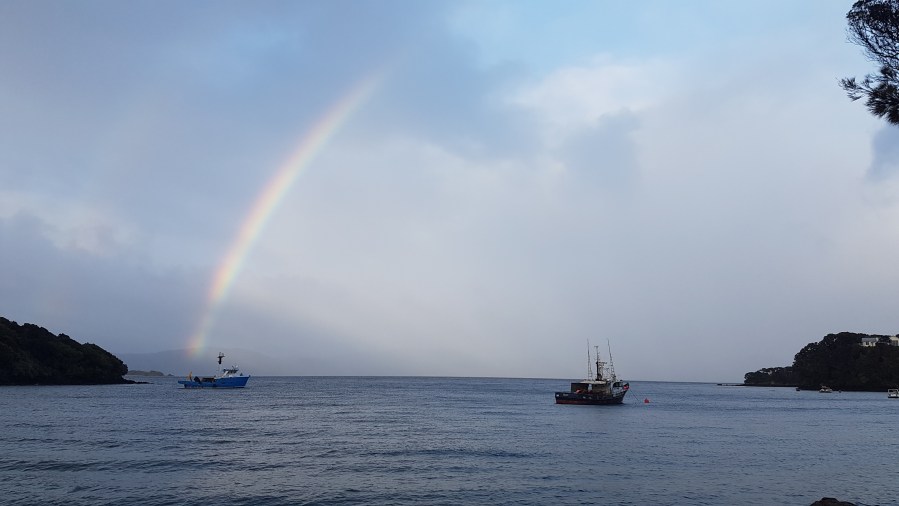
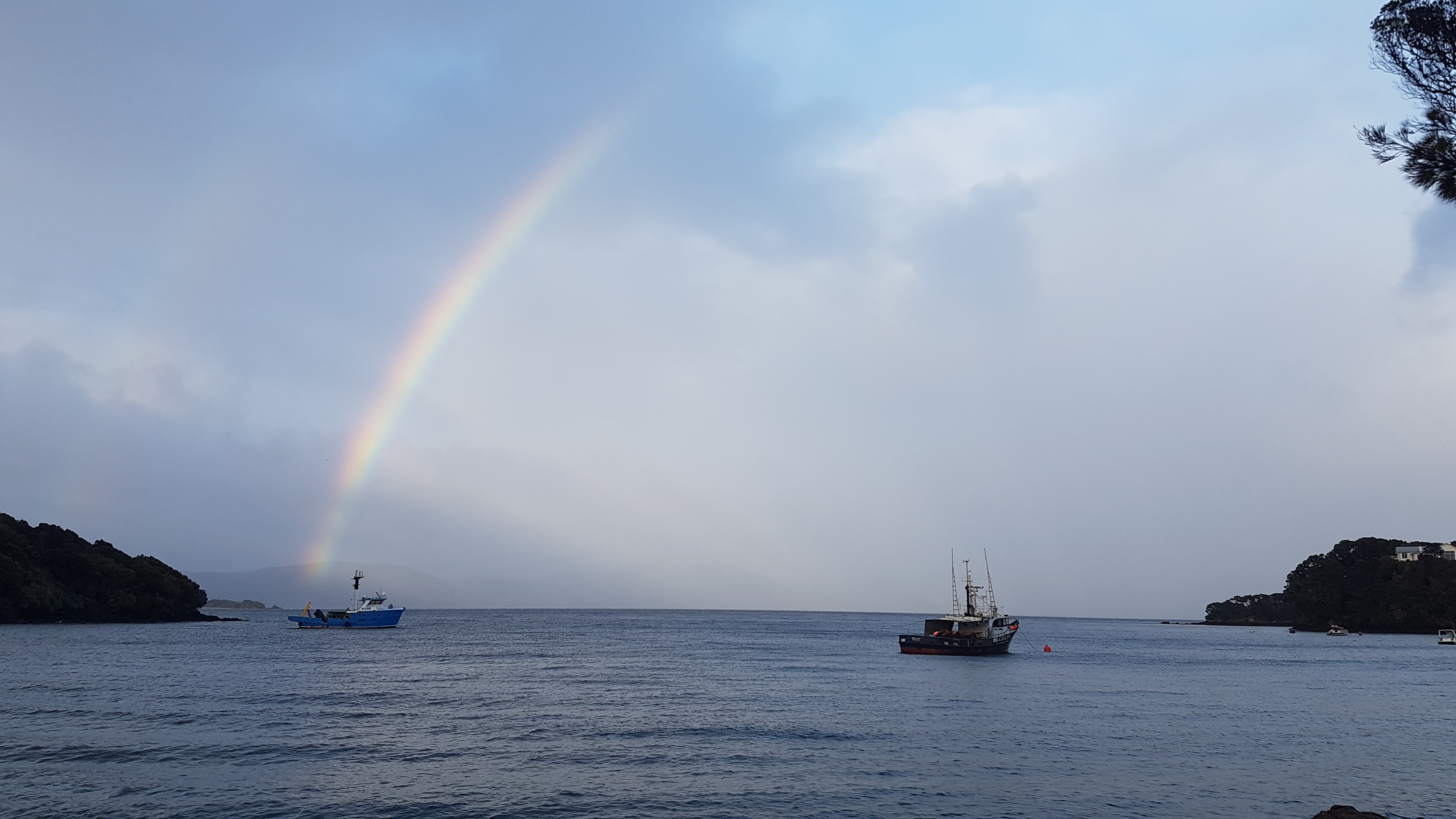
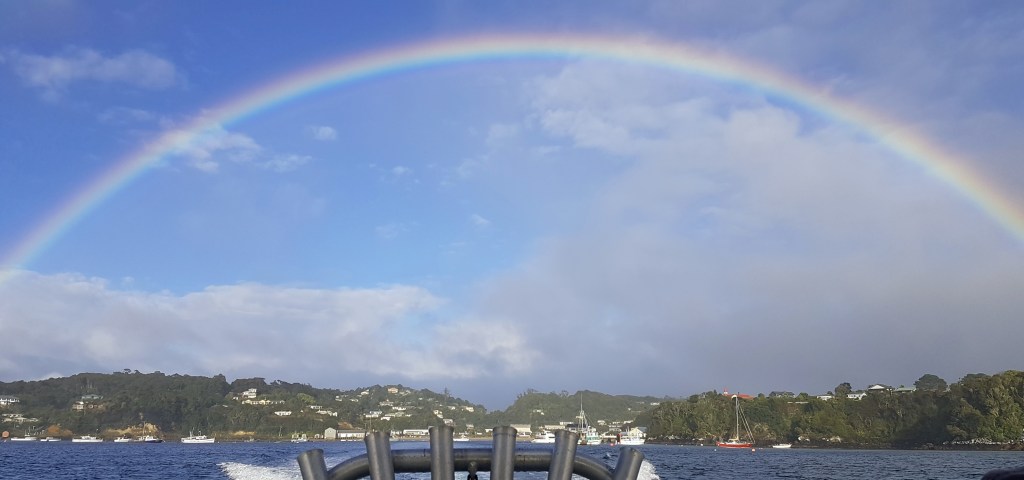
Dan tells us we are lucky that it’s a pretty calm day so our trip will be nice and cruisy. As we leave the wharf, we are treated to brilliant views of a huge rainbow stretching right across the bay. We are in a prime position and can see both ends. Gosh, this is a magical place.
For a calm, still day, our water taxi is bumping up and down a lot. There are a number of times we rise up and then slap back down into the water. I am fortunate not to have much of an issue with sea sickness, but my tummy is reminding me of the bagel sitting in it. I’m not too sure I want to know what a ride out here would be like on a rough day. We follow the coastline around and Dan makes a couple of stops on the way, the first being Lee Bay, to show us where the walk ends and instructions on how to call for a taxi (You have to stand in a certain spot to get reception). The second stop is at Maori Bay which he informs us is approximately half way and with today’s tides, if we arrive there after 11am we should take the high route. Useful information!
We arrive at our first destination, Port William, and get off the boat. We will spend the next 3- 4 hours walking back towards Lee Bay.
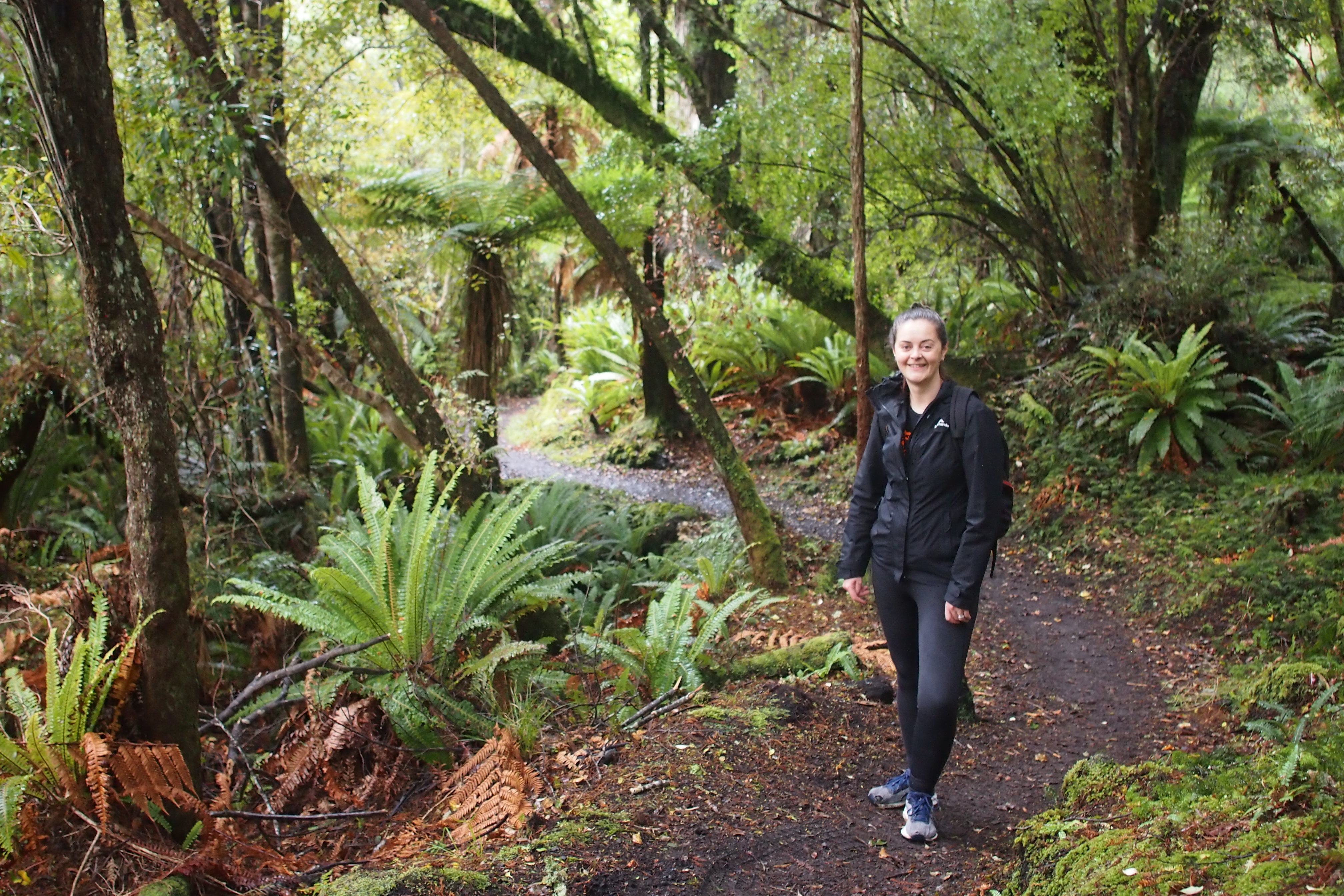
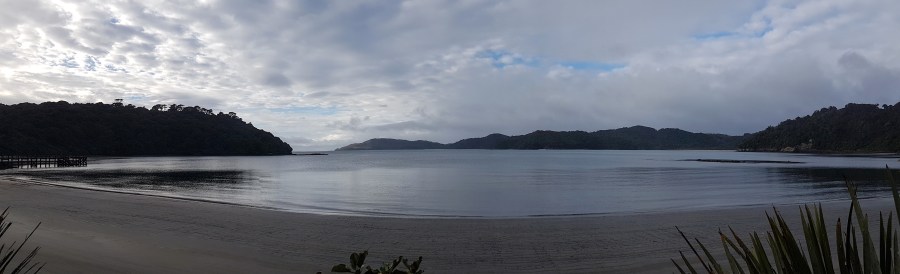
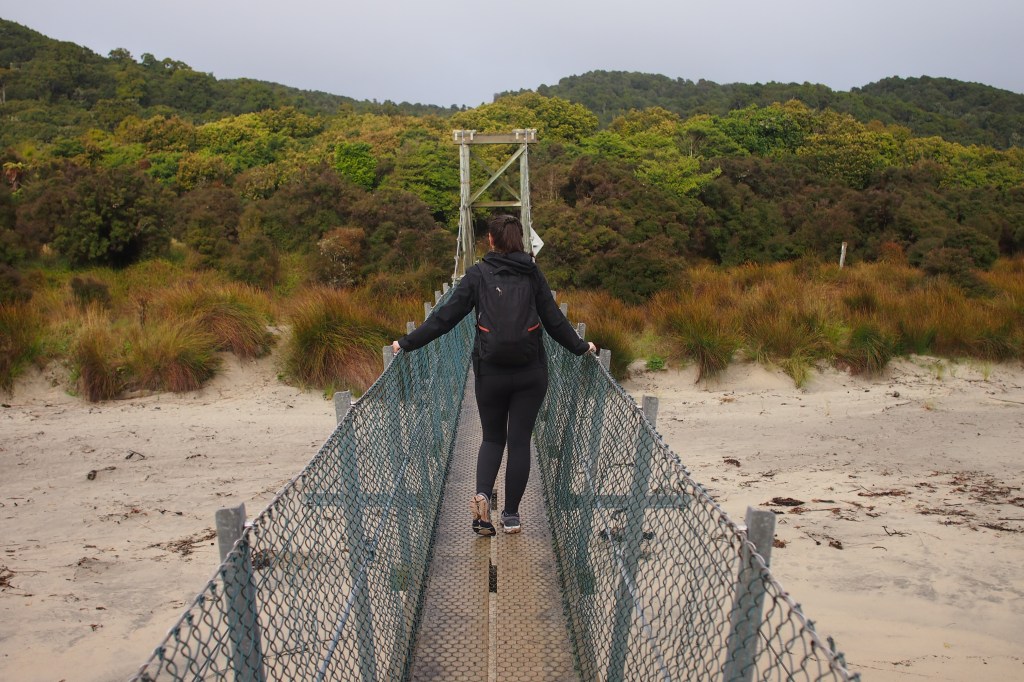
Port William is situated on another picture perfect bay surrounded by bush, which we venture straight into. And like a lot of New Zealand bush, it is lush and green. The walk we are doing makes up part of the 3 day Rakiura great walk. Although I really enjoy walking, neither Daniel or I are really trampers and I love that we can experience some of this Great Walk without having to carry packs and sleep in tents.
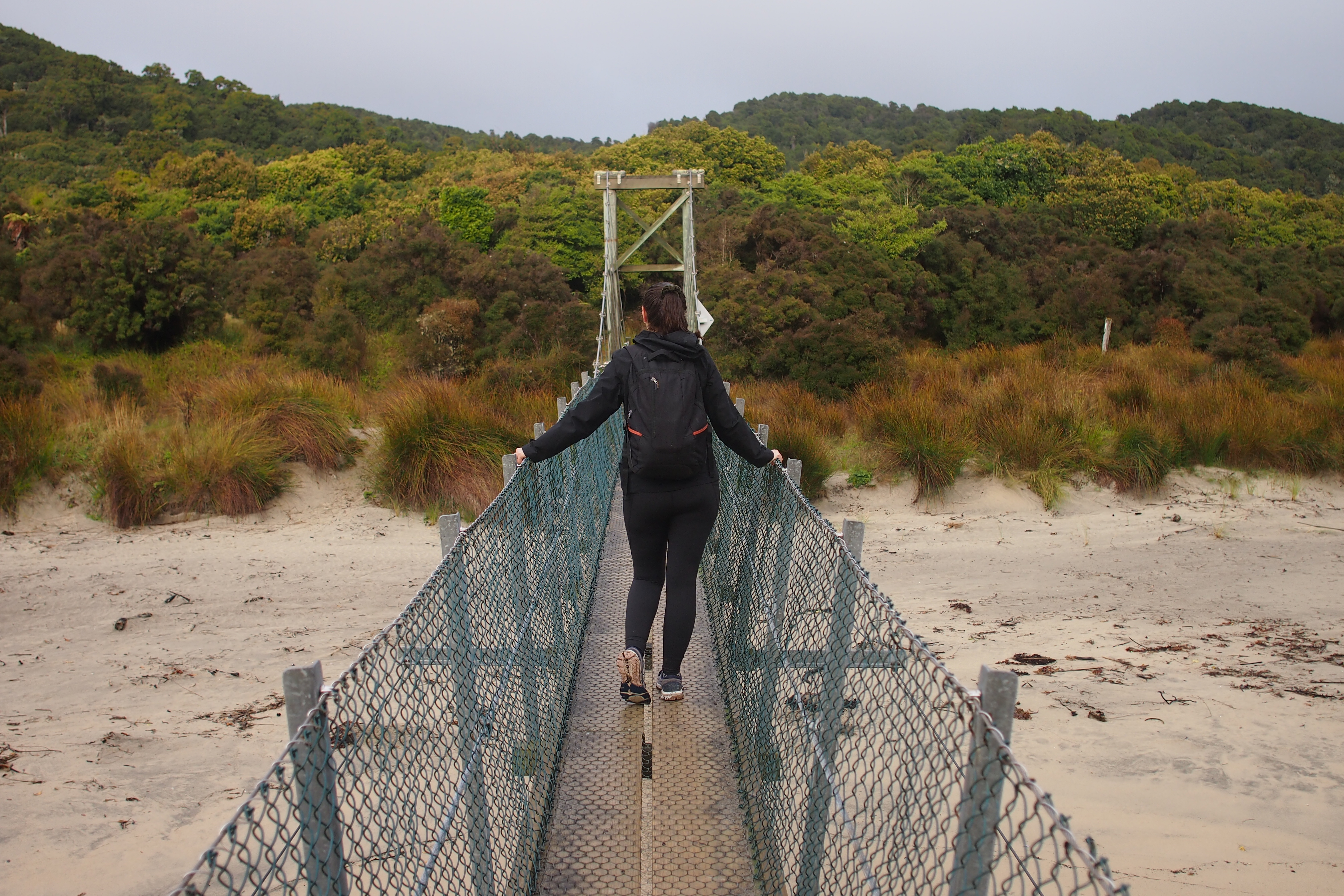
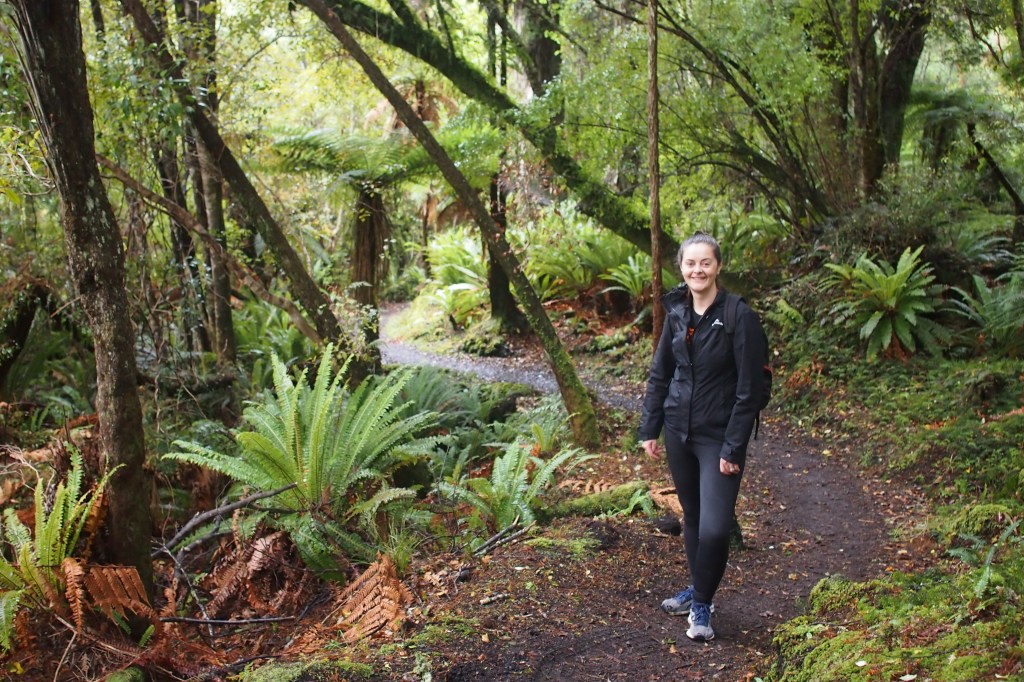
This Great Walk is very popular and can be walked all year round. Because of its popularity, the track is really well maintained and signposted. We trek up for a while, getting quite high and then drop back down into the valley. The forest is beautiful. I love the forest when it rains, it becomes even more alive. The little dewy water droplets and the smell makes it magical. In some ways I prefer it to a walk on a hot sunny day.
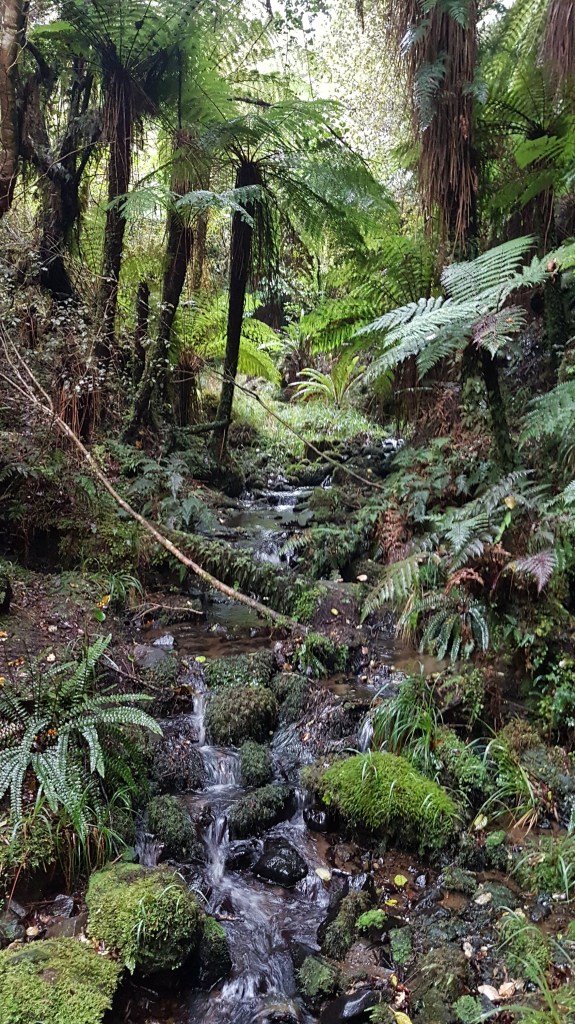
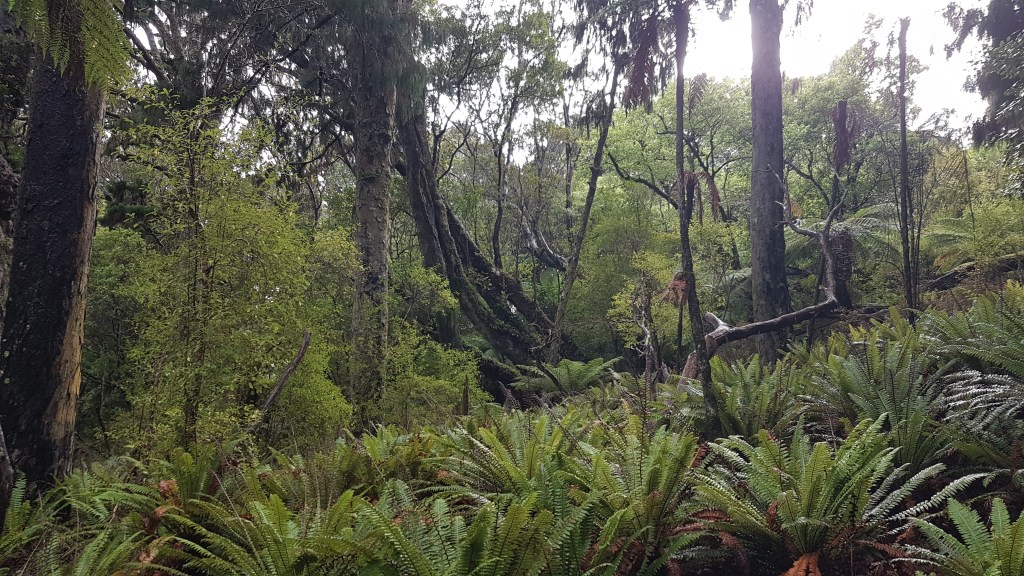
I love looking at all the layers in the forest too, the way all the different plant species support one another and the birds. The forest canopy is doing a great job of protecting us from the rain, but every now and again a gentle breeze blows through, rustling the leaves and dumping heavy droplets of water on us.
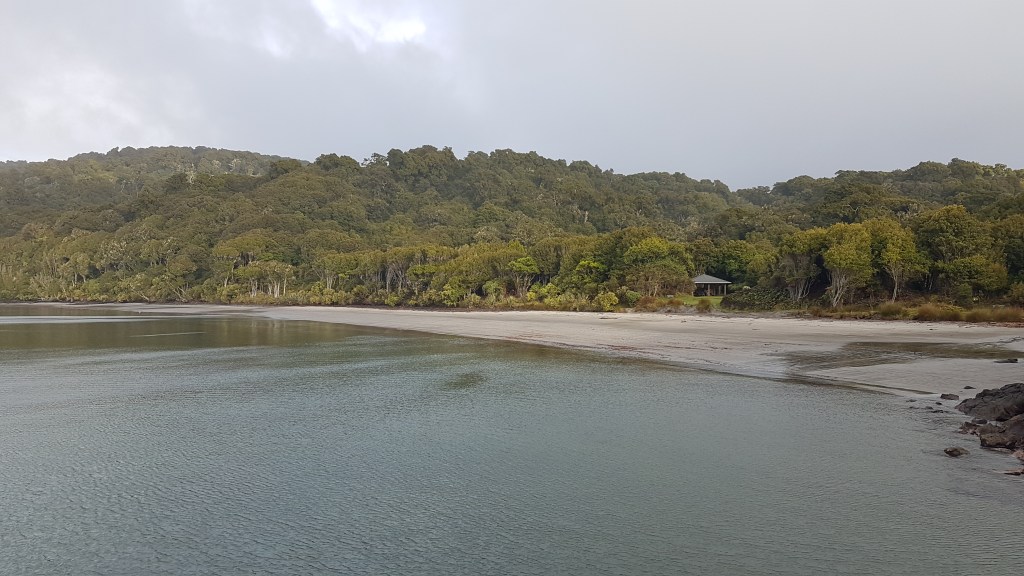
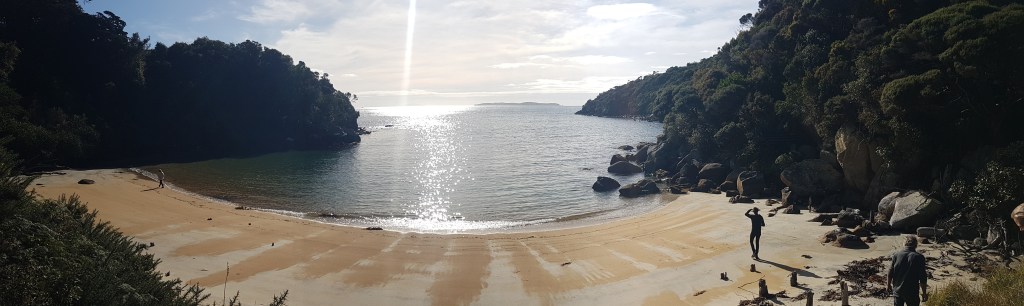
After a couple of hours walking, we reach Māori Beach. Another gorgeous bay. I really had no idea how gorgeous the Rakiura coastline was. On the beach I notice some tracks that I think might be kiwi, so I take a photo to show our guide tonight.
It’s still raining so we take shelter at the DOC kitchen (Department of Conservation) and decide to stop for a snack. It’s amazing how quickly you can cool down. I was very warm while we were walking but now we have stopped, it’s not long before I am feeling the cold and reaching for my sweater.
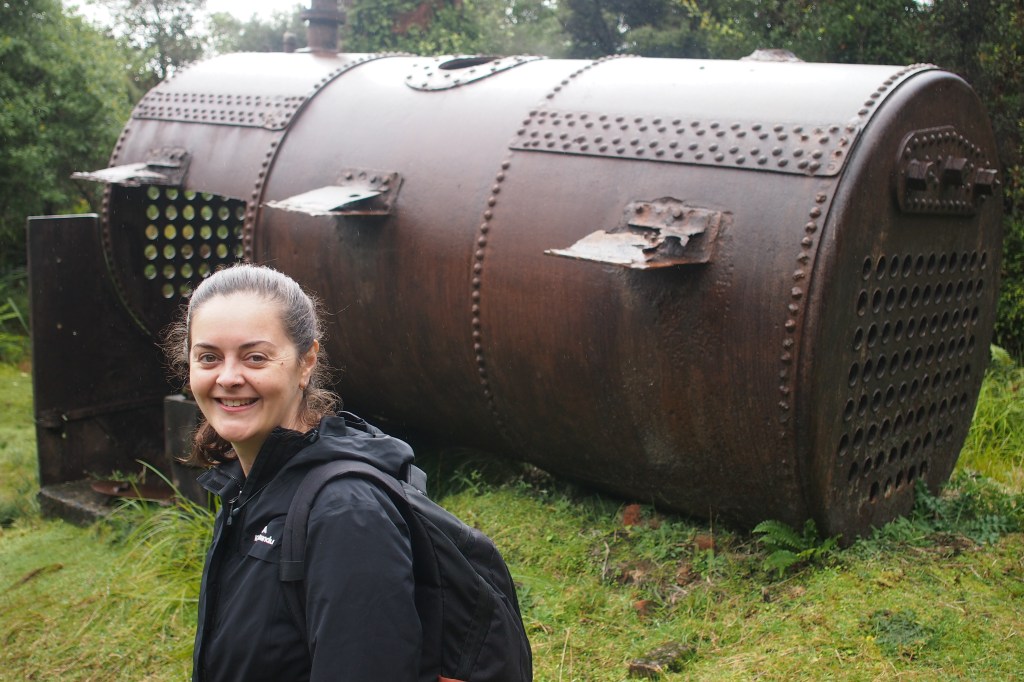
After having a bit of a rest, we carry on with our walk, taking a short detour up to the old sawmill site. Back in the day, there was quite a large Scottish logging settlement here. Now all that remains are the relics of their sawmill equipment. This would have been a beautiful place to live but very challenging, remote and cold in the winters.
Back in the forest, I am glad for the shelter it provides us, but am also loving the cool, misty rain that manages to get through and land on my face. When I am not distracted by my heavy breathing, I am listening to the forest. The soft pitter patter of rain on the canopy, rushing water from the nearby stream, the rhythmic rolling ocean, the tui’s melodic song and the little peeps from a fantail. Even the trees are speaking, creaking as they sway in the wind. I love it when I slow down and take in what’s around me. There is so much to notice and so much that’s missed when we rush through life.
As Daniel said, it looks like New Zealand forest. But there is also so much variety. Some areas are dotted with tall, lanky trees that sway in the wind. Other parts are thick and dense. Large trees are covered in smaller plants and some low lying areas covered in ferns and moss. It’s pretty special.
When we emerge from the bush at Lee Bay, the rain has stopped. We decide to sit at the picnic table and have some lunch. We are joined shortly after by more rain and a little bird. I am not sure what it is, she is black with a white chest, shy but also curious. I am sure our guide for Ulva Island tomorrow will be able to tell us what sort of bird it is.
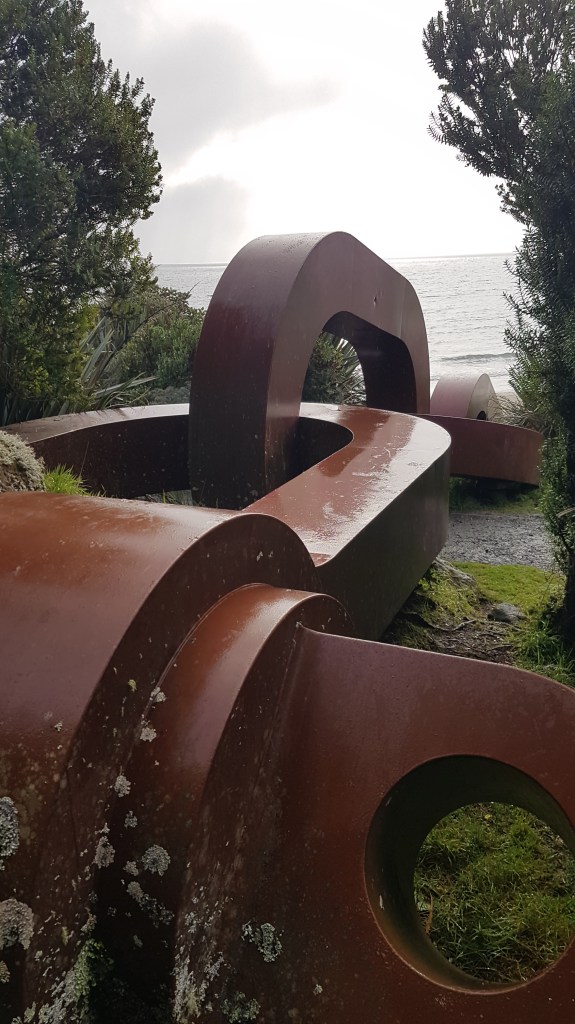
As we head to the car park, we see ‘The Anchor’ sculpture. It is inspired by the story of Māui who fished up Te Waipounamu (The South Island) and anchored it with Rakiura (Stewart Island). There is a matching sculpture in Bluff (the bottom of Te Waipounamu) which we saw on a previous trip. This sculpture is a lovely end to our half day walk exploring Rakiura National Park.
I wake up to the sound of birds outside our room. No noise from trains or cars, just nature. I wrap myself in a blanket and sit outside on the porch, watching the day wake up. I love how quiet and peaceful it is.
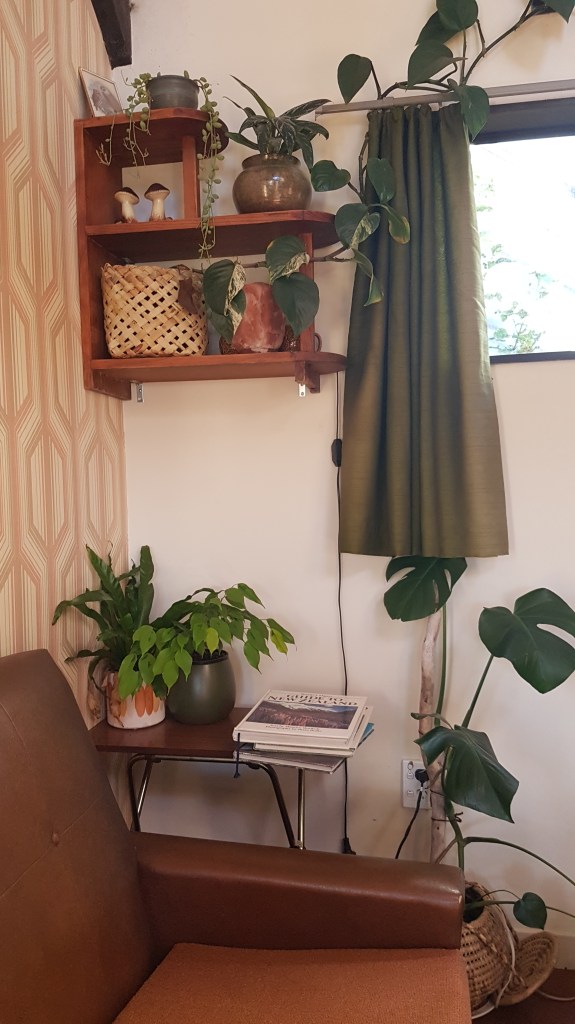
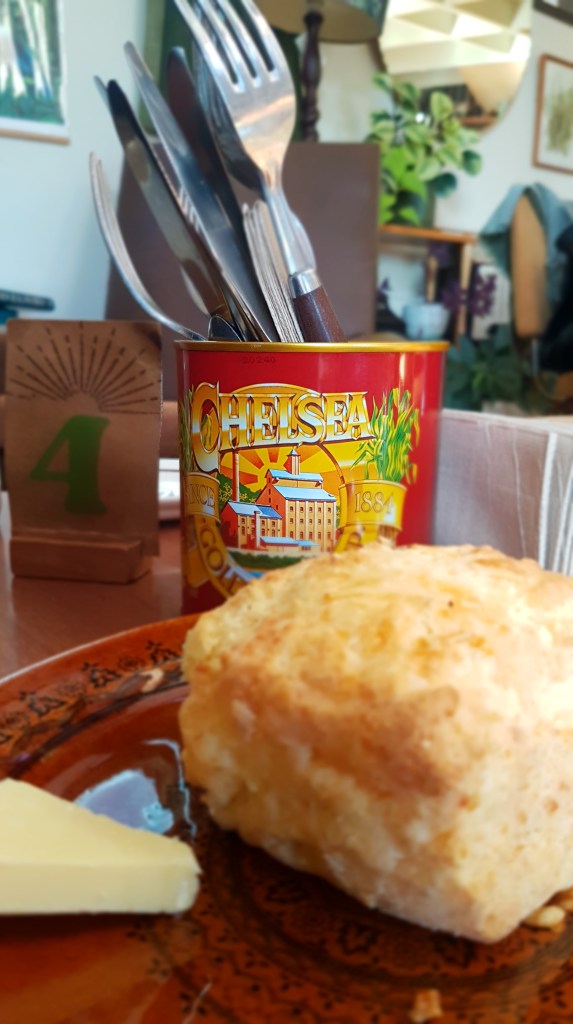
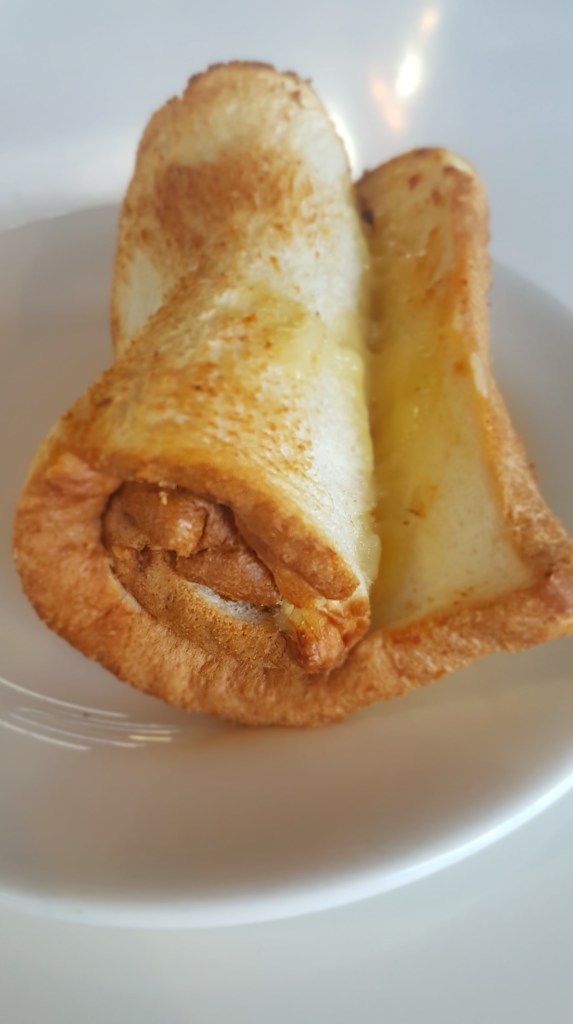
This is our first day here, so we head down the road to the town center to check out the options for breakfast. We find ourselves in The Snuggery. A retro cafe with funky 70’s vibes, cheese graters for light shades and lots of indoor plants. It’s so cosy and inviting. I think this place will be a favourite of mine. The food is good too. Daniel has cheese rolls and I have a cheese scone and lemon, honey & ginger drink. We stay here for a while, chatting and eating. It’s a lovely slow start to the morning.
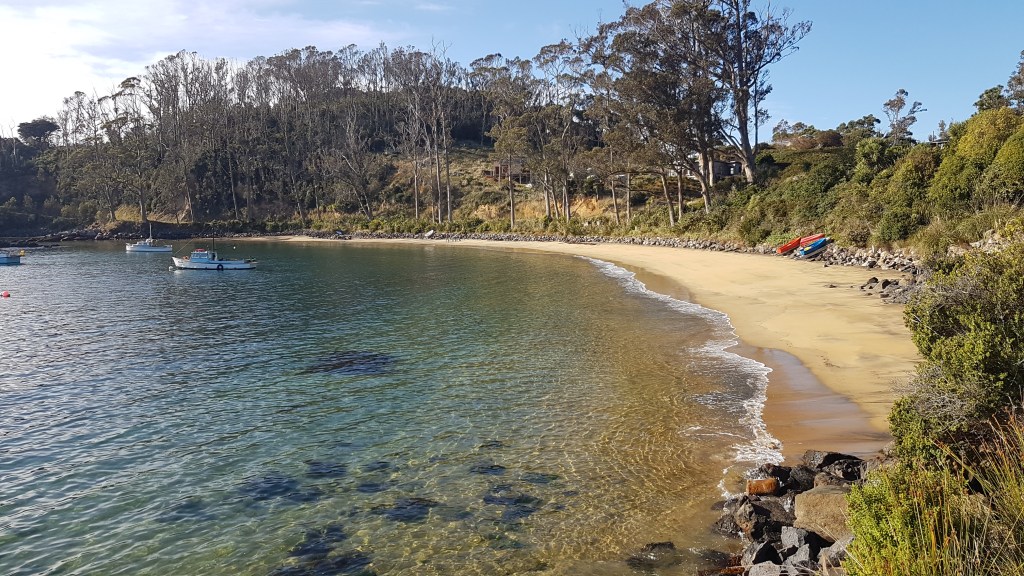
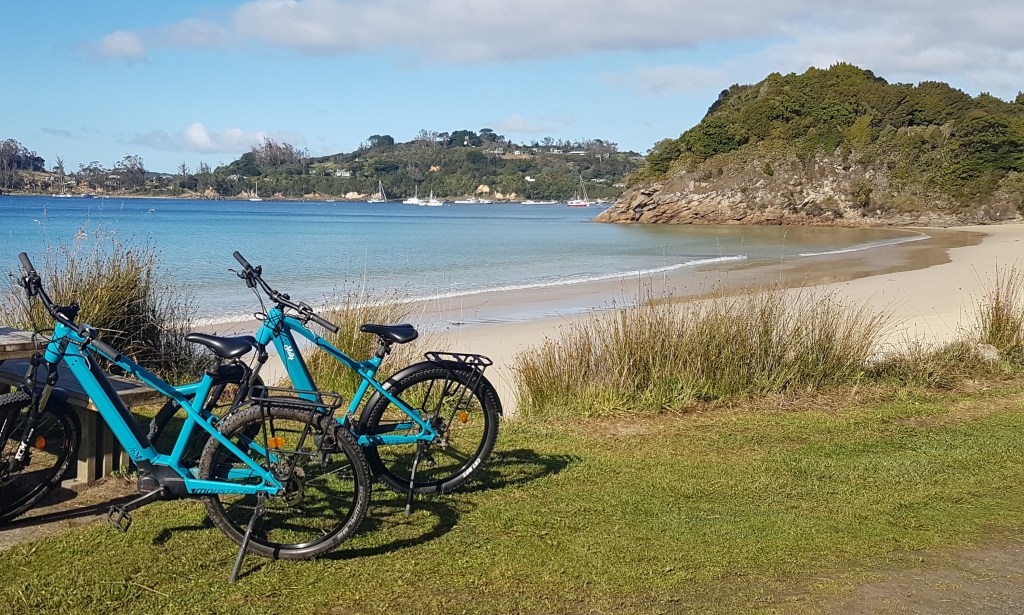
With our tummy’s full from breakfast we make our way a little further down the street to Stewart Island Electric Bikes. We are planning to explore the island by E-bike this morning and have perfect weather. We have them for 2 hours and have a couple of places we want to visit. We begin by heading East towards Ackers Stone Cottage. We pedal alongside gorgeous bays. Before arriving on Rakiura, I had pictured wild, rugged coastlines, and some of it is, but I had never envisioned beautifully pristine, golden sandy bays. But there are, we cycle past many, each one as beautiful as the next.
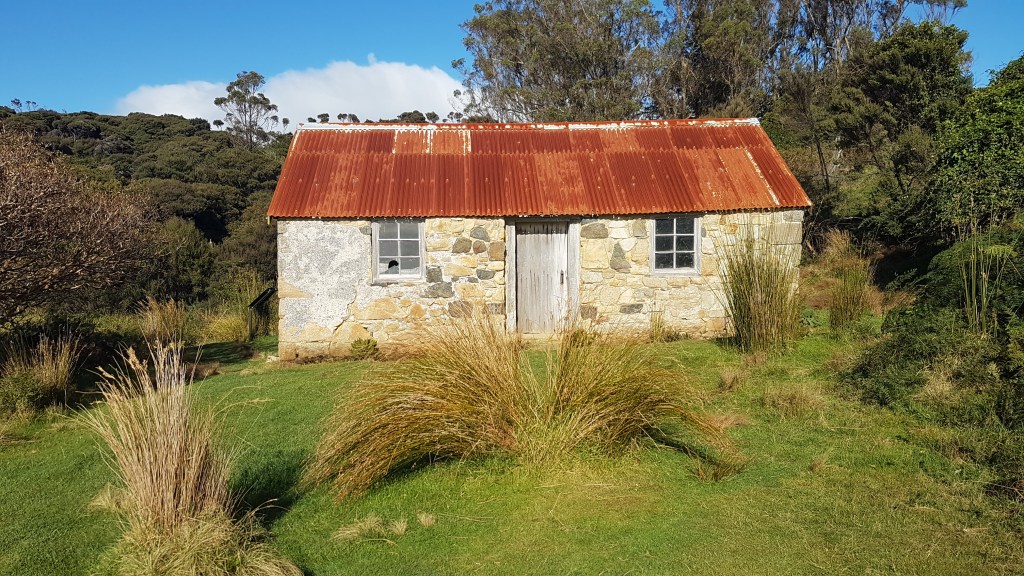
When we get to the end of the road, we leave the bikes and do a short walk through a forest. We come to a clearing and there we see Ackers Cottage. Lewis Ackers built the cottage himself in the first half of the 19th century and lived there with his wife and 9 children! I can’t even imagine how they could all fit!
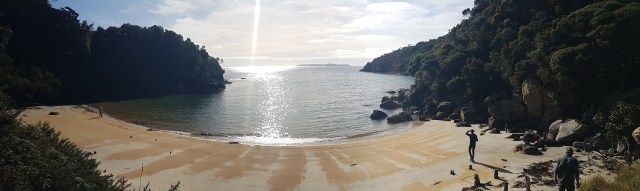
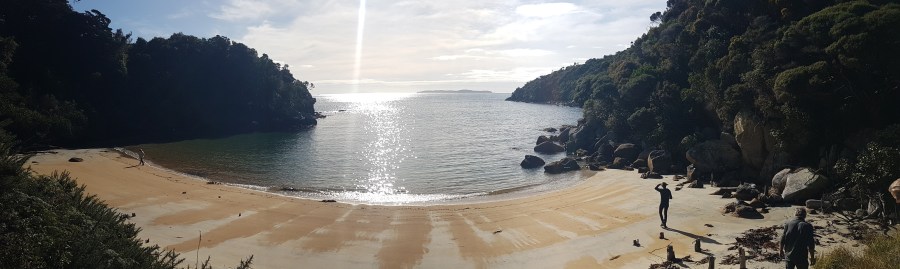
Perched up on a small hill, it has spectacular views overlooking a picture perfect, golden sandy bay. It’s so idyllic. What a place to live! The water is clear and so inviting. Why didn’t I pack my swimsuit?
After romanticising briefly about what it would be like to live here, we head back to the bikes and cycle in the other direction towards Horseshoe Bay. Even on an e-bike, I am quite slow. Especially when there are hills. I ride cautiously and take my time. Daniel is much more confident and tends to leave me behind, pausing every now and again so that I can catch up. This results in a communication breakdown and I end up cycling up a very, very, steep hill to Observation Rock, with no sign of Daniel in sight. I am super puffed from that cycle so I take a few moments to enjoy the fantastic views. It’s pretty amazing. It was a hard detour, but a good one. Apparently this is a good place for watching sunsets and Aurora hunting, but I don’t fancy walking up here in the dark, or anytime really, it’s way too steep!
Fortunately there is cell phone reception up there so Daniel and I are able to locate each other and I carry on my journey towards him. He is way over the other side of the island by Butterfields Beach. It takes me a while to get there and I arrive sweating, huffing and puffing. Rakiura sure does have a lot of hills! But it’s another spectacular beach and it makes it all worth it. I take a little walk along the beach, again wishing that I had packed my swimsuit.
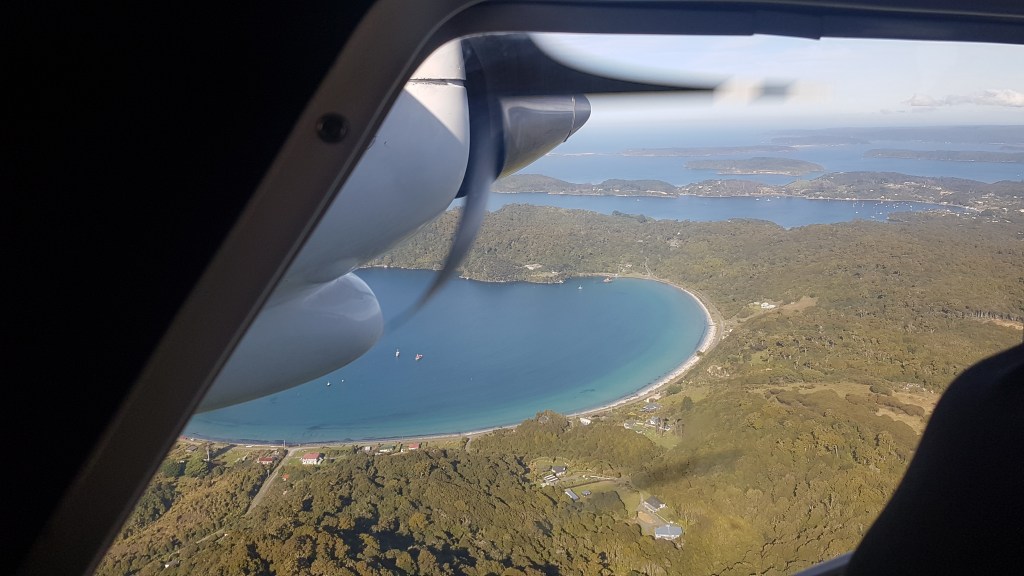
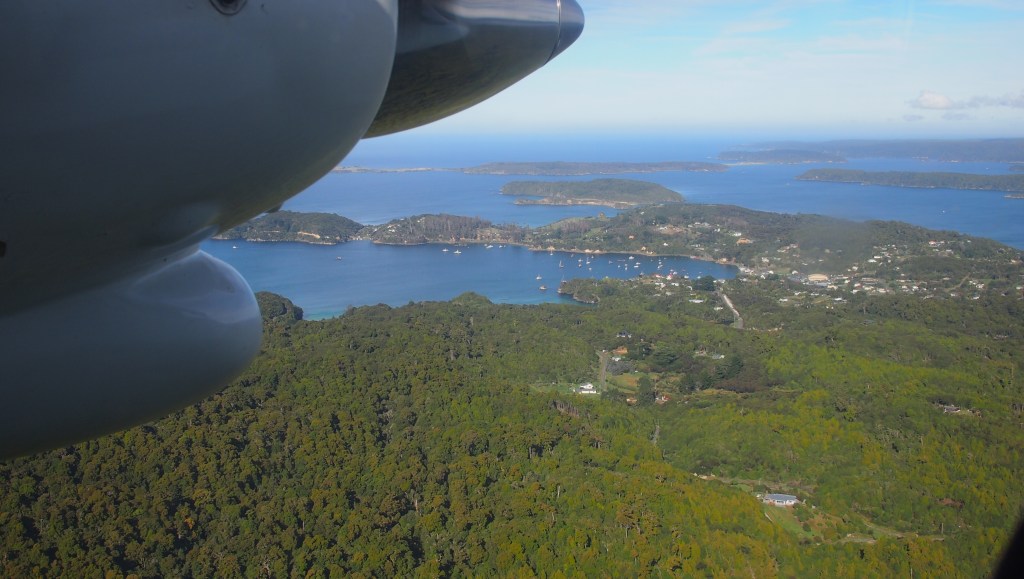
After cycling up and over yet another hill, we arrive at Horseshoe Bay. I saw this place from the air yesterday and can understand why it has this name.
The road ends and we take the e-bikes along a walking track. We were told we could take them up to a certain point which is marked and would then have to walk the rest of the distance to the look out. It’s not difficult terrain, but I am not confident and find it rather challenging to navigate over all the rocks and tree roots. I’m nervous, but I do it. The very last part is incredibly steep and I don’t hit it with enough momentum. I am using all my strength to cycle but I’m barley moving. I start shouting oh no, oh no, oh no, as I wobble and nearly fall over. Somehow I manage to stay upright and make it to the top.
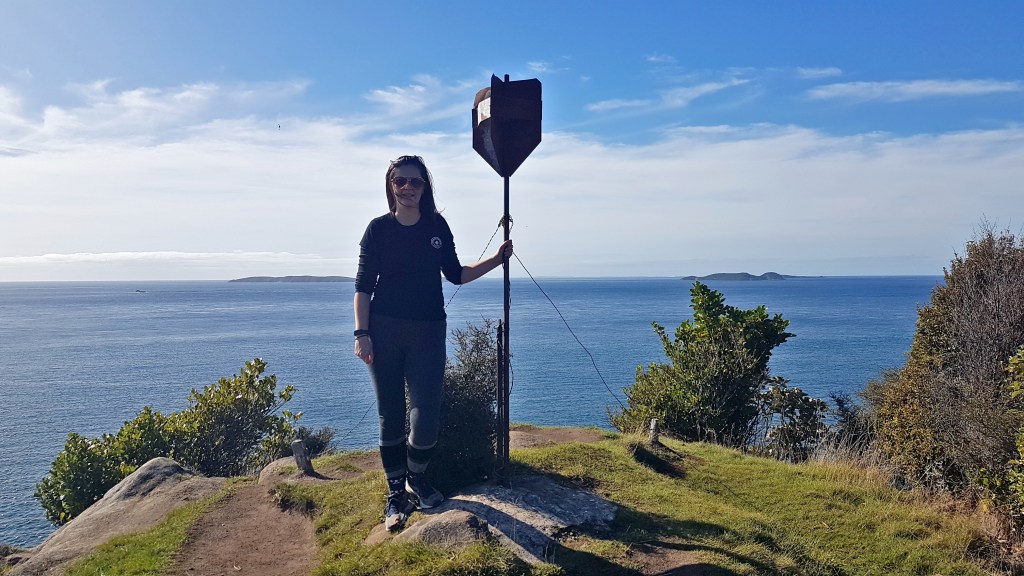
After a short walk we make it to Horseshoe Point Lookout and are rewarded with more great views, this time out over Foveaux Strait.
We can’t stay long as we need to get back to return the bikes so I soak up the views and walk back to the bike where the very steep hill is waiting for me to ride down. I consider just walking the bike down but decide to face my fear and cycle. I manage to do it without falling off. Proud moment!
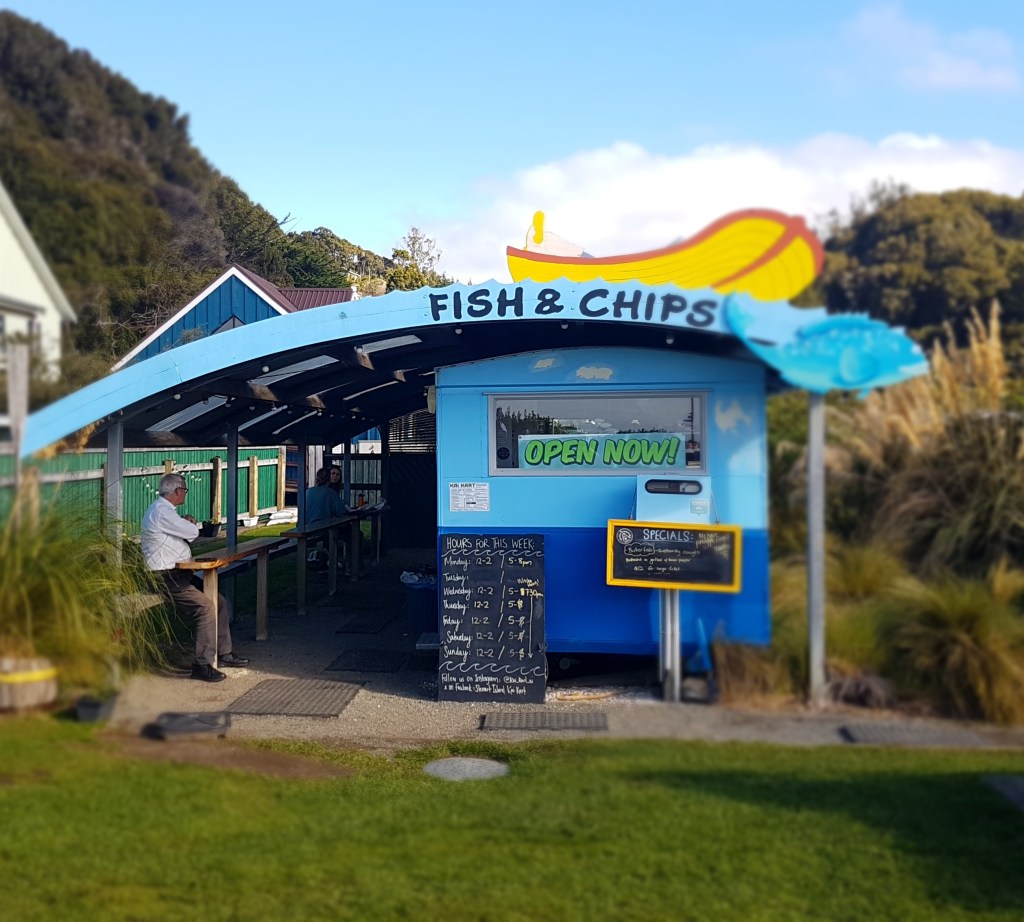
We return the bikes, pretty exhausted, and decide to find somewhere for lunch. I have a delicious toasted sandwich and juice. Just what I need to restore my energy. It was a really active morning and I am feeling pretty worn out. Daniel has poached eggs for lunch but then decides he needs a second lunch so we head to the Kai Kart so he can have some fish & chips. We sit in the lovely sunshine and rest for a while.
Have you ever stared into a brilliant dark night sky, surrounded by an abundance of twinkling stars? Or been mesmerized by the magical Milky Way? Our Southern night sky has guided our ancestors for many years, with Māhutonga, the Southern Cross being used as a navigational aid. I have read that the night sky is vanishing, with the light pollution in urban cities making it very difficult to see the milky way or the many faint stars that adorn our night sky.
Rakiura means ‘glowing skies’ and get’s its name from the Aurora Australis which can sometimes be seen from here. I am hoping I might get lucky and see it on this trip. But tonight, we are booked in with Twinkle Dark Sky Tours to do some star gazing. It’s on the top of my list for activities while we are here, so I have booked in for our first night so we have some back up evenings if it’s cloudy.
Al from Twinkle Dark Sky Tours collects us from the backpackers, along with 1 other guest. While we are waiting, I can feel spots of rain. Not a good sign. I can see some stars and am hoping the clouds will clear. We head up to Ringa Ringa Heights and on the way, Al tells us a little bit about the area. Rakiura was given the title ‘Dark Sky Sanctuary’ in 2019 and is the most southern in the world. I was interested to learn that Tekapo, which is quite well known for its night sky, is actually a reserve not a sanctuary. The difference being a reserve is a very remote location with little threat of light pollution. Rakiura is remote and the town, Oban, is small, which keeps the sky dark. But light levels still have to continually be monitored and changes made to keep the levels down.
The night sky has always been a passion for Al and in 2021, he started the star gazing tours along with his wife Jen. (And I am so glad that he did!)
The car stops, the lights go out and it is so dark. We get out of the car and I look up. That first glimpse of the milky way takes your breath away. As my eyes adjust, more and more stars appear. We head across the golf course, Al has a red light and we use that to make our way into the field where a large telescope is set up and alongside it, moon chairs with blankets, hot water bottles and binoculars. I settle into my chair, warm and cosy and begin to gaze at the sky.
There are clouds around, but enough of an opening that I can see Māhutonga and some of the milky way. With his Jedi lightsaber style laser beam, Al begins to enthusiastically point out stars and constellations in the sky. He is so passionate and knowledgeable. I try to take in as much as I can, but ultimately I just sit and stare in awe. Al is from the UK and grew up seeing the Northern hemisphere sky so it’s interesting to hear about some of the differences.
After about 30 minutes it begins to cloud over so Al hands out some hot chocolate and we chat while waiting to see if it clears again. We talk about the Aurora, there are a lot of things that have to align to be able to see it. Firstly, the Kp reading, or geomagnetic activity needs to be above a certain level. It needs to be night, winter is best, along with a new moon and no clouds. And while we didn’t get to see it tonight, even just witnessing that brilliant night sky is wonderful.
Unfortunately the cloud doesn’t clear so Al drops us home and offers to take us back out again the next night. We are so keen! His tour is really fascinating! And so the next night we are collected again by Al, this time I am a little better prepared with extra layers, it gets cold out there! We settle into our chairs again, wrapped up warm in blankets and that blissful hot water bottle. The sky is much clearer tonight, barely any clouds and we can see all of the milky way this time.
Using my binoculars I start exploring the sky and I spot what I can only describe as a fuzzy ball of dots. Al tells me,’Well done, you have found what’s called a globular cluster and that this one is called Omega Centauri.’ A globular cluster is a group of thousands to millions of stars bound tightly into a cluster. Al aligns the telescope and we get to see it through that. It looks like a twinkling ball of grainy light. So cool!
During the evening we hear ruru (owl) and kiwi calling and at one point, 2 male kiwi having a fight in the nearby bush – now that was an impressive sound to hear.
We also look at dark patches of the sky where you would think there was nothing, but through the telescope, so many stars appear. There is so much up there, we see shooting stars, the Beehive Cluster, the Southern Pleiades, the Carina Nebula, the Large and Small Magellanic Clouds, Mars, constellations of the zodiac and so much more. Probably the most mind boggling thing we saw was Centaurus A – a galaxy that is 12 million light years away. 12 million light years!! Incredible!
If you are in Rakiura, this tour is a must. The things you will see in the sky will blow your mind! New Zealand is home to 2 Dark Sky Reserves, Aoraki/Mt Cook and Rakiura/Stewart Island. I am so grateful for places like this and the people who work so hard to protect it. If you have never seen the milky way, or a true dark sky, it needs to go on your bucket list. It is the most captivating sight.
I’m sorry that I don’t really have any good photo’s to share. I haven’t mastered photographing the night sky. You will just have to see it for yourself!
Here’s a tip – if you ever travel with me, don’t trust me with directions, ever! Even if I insist that I know where I am going or have a map, do not believe me. Lets just say, our trip to drop the car off before the airport was a little bit of a stressful start to the holiday. For some reason, I was on navigation. We still manage to arrive at the airport in plenty of time and I pass time, just sitting and watching, enjoying seeing the day wake up. It’s been a busy few weeks and Daniel and I have both been unwell. I find that I get tired easily at the moment. It’s a pretty active holiday that I’ve planned, I hope we can manage it.
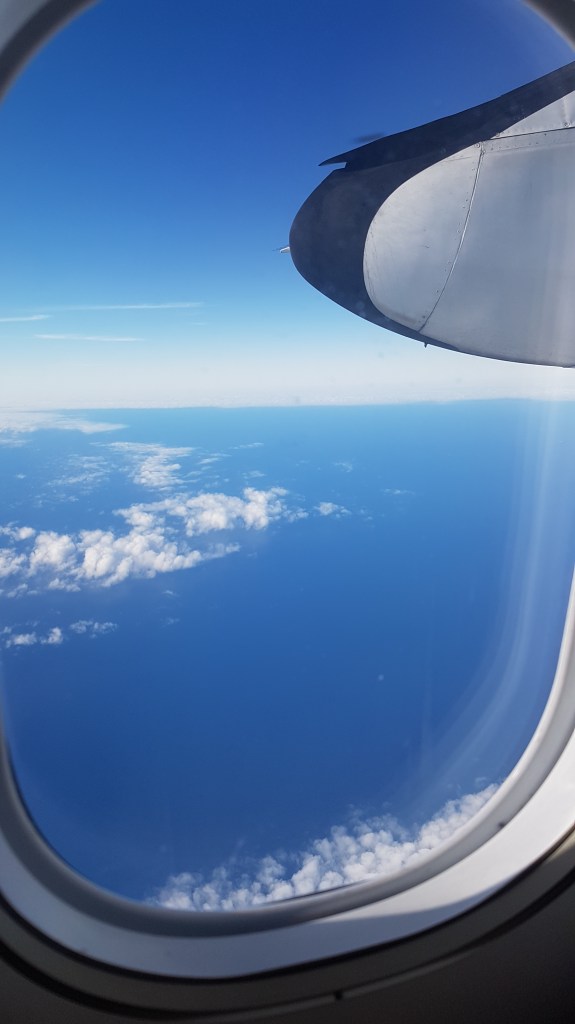
I am so fortunate to have seen so much of our beautiful country, but there are still many pockets of land to be explored. Today, I am so excited to see one of them. We are heading South, as far South as we have ever been and need to take a couple of flights to get there. Our first stop is Invercargill. We are on a smallish plane, the type you board by walking across the tarmac and up some steps. I can see our pilots in the cockpit and our cabin crew greeting the passengers as they enter – we have an all female crew, including the pilots. That’s pretty awesome!
We leave grey, misty Wellington behind us and step out into a beautiful, sunny Invercargill day. It even feels a little bit warm. We have about 3 hours to pass before our next flight so decide to grab some early lunch (or is it a late breakfast?) and settle in. The cafe has cheese rolls on the menu – I think that’s a must when you’re in Southland!
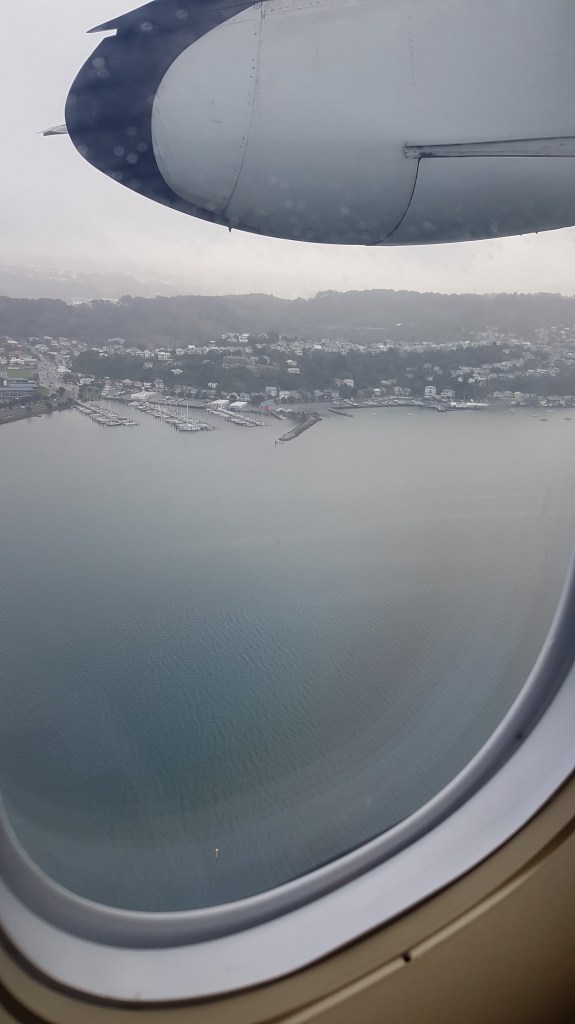
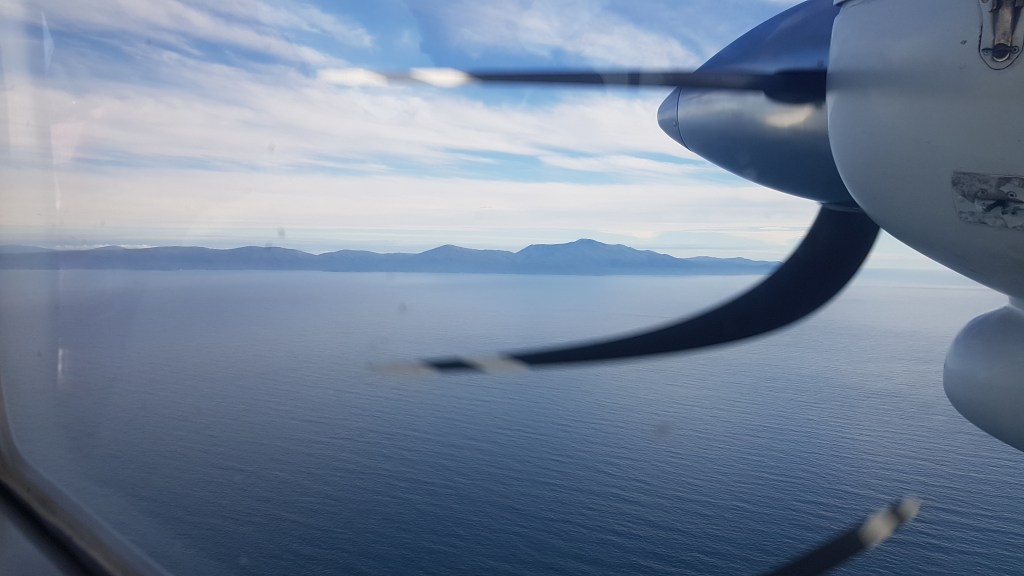
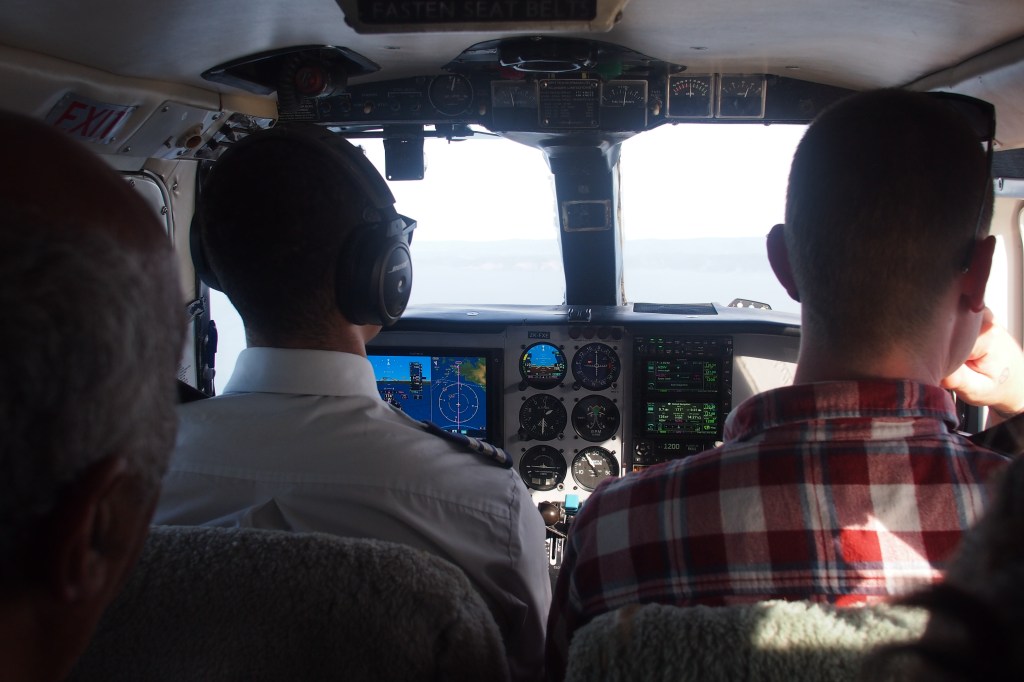
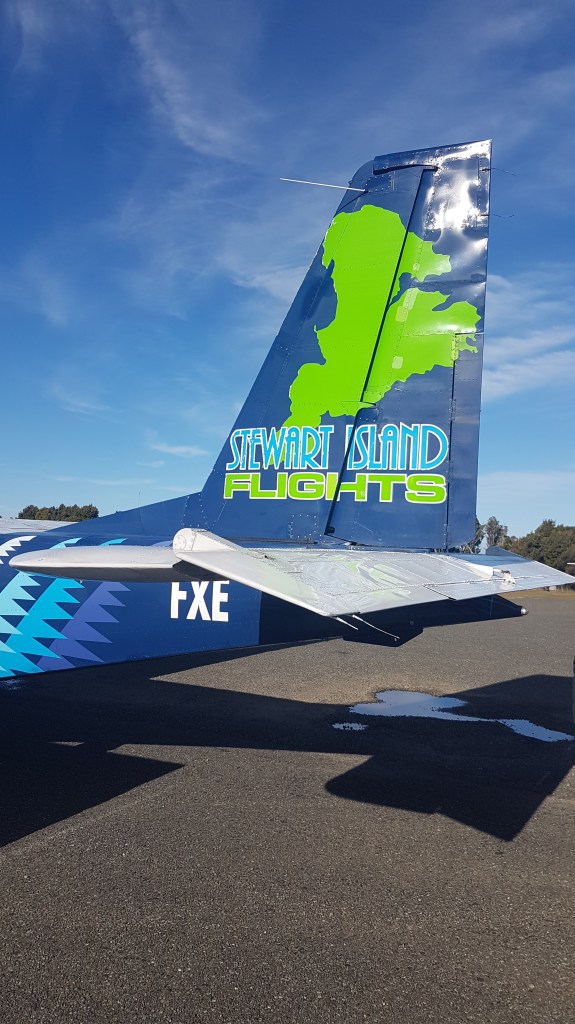
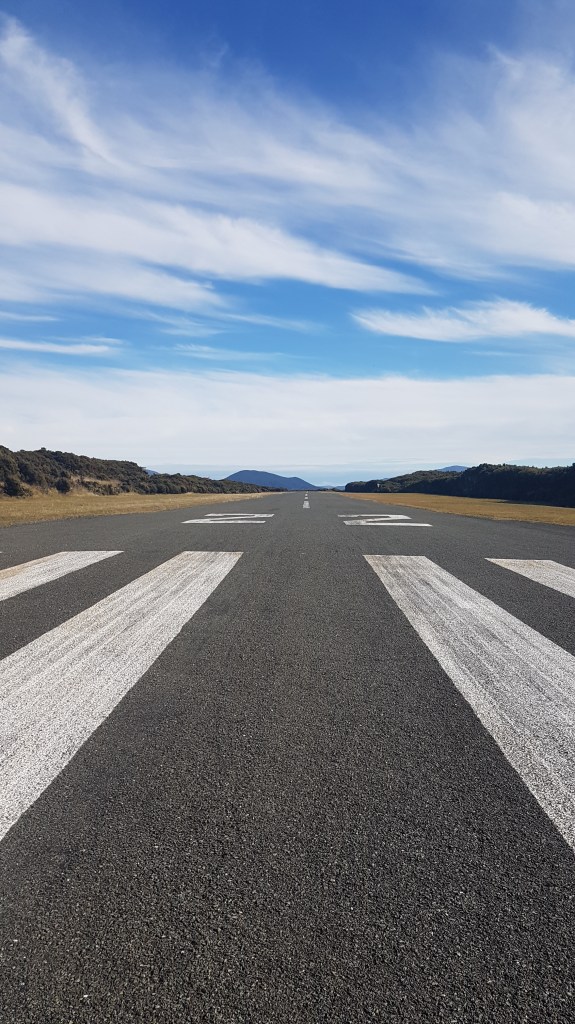
It’s time to board our next flight. We are greeted by the pilot who checks our tickets and leads us out to the plane. This is a first! This plane is even smaller, taking only 9 passengers. The pilot does the H&S briefing and then we are off. It’s so loud! But we get incredible views of Rakiura. We can see the lush, vibrant green forests, clear water and golden sandy bays. I am surprised by how much I enjoy the flight, given my dislike of flying, but we have perfect conditions and it was only 20 minutes. After landing, we take a complimentary van ride down to the township – also driven by the pilot!
There are 2 ways to get to Rakiura (Stewart Island): A 1 hour ferry from Bluff or a 20 minute flight from Invercargill. Although more expensive, I opted for the flight as I have heard the Foveaux Strait is a very rough stretch of water. I also thought it would be lovely to see Rakiura from the sky (and I was right!)
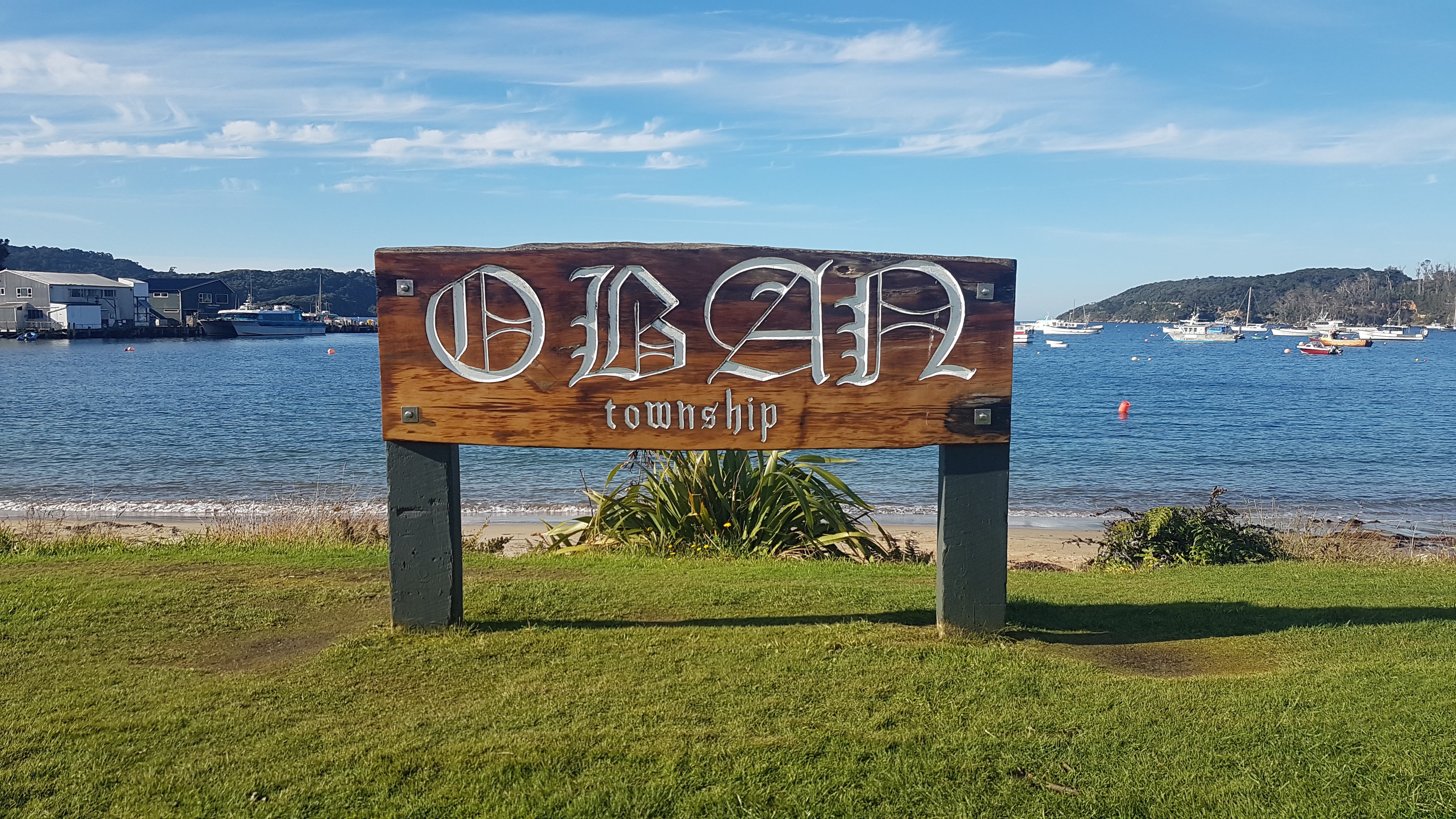
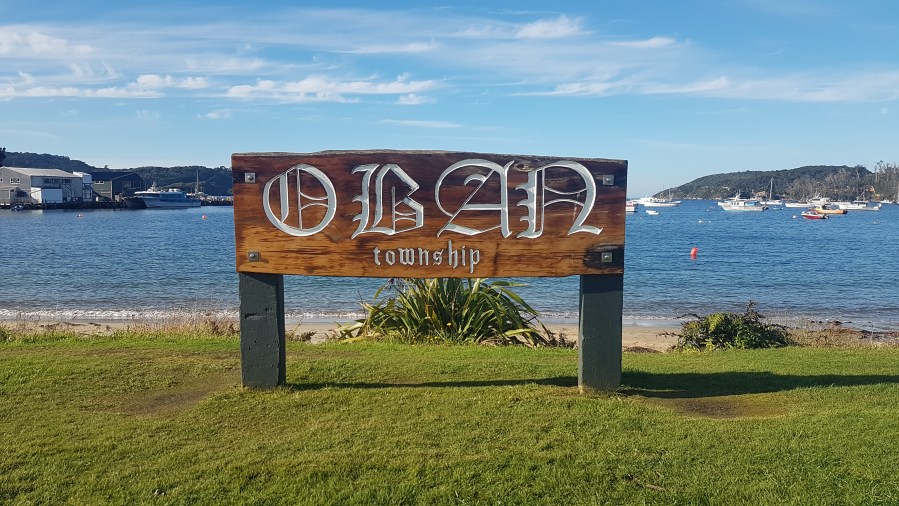
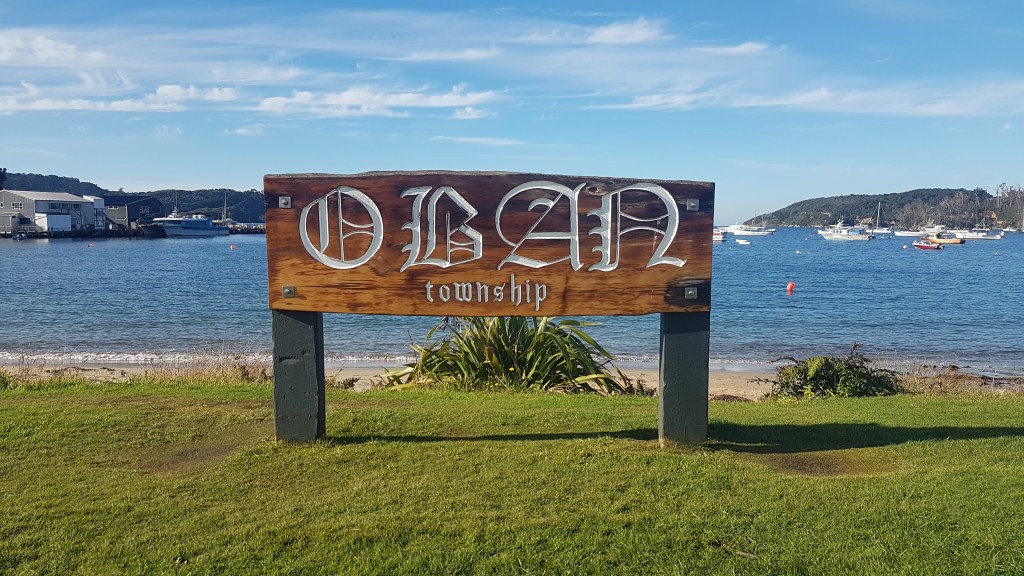
We are dropped in Oban, the only town in Rakiura, population 400, and walk to our accommodation, We are staying at Stewart Island Backpackers. Accommodation here can be quite pricey. I was thinking of splashing out since this trip was to celebrate my 40th birthday, but really, all I need is a bed to sleep in and a roof over my head. I would rather spend less on accommodation and have more to spend on activities and tours. The backpackers is basic, but very comfy, warm, clean and good value for money. A good choice.
We drop off our bags and head out to explore. The town is small, there are a few shops, a small grocery store, pub, library, a couple of cafe’s and gift shops. For such a small town, the place feels very busy. There are lots of people out and about, enjoying the nice weather and returning from multi-day tramps. You can do Rakiura on a day trip, but honestly, if you love the outdoors, go for a few days, there is so much to see here, you won’t regret it.
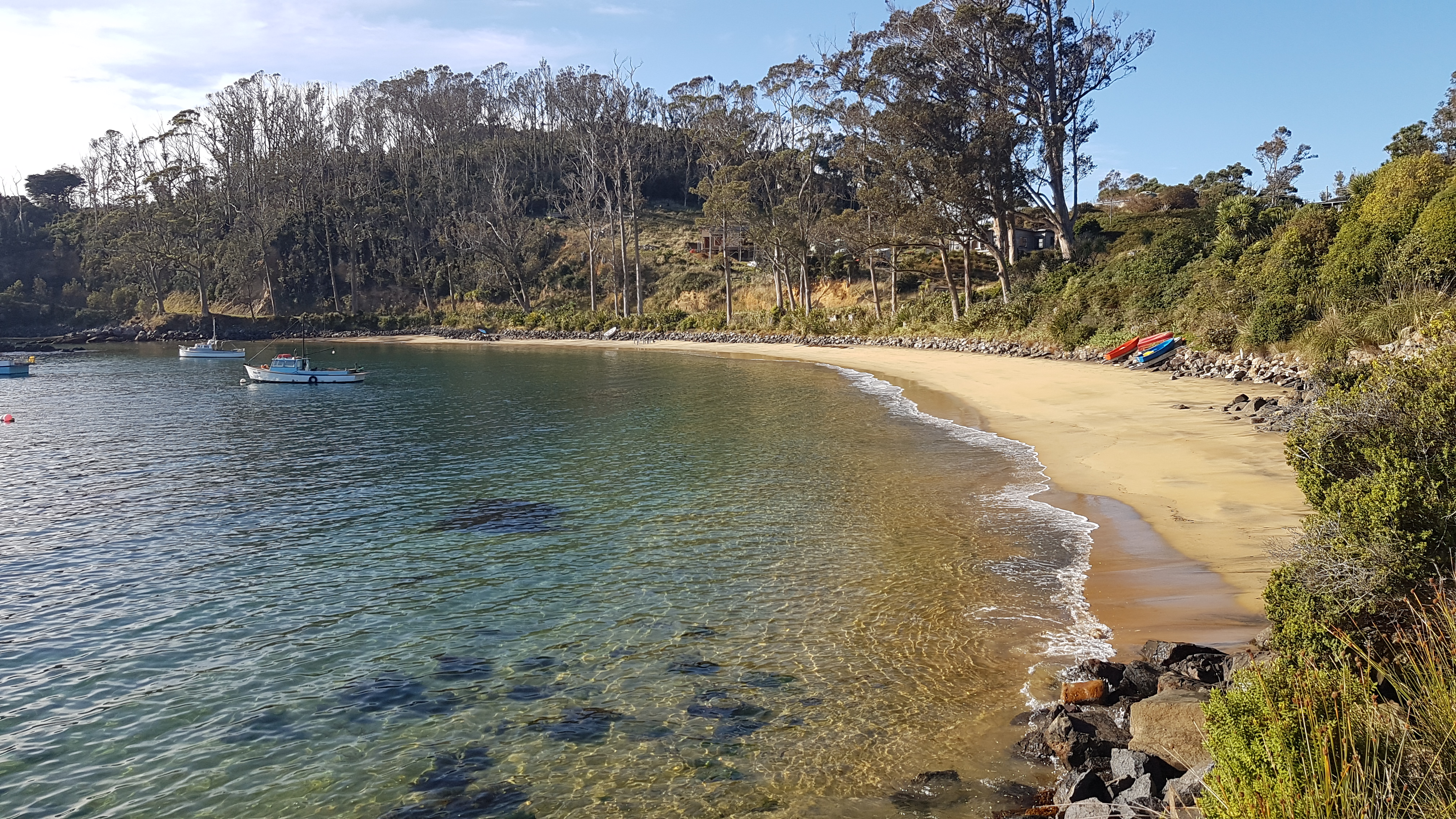
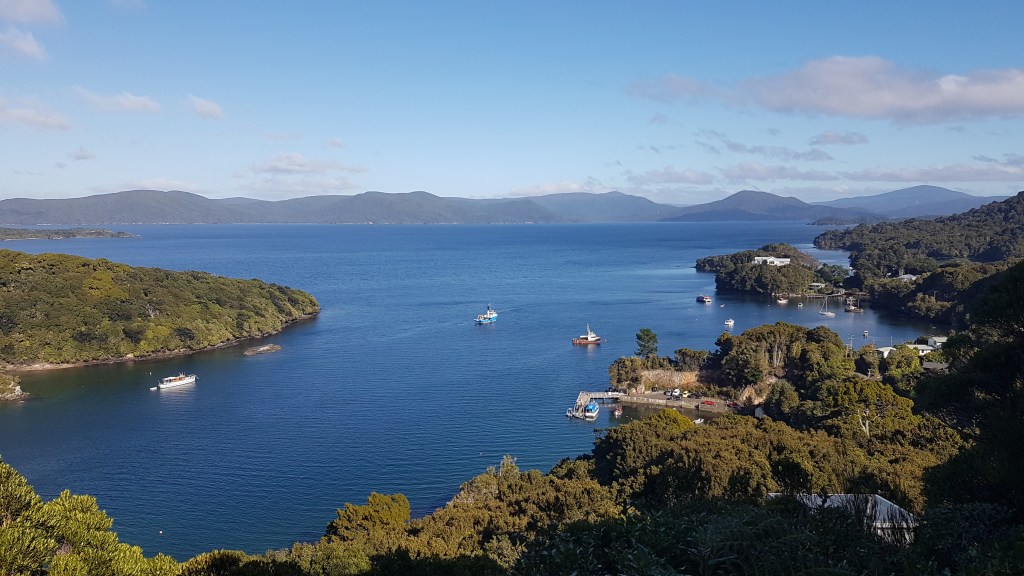
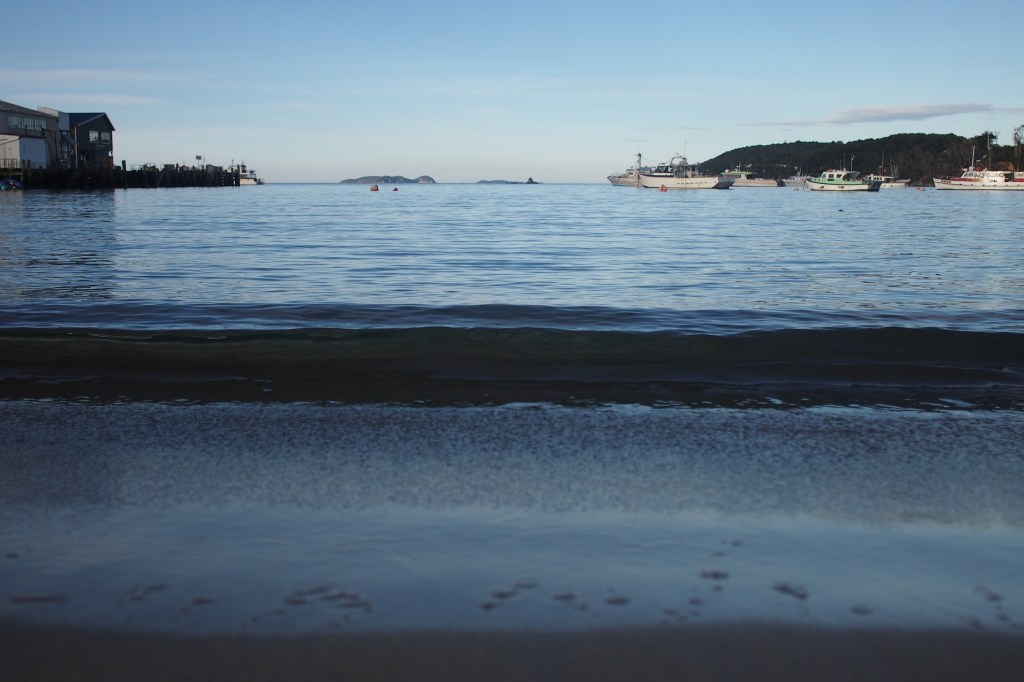
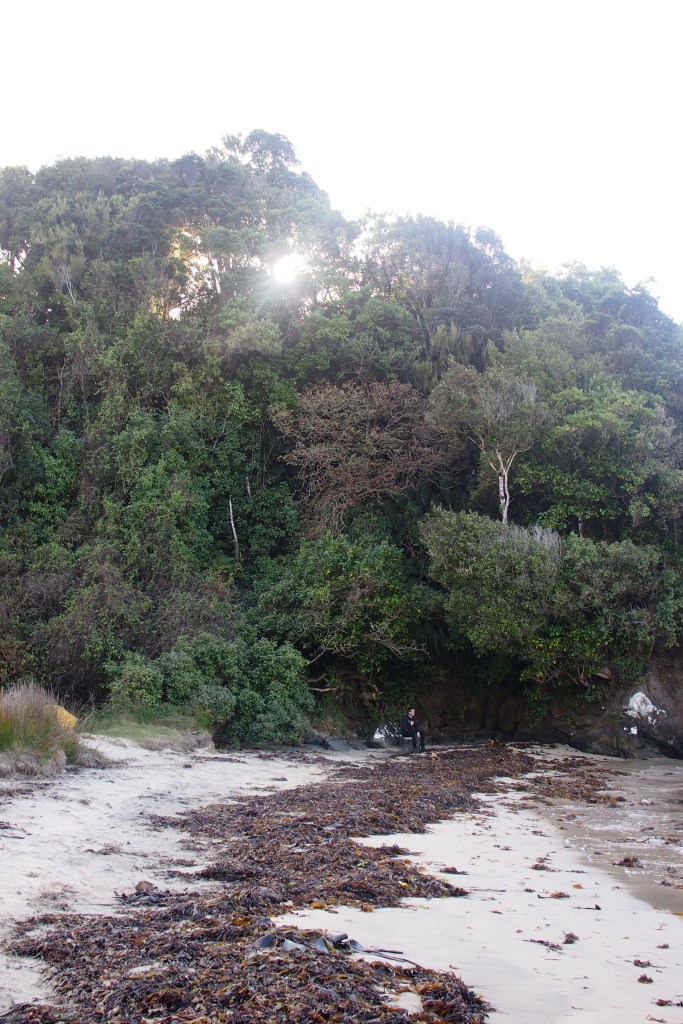
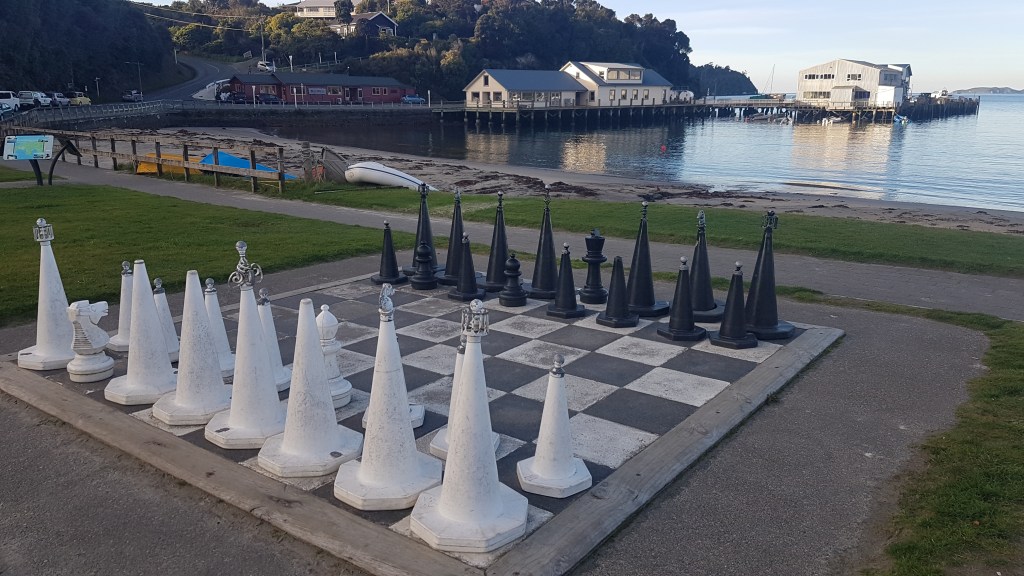
We walk along Halfmoon Bay. There are many boats anchored in the harbour, bobbing up and down with the tide. It’s very idyllic. We take a short walk up a hill and through some bush, a cheeky little piwakawaka (fantail) joins me and flutters about but doesn’t stay still long enough for a photo. They are sweet little birds. The track leads us down to a little bay called Bathing Beach. The sand is golden, but honestly, I think we have caught it on a bad day. It’s covered in seaweed that’s started to rot and is rather stinky! I feel the water, it feels like the New Zealand water I am used to, cool and fresh. But I am still questioning my decision not to pack my togs. I didn’t think I would need them on a holiday down South in April! It would be the furthest south I have ever swam.
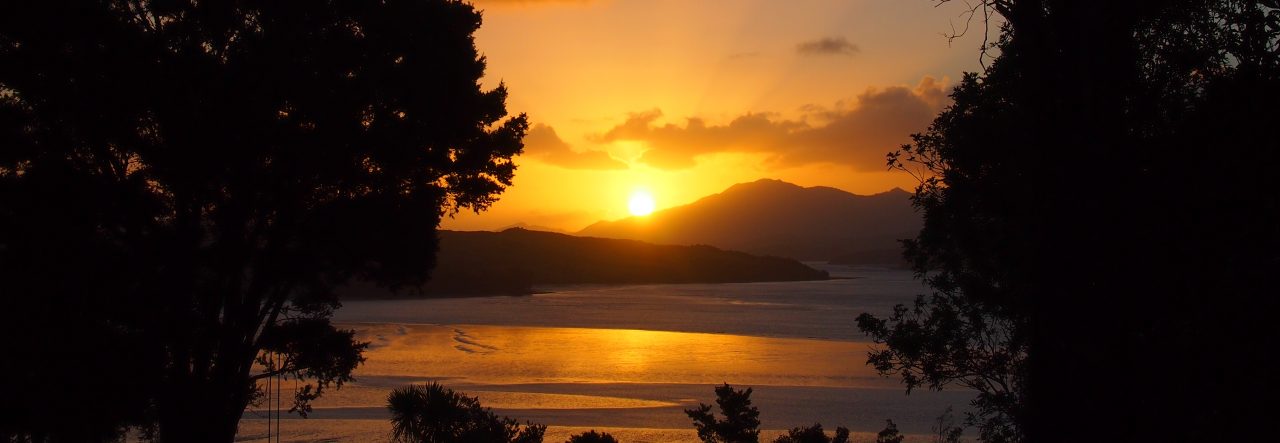
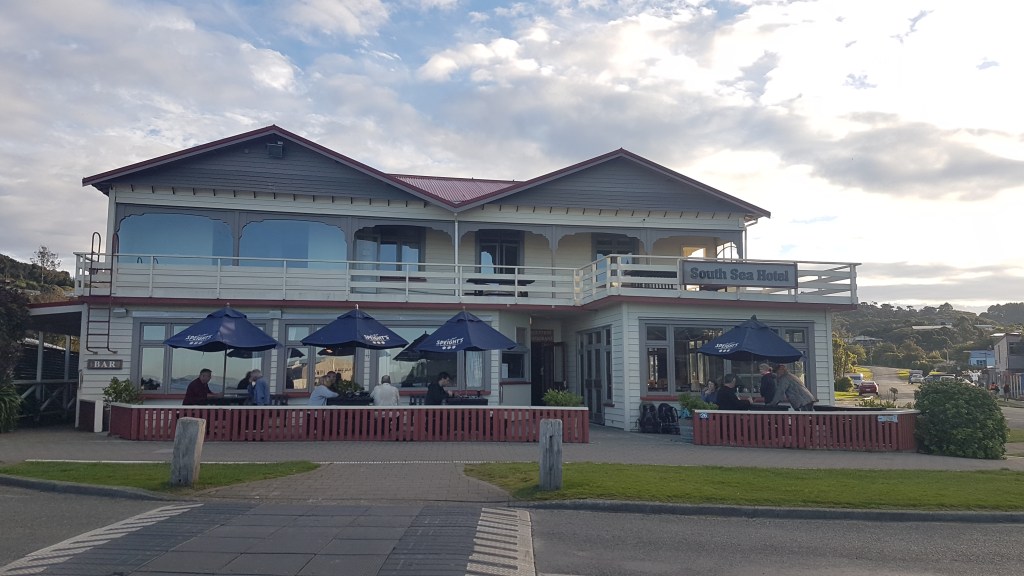
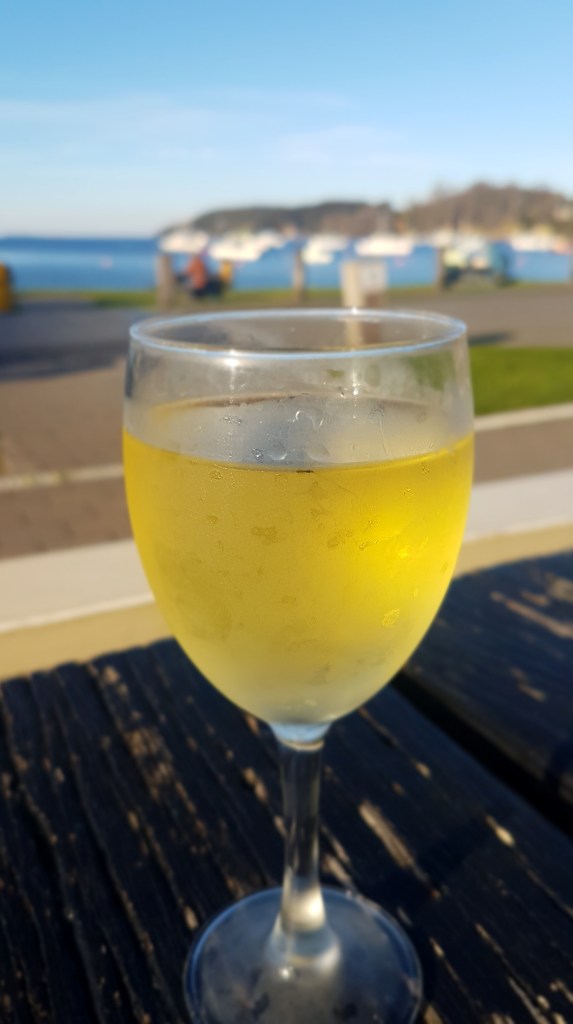
Back in Oban we park ourselves on some outdoor seating at The South Sea Hotel Pub and enjoy a wine while watching the world go by, relaxing & talking. What a perfect view.
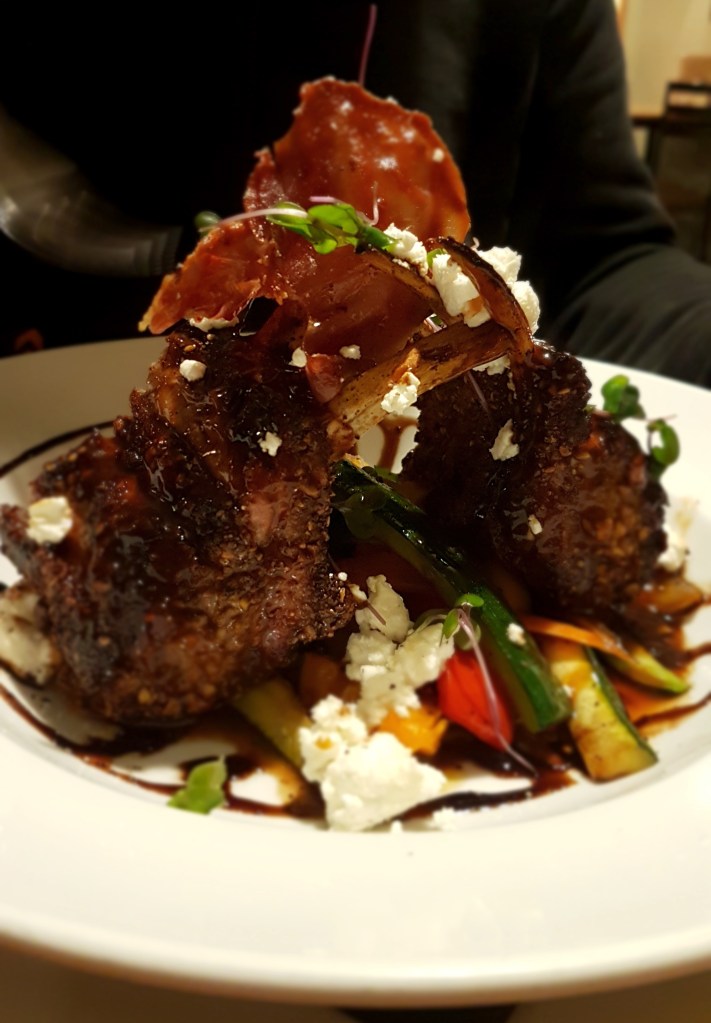
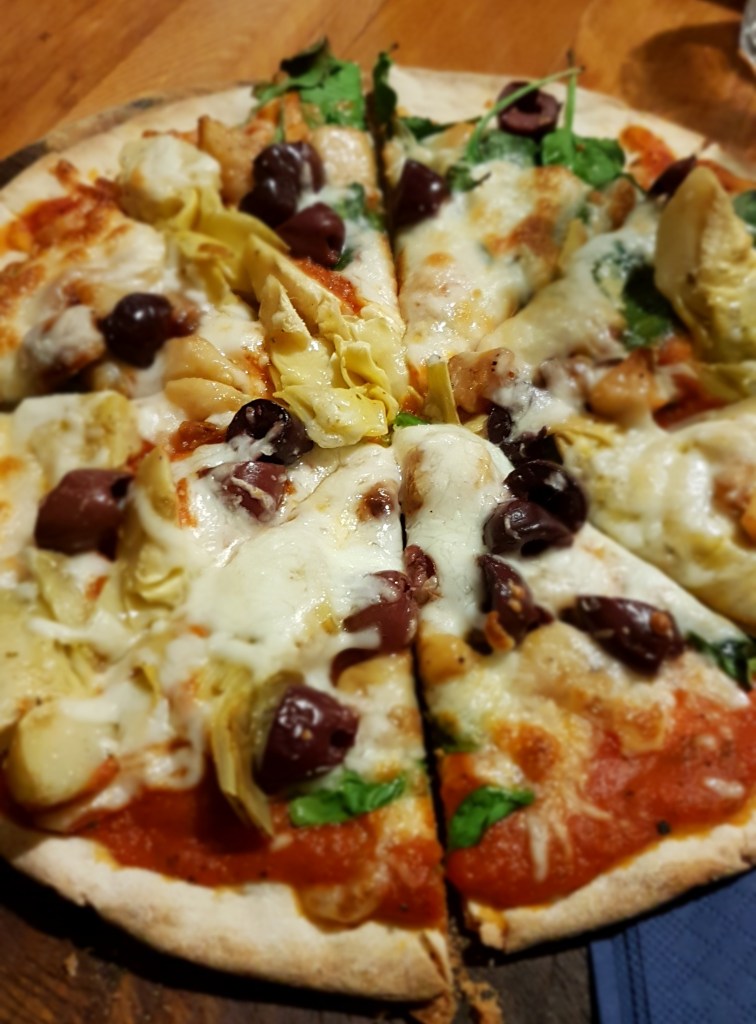
As the sun goes down it begins to get cold so we head inside for an early dinner at the restaurant. The dining options on Rakiura are limited, but we found the food at the South Sea Pub here really good. They have lovely wait staff and the food is reasonably priced considering everything has to be shipped across.
Tonight we are booked on a star gazing tour with Twinkle Dark Sky Tours. I have spent the afternoon watching clouds begin to roll in on what was a perfect cloudless sky. So I am surprised to get a call from Al to say the tour is still going ahead. He is hoping the clouds will clear after sunset. He tells me, in the worse case scenario, he will talk to us about the night sky for around 30 minutes, give us a hot chocolate and a refund – so nothing to lose. It’s been a long day, so we head back to our room for a nap while we wait for it to get dark and the tour to start.

 Exploring the Long White Cloud