Searching for Kiwi

With a ratio of 5:1 sheep to humans, Aotearoa is well known for its abundance of these woolly mammals. A more interesting, but less known fact is that Rakiura has a ratio of 30:1 kiwis to humans. If you are hoping to see one of our quirky national icons, you will have a much higher chance here. Due to the shorter nights and longer day time hours this far south, it’s not uncommon to spot kiwi during the day. I have heard stories of people on the Rakiura trek seeing kiwi wander out onto the path in front of them – in broad daylight! Another reason to put Rakiura on your bucket list.

After the sun has gone down, we meet our guide Dan and head out on our kiwi spotting adventure with Ulva’s Guided Walks. We are heading towards Lee Bay and the Mamaku Reserve. On the drive out, Dan brakes suddenly and we all hop out of the van to witness our first kiwi. It’s on the side of the road, casually having a feed. I can’t believe it. The tour hasn’t even really started yet and we have already seen a kiwi.

A single kiwi can consume as many as 200-250 worms in one evening! They use their sense of smell and vibrations to seek them out, probing the soil with their long beaks. She is very absorbed in her feeding and not at all aware of our presence. We are using red lights which apparently they can’t see. We watch her for a while and then she wanders into the bush. We pile into the van to carry on our journey.

We arrive at Lee bay and spend some time wandering around on the beach and the grassy area where Daniel and I had our picnic earlier that day. Dan knows where their burrows are so has taken us here to see if any of them are out feeding. We see tracks on the beach but no kiwi so we make our way up to the reserve and Dan lets us in through the gate.

Kiwi are one of the many flightless bird species we have in Aotearoa. Long ago, there were no natural predators in our country so they had no need to fly. They evolved, their wings became stumps, their bones became dense (not hollow like other flying birds) and their feathers changed to be more downy than aerodynamic. Fortunately, there aren’t many predators on Rakiura and the Stewart Island Kiwi is really flourishing here.

Kiwi lay huge eggs for their size and the incubation period is 90 days. When they hatch, they are fully formed, feathers and all. They are able to hunt for themselves but remain with their parents for 1 – 3 years depending on the species.

This is a tour that requires patience. There is a lot of standing still, listening to the night. The forest floor is squishy underfoot. It’s raining. We are standing in the open, getting quite wet, but it’s also thrilling. The anticipation of seeing more kiwi outweighs the discomfort of being wet and cold. We walk slowly, every step carefully taken so not to make too much noise.

Then, under our red light, along the fence line, we see two more kiwi. A male and a female. Dan tells us this is uncommon. While they share burrows, they feed alone. We feel very privileged to see two at once. There is a noticeable size difference, the female much larger. This was clearly visible when we saw them side by side.

But then, something unusual happens. The male kiwi lets out an almighty squawk that pierces the silence of the night. I just about leap out of my skin, it gives me such a fright. He has seen us, sent out a warning call and before we know it, he and the female have disappeared into the bush. Now, I know I said earlier that kiwi can’t see red light, and this is true, except for one male in the reserve who does seem to be able to see it. No one is sure why or how he can see it, but he can. It seems that this is the kiwi we have encountered tonight.

We continue standing in the dark waiting to see if they will reappear. Dan has a heat sensor that he uses to help spot kiwi. After some time, I hear a subtle rasping noise and then the female reappears – on her own this time. She isn’t bothered by us. We follow her along the fence line, she moves quickly, bouncing along. Dan explains that this is how they graze. As she moves she can sense if there is any food underneath so she doesn’t need to stop and poke around. She will only put her beak down when she knows something is there. We eventually lose track of her, she was moving very quickly.

Some more interesting information we learn is that on the couple of occasions they have seen the Southern Lights on the tour, they haven’t seen kiwi. Dan said that other local guides have reported this too. There are no studies on this, the kiwi do so well on Rakiura that conservation money goes to other projects. However, their theory is that the high geomagnetic activity keeps them tucked away in their burrows.

We make our way back to the beach but no sign of any more kiwi, we still all feel lucky to have seen 3. We head back to the town in the van but as we approach Horseshoe Bay, Dan makes a stop – he has seen another kiwi. It’s not even bothered by the van headlights. We watch it for a while before calling it a night.

We arrive home rather wet and ready for bed. We have been out on tours the last 3 nights. I am grateful we are here in April when the sun goes down a bit earlier. In the peak of summer, these tours don’t even depart until around 10 – 10:30pm.

Rakiura is a fantastic location for kiwi spotting. You could head out on your own to look for them, but being on a tour, you get the expert knowledge of a guide who can teach you so much about these curious birds. I highly recommend Ulva’s Guided Walks Day and Night Special. It covers 2 tours – kiwi spotting and a guided walk on Ulva Island, which I will be sharing about next week.

Sorry, no photos for this one. I am no good at taking night photos and didn’t want to risk a flash going off. Sometimes, it’s just best to take memory photos to tuck away in your mind. This is one of those occasions.
Lockdown and our Native Birds

First of all, apologies to my followers for skipping last week’s post. It was a hard decision to make but I spent a lot of the week unwell and just didn’t have the energy to write. (Yes, I got a covid test, rather unpleasant, but great for peace of mind to know that I don’t have it)

I’m so grateful to those of you from around the world who check in each week to read what I write. I love sharing my stories, adventures and beautiful country with you all.

You may see reduced posts from me over the next few weeks. I had a plan of what I was going to write about, but we are currently in a lockdown after a case of the Delta virus was discovered in the community. This has thrown a bit of a spanner in the works for my blogging, as the only travelling I can currently do is laps around the block!

Nethertheless, I am so grateful that I get to call this place home. I am grateful for New Zealand’s fast, unified response to covid. Our team of 5 million have and are working hard to eradicate covid from our shores. This has meant that we have been able to spend the majority of this covid world with so many freedoms and the opportunity to enjoy exploring our own backyard with very few restrictions. For the most part of 2020 and 2021, life here has been reasonably normal.

We have a bucket list trip booked for early/mid September which we have been looking forward to for the last 6 months. I am hopeful that we will still be able to do this, but if we have to postpone it, I know that it is for good reason. To my New Zealand readers, hang in there. This is not forever, we are all in this together and I am confident that we will once again see covid eliminated from our communities and home.

I have been working from home this week and have enjoyed seeing the birds that visit our garden. We are lucky to have native birds around here, and I do see them frequently, but they are even more plentiful during lockdown, when there are far fewer cars and people out and about. So, I thought I would do a post on some of our beautiful native birds.

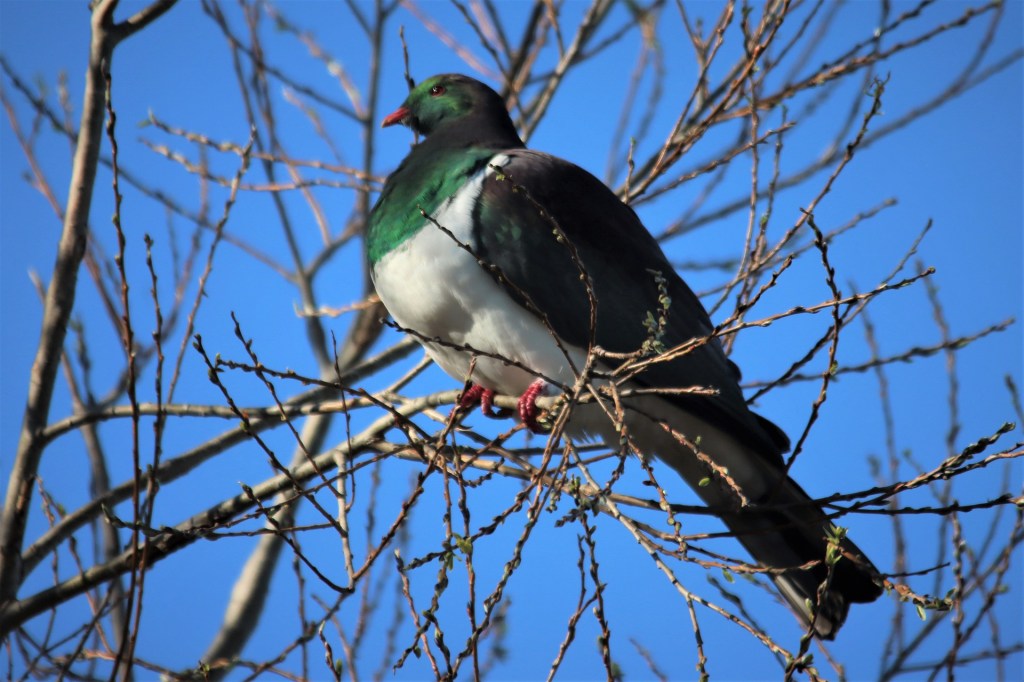
One of my favorites, and a frequent visitor to our garden is the Kereru. A large, chubby wood pigeon that defies gravity every time they fly. You hear them before you see them, the distinctive whooshing sounds of their wings trying to keep such a large body airborne, and the crashing about in the trees as they attempt to land on branches far to thin to support their weight. Their iridescent coloured plumage and striking white chest, makes them, I think, a really attractive bird. They were traditionally hunted for their feathers and meat but it is now illegal and their population numbers are good. I had an amazing experience earlier this year when a kereru landed on the edge of a spa pool my nephew and I were in. Seeing it that close, it’s feathers and colours in so much detail, it was such a highlight.

Image by Nel Botha from Pixabay – Kereru

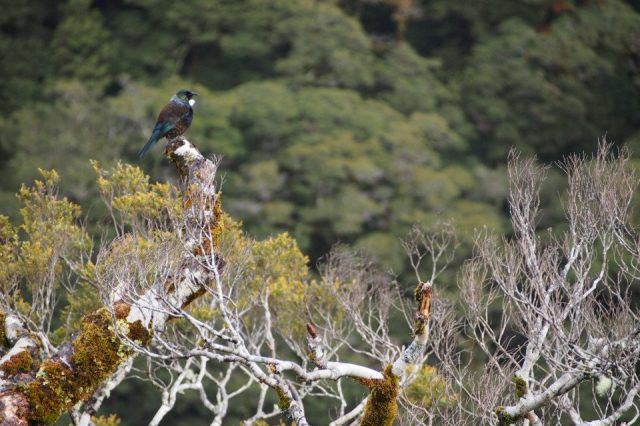
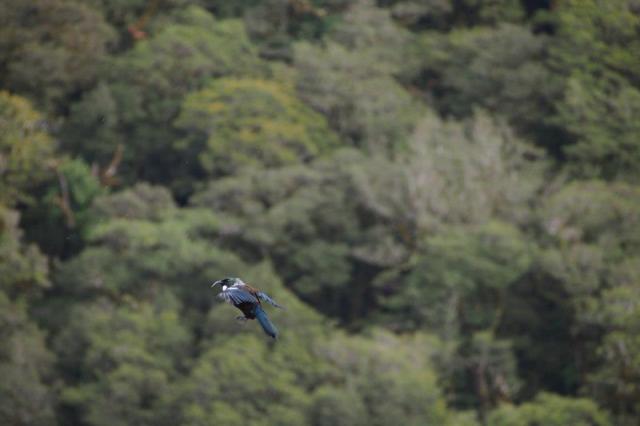
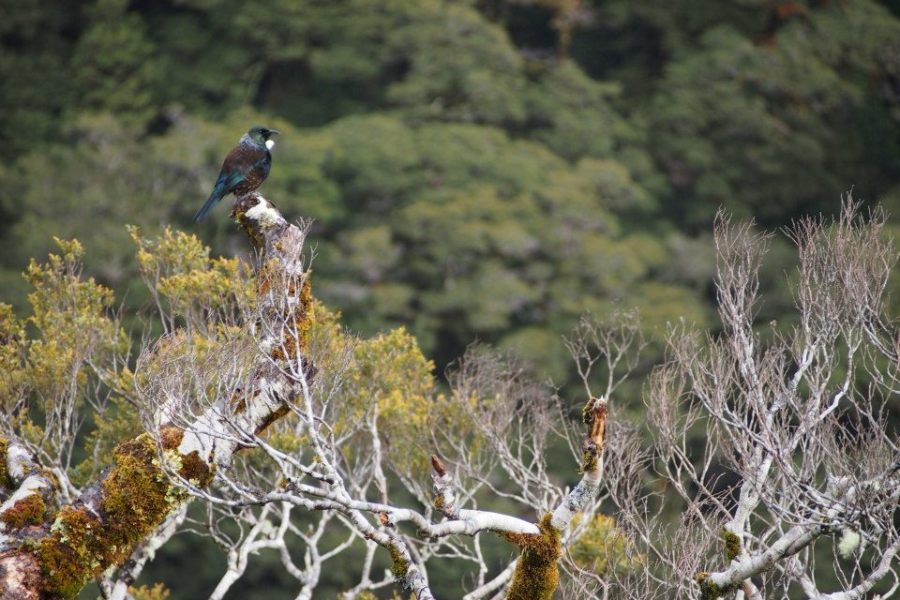
The Tui is another frequent visitor to our garden. They love the nectar that is in the plants surrounding our home. I have always thought them very pretty birds, again their plumage is iridescent with distinctive white feathers adorning their neck. They also have the most beautiful song. I learned recently that they have 2 voice boxes. This enables them to produce such varied sounds and melodies. After observing them over the years I have noticed they are quite territorial birds, you will often find them chasing away other birds, including other tui, sometimes with quite a lot of aggression. For this reason, they have dropped a little on my favorite list! They are very common in New Zealand, although I have just learnt that there is a Chatham Island tui that is a threatened species.

Photos by my talented husband

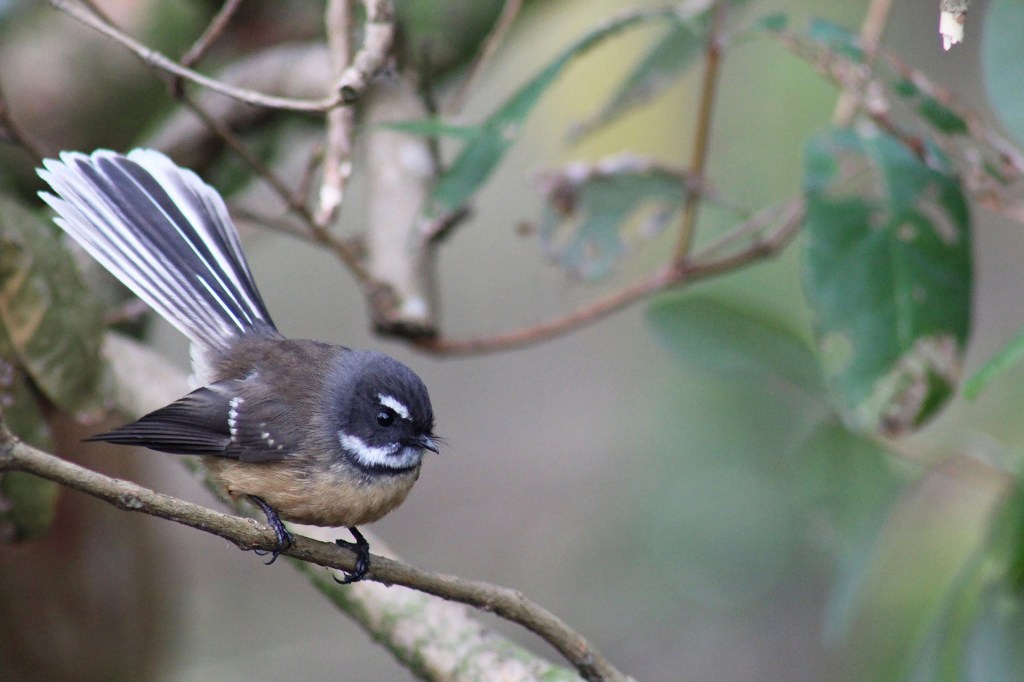
Piwakawaka, also known as the fantail. You can’t help but love these cheeky, friendly, curious little birds. While I have seen them at home, you are far more likely to see them in the bush. I did see one last week at home, darting about the large tree in the neighbors garden. It was being chased by an angry tui. They make a distinctive cheep-cheep sound and have a striking striped tail which is revealed when fanned out.

Image by LorryM from Pixabay

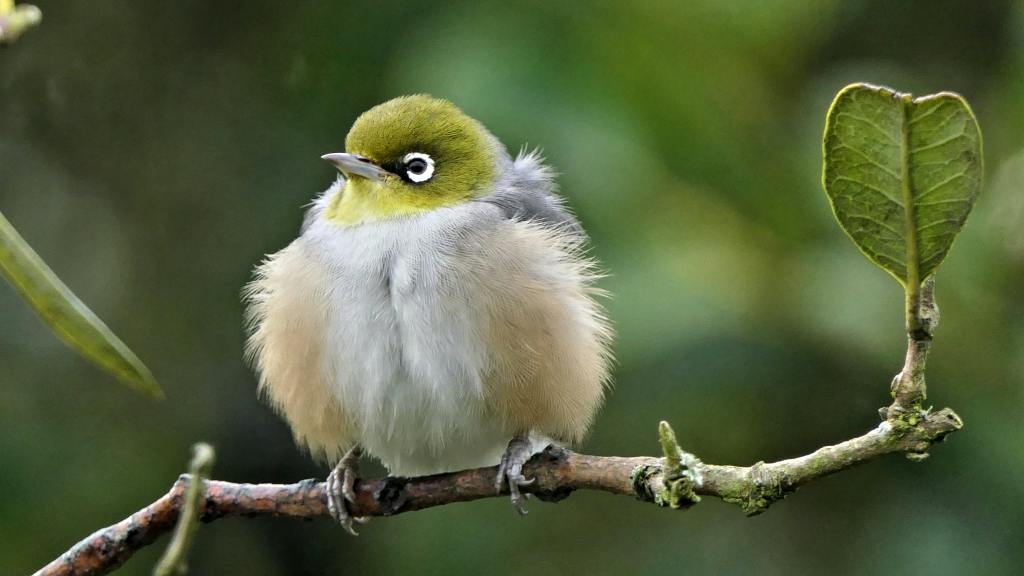
The Tauhou, or Silvereye is another little bird that has just started to visit my garden. From time to time I will put wild bird seed out. It is the little Tauhou that seem to be attracted to this. (Which is good news, my bird feeder would break in a second if a Kereru tried to feed from it!) They are a mossy green colour with a silver ring around their eye and similar size to a sparrow.

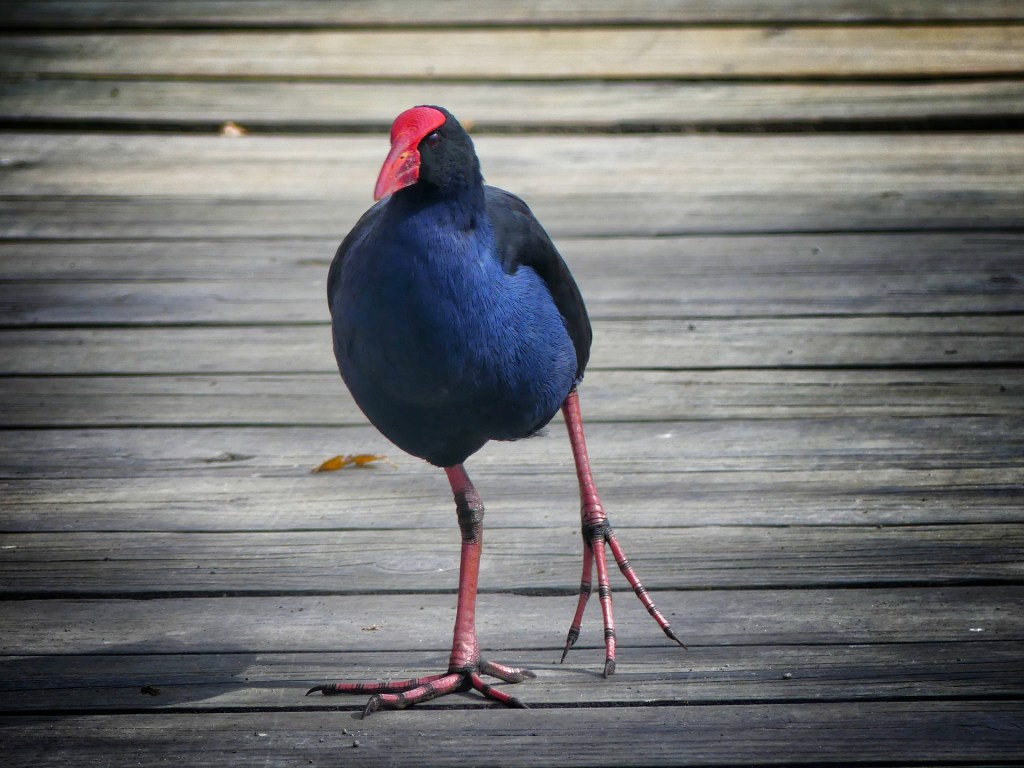
The Pukeko, also known as a ‘swamp hen’ to early settlers, is a bird I have always found a little unusual. Not so much in it’s looks, but in the way it moves. It’s long legs and big claws that move in such a distinctive way, that I think, makes them look prehistoric. They can fly, although not very well. They are pretty common in New Zealand. You will likely see them on your travels here. A work colleague of mine has one that has kind of become a pet, it visits his garden regularly to say hello and see what food is on the menu. These birds are also territorial, and much to my horror, I have learnt that they sometimes eat baby chicks.

Image by Montevideo from Pixabay

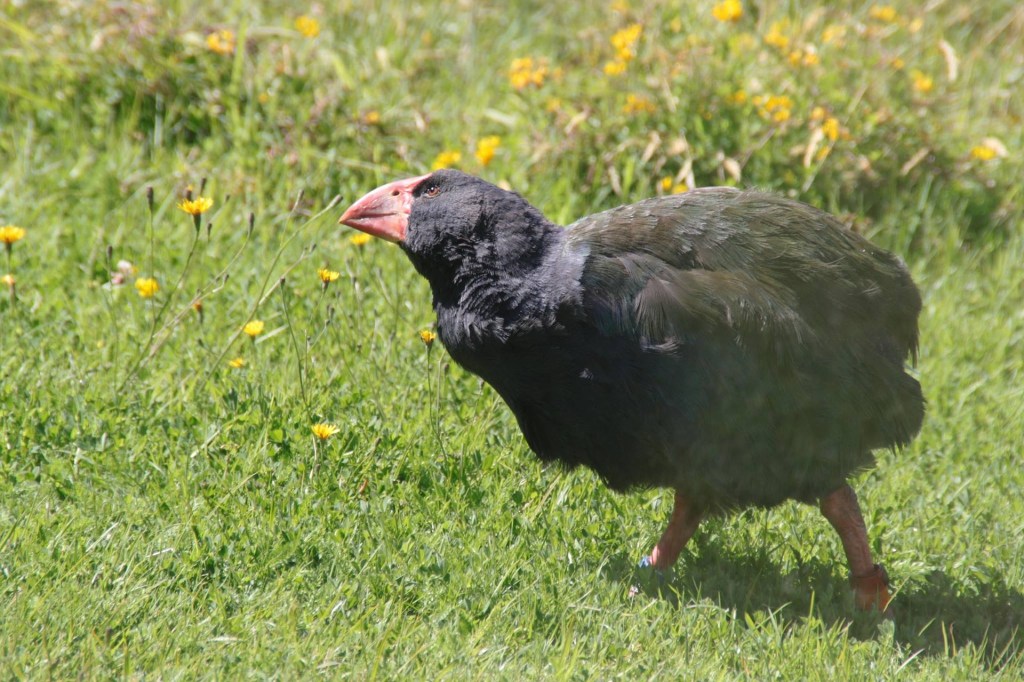
The Takahe is a bit like a pukeko, they are similar in colour and shape, but a heavier build and short legs. for 50 years they were thought to be extinct, but were then rediscovered in Fiordland in 1948. Since then, a lot of effort has gone into conservation and breeding programs. I have wanted to see one of these for a long time and finally managed to last year when I visited Zealandia

Image by Violet K from Pixabay – Takahe

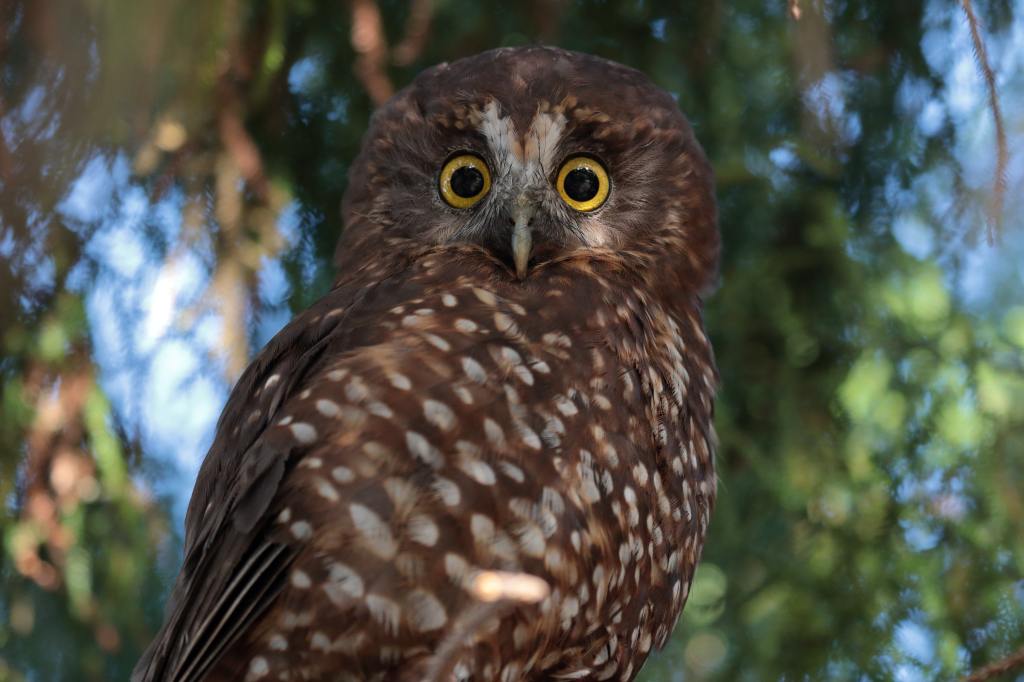
A bird I don’t think I have seen, but definitely heard is the Ruru, also known as the morepork. They are a small owl, nocturnal and feed on large insects and small mammals like mice. The have incredible hearing, large eyes and can turn their head 270 degrees. You will hear them at night, making their echoey call which sounds like they are saying ‘morepork’. While I have heard them from time to time in residential areas, I remember their call more from my childhood when we would go on camping holidays.

Photo by Tony Stoddard on Unsplash

One day I hope to see a Kiwi in the wild. I have seen them in the zoo, but encountering an animal in it’s natural habitat is something quite special. I did a kiwi spotting tour at Zealandia a few years back. We heard their call, but didn’t see any. I was hoping for another attempt to see them earlier this year when we were in Okarito, but we had just missed the tour season. There are 5 varieties of kiwi, all needing help and protection not to become extinct. They are curious birds, flightless, nocturnal and don’t have tails. Stoats, ferrets, rats and dogs pose a big threat to our national icon.

If you want to get out and about to try and spot some of our beautiful birds, Zealandia in Karori or Kapiti Island are great places to explore.