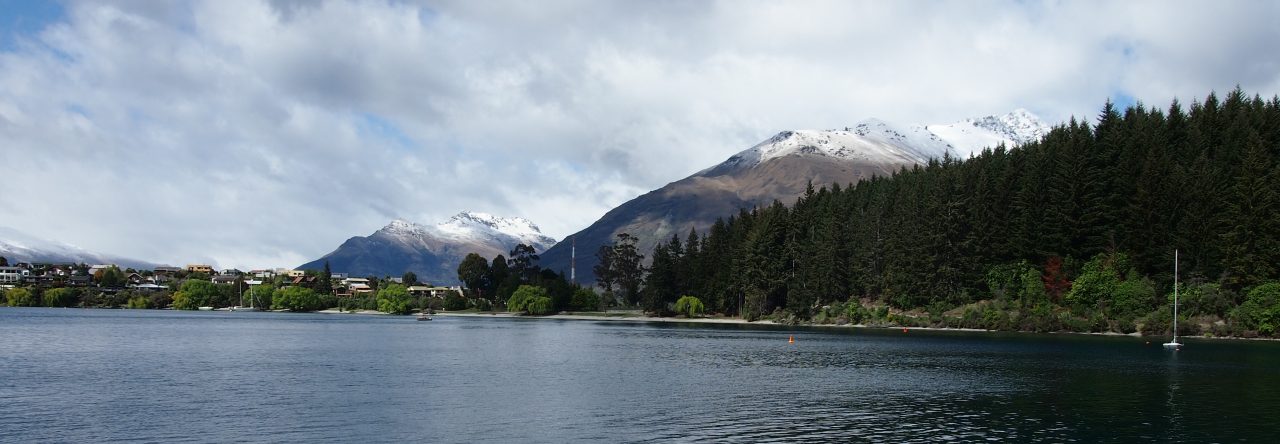
Have you ever stared into a brilliant dark night sky, surrounded by an abundance of twinkling stars? Or been mesmerized by the magical Milky Way? Our Southern night sky has guided our ancestors for many years, with Māhutonga, the Southern Cross being used as a navigational aid. I have read that the night sky is vanishing, with the light pollution in urban cities making it very difficult to see the milky way or the many faint stars that adorn our night sky.
Rakiura means ‘glowing skies’ and get’s its name from the Aurora Australis which can sometimes be seen from here. I am hoping I might get lucky and see it on this trip. But tonight, we are booked in with Twinkle Dark Sky Tours to do some star gazing. It’s on the top of my list for activities while we are here, so I have booked in for our first night so we have some back up evenings if it’s cloudy.
Al from Twinkle Dark Sky Tours collects us from the backpackers, along with 1 other guest. While we are waiting, I can feel spots of rain. Not a good sign. I can see some stars and am hoping the clouds will clear. We head up to Ringa Ringa Heights and on the way, Al tells us a little bit about the area. Rakiura was given the title ‘Dark Sky Sanctuary’ in 2019 and is the most southern in the world. I was interested to learn that Tekapo, which is quite well known for its night sky, is actually a reserve not a sanctuary. The difference being a reserve is a very remote location with little threat of light pollution. Rakiura is remote and the town, Oban, is small, which keeps the sky dark. But light levels still have to continually be monitored and changes made to keep the levels down.
The night sky has always been a passion for Al and in 2021, he started the star gazing tours along with his wife Jen. (And I am so glad that he did!)
The car stops, the lights go out and it is so dark. We get out of the car and I look up. That first glimpse of the milky way takes your breath away. As my eyes adjust, more and more stars appear. We head across the golf course, Al has a red light and we use that to make our way into the field where a large telescope is set up and alongside it, moon chairs with blankets, hot water bottles and binoculars. I settle into my chair, warm and cosy and begin to gaze at the sky.
There are clouds around, but enough of an opening that I can see Māhutonga and some of the milky way. With his Jedi lightsaber style laser beam, Al begins to enthusiastically point out stars and constellations in the sky. He is so passionate and knowledgeable. I try to take in as much as I can, but ultimately I just sit and stare in awe. Al is from the UK and grew up seeing the Northern hemisphere sky so it’s interesting to hear about some of the differences.
After about 30 minutes it begins to cloud over so Al hands out some hot chocolate and we chat while waiting to see if it clears again. We talk about the Aurora, there are a lot of things that have to align to be able to see it. Firstly, the Kp reading, or geomagnetic activity needs to be above a certain level. It needs to be night, winter is best, along with a new moon and no clouds. And while we didn’t get to see it tonight, even just witnessing that brilliant night sky is wonderful.
Unfortunately the cloud doesn’t clear so Al drops us home and offers to take us back out again the next night. We are so keen! His tour is really fascinating! And so the next night we are collected again by Al, this time I am a little better prepared with extra layers, it gets cold out there! We settle into our chairs again, wrapped up warm in blankets and that blissful hot water bottle. The sky is much clearer tonight, barely any clouds and we can see all of the milky way this time.
Using my binoculars I start exploring the sky and I spot what I can only describe as a fuzzy ball of dots. Al tells me,’Well done, you have found what’s called a globular cluster and that this one is called Omega Centauri.’ A globular cluster is a group of thousands to millions of stars bound tightly into a cluster. Al aligns the telescope and we get to see it through that. It looks like a twinkling ball of grainy light. So cool!
During the evening we hear ruru (owl) and kiwi calling and at one point, 2 male kiwi having a fight in the nearby bush – now that was an impressive sound to hear.
We also look at dark patches of the sky where you would think there was nothing, but through the telescope, so many stars appear. There is so much up there, we see shooting stars, the Beehive Cluster, the Southern Pleiades, the Carina Nebula, the Large and Small Magellanic Clouds, Mars, constellations of the zodiac and so much more. Probably the most mind boggling thing we saw was Centaurus A – a galaxy that is 12 million light years away. 12 million light years!! Incredible!
If you are in Rakiura, this tour is a must. The things you will see in the sky will blow your mind! New Zealand is home to 2 Dark Sky Reserves, Aoraki/Mt Cook and Rakiura/Stewart Island. I am so grateful for places like this and the people who work so hard to protect it. If you have never seen the milky way, or a true dark sky, it needs to go on your bucket list. It is the most captivating sight.
I’m sorry that I don’t really have any good photo’s to share. I haven’t mastered photographing the night sky. You will just have to see it for yourself!
 Exploring the Long White Cloud