Barefoot Manta Island Resort run a range of daily tours and activities for guests. There is one that has caught our eye, which is the full day conservation project, so we book ourselves in. It begins with a classroom style lesson, taken by Filo, one of the Marine Biologists on the island. For the next hour and a half, we learn all about the local fish and coral found in the waters here. There is also the opportunity to ask her many questions. Like, what was that popping sound I could hear in the water this morning and what was the mystery fish we saw yesterday? We give Filo a terrible description, ‘it was sort of light brown with spots and really round, but it had a box shaped head, like it had swam into a wall’. Filo flicked through a fish book and managed to find our mysterious friend. It was a porcupine fish that we saw yesterday.
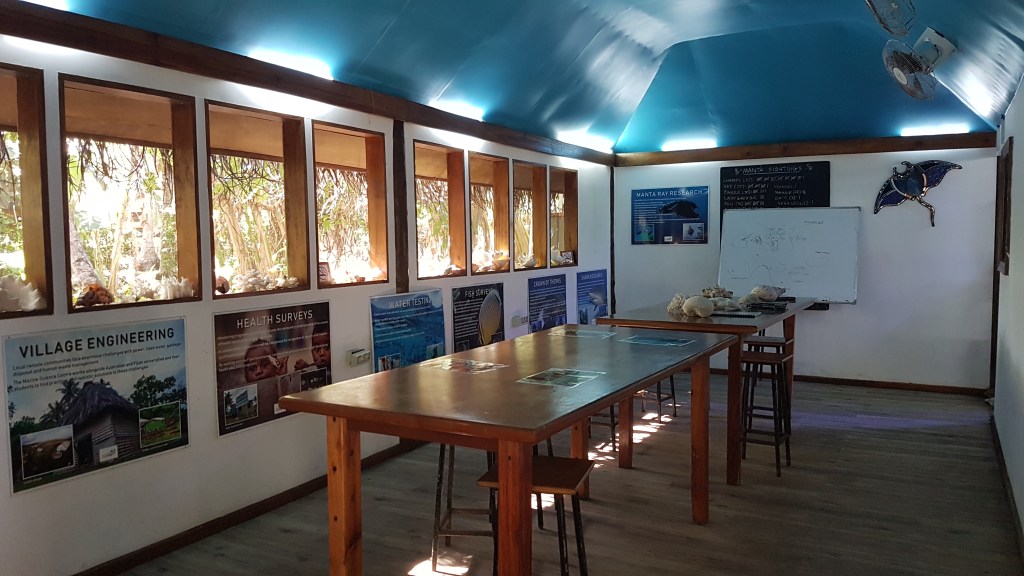
It’s such an interesting class, we learn so much about coral. Such as, it’s actually an animal, not a plant. On the table there are examples of different types of corals. Branch coral, Boulder coral, Mushroom, Bushy and Brain coral. The Boulder coral is very slow growing, only a few millimeters per year. The ones mentioned are hard corals, but there are also soft corals. We learn about what coral eats, how it reproduces and what damages it. The Crown of Thorns Starfish is a big killer of coral. It feeds off it and kills the coral polyps.
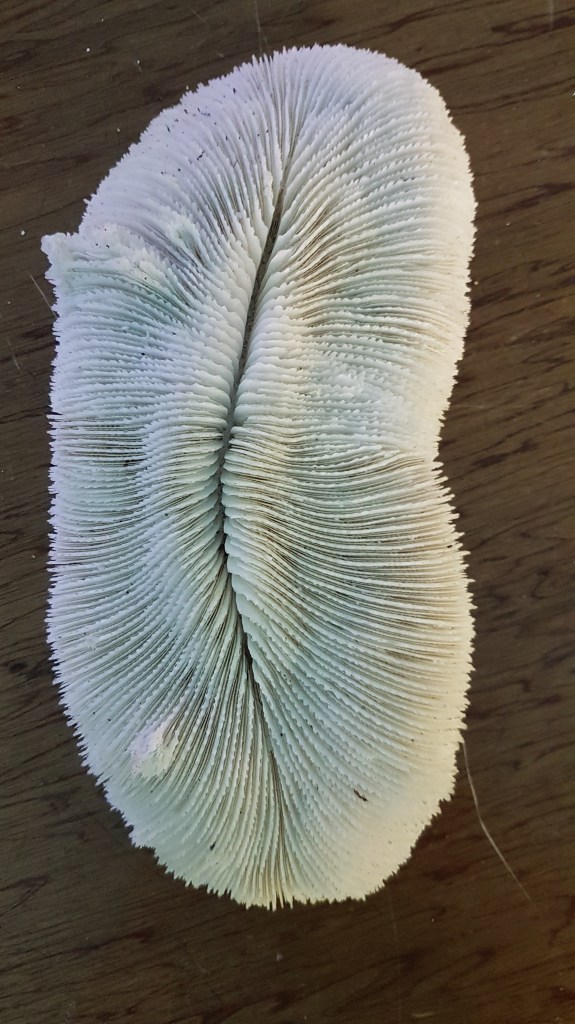
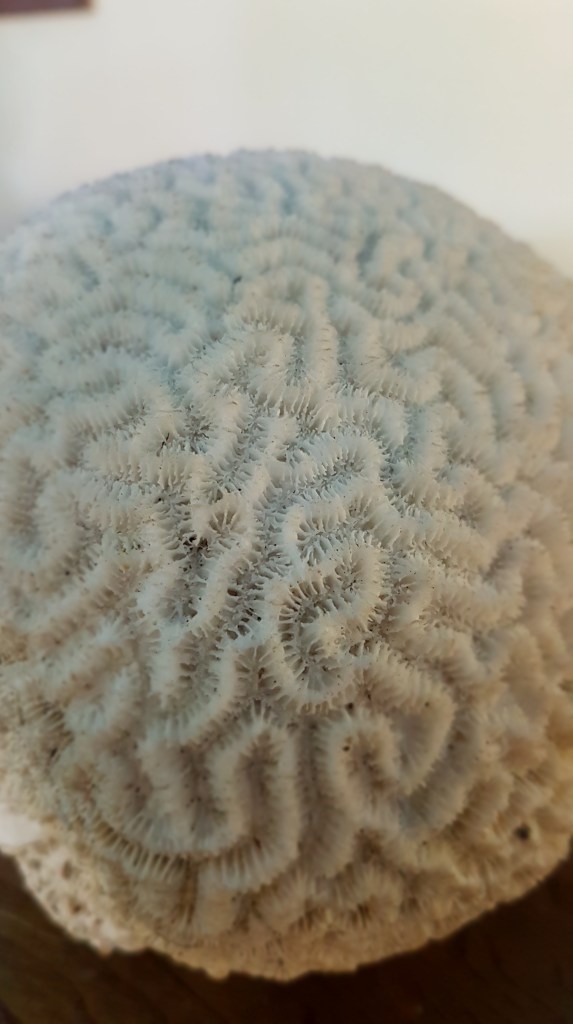
We also learn that coral is related to jellyfish, they have stinging cells which are used as a defence mechanism. This isn’t the cause of infection when you get cut by it though, this is caused by the bacteria in it. We also learn about the different fish groups, their characteristics and how the reef and the fish interact.
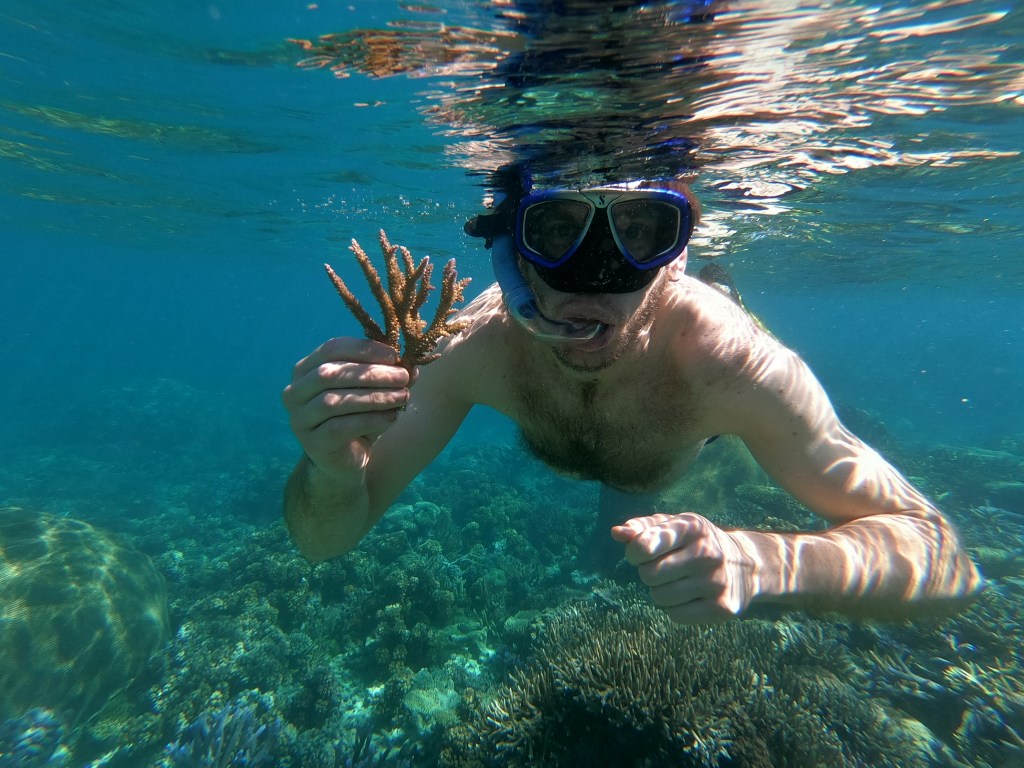
After a great lesson, we head out in the boat to do some coral planting. I have to say, this sounds a lot cooler than it was. Filo would find bits of coral that had broken off and was starting to die. She would then give it to us to plant in the ocean bed. You do this by wedging it into cracks in rocks so it’s pointing the right way and can get sunlight. It then fuses to the rock and begins to grow.
I found this really challenging. Although it wasn’t very deep, trying to dive down to the bottom and hold my breath long enough to put the coral in place was hard. I did manage to plant a few though. Daniel handed me a piece to hold for him while he planted another. While I am waiting, I feel something brush the inside of my hand. When I take a closer look I see a little crab has made its home in this piece. We make sure we plant this one next.
While out in the water, we also see a moray eel, it has its head poking out of a hole, looking rather grumpy! We make sure we don’t get too close. We see lots of fish too, from clownfish to parrot fish to angelfish, but my favourite are the little blue damselfish. They stay close to their coral, Filo had told us this morning that they are very territorial. The reef is such a fascinating place, such a delicate, balanced ecosystem.
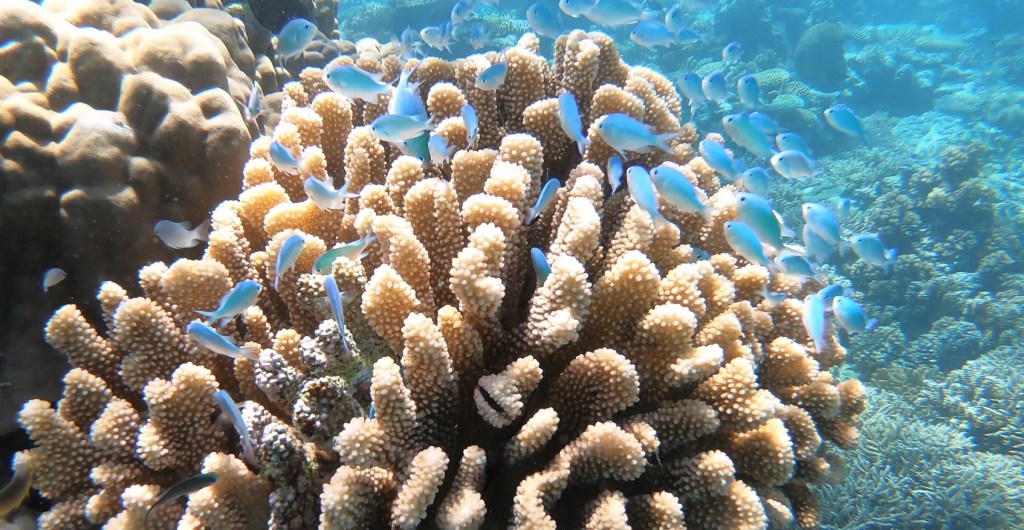
After lunch, we have a bit of a rest outside our bure in the hammock. The air is warm and filled with Island vibes. The afternoon class begins with some crafts. Filo gets out the paint and we are challenged to paint something that has stood out to us while snorkeling. Daniel paints (quite well) the porcupine fish and I do a very amateur painting of the damselfish in the coral. I found their bright blue colouring captivating and the way they hugged the coral protecting their home really interesting to watch. Filo is there to answer any questions of course and also gives us a pop quiz, which unfortunately, I don’t do very well at.
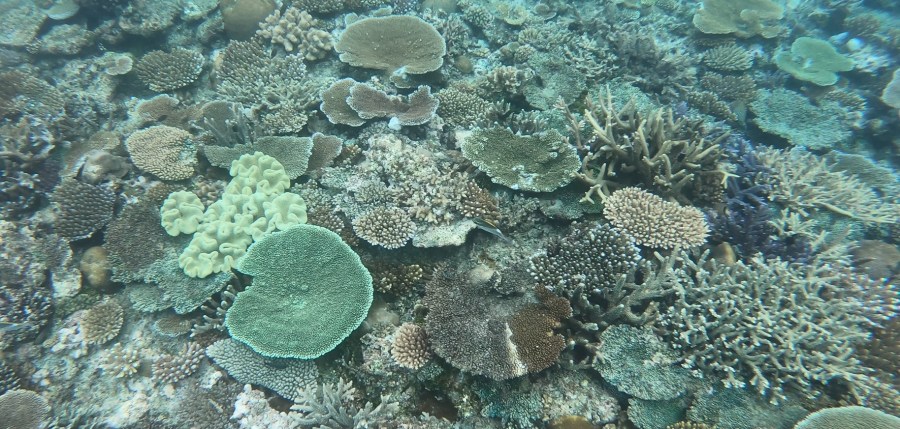
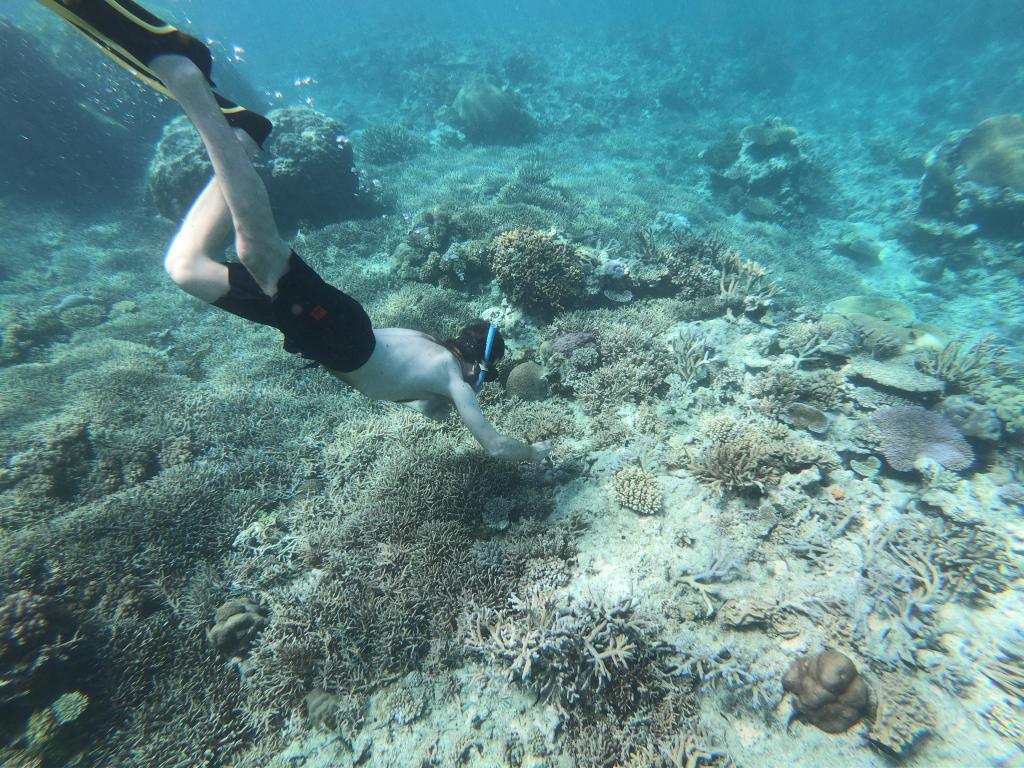
For the last part of the day, we get kitted up with masks, snorkels and fins for a snorkeling safari. We get on the boat which takes us out to Reef Escape, which is a well known dive spot. Wow, what a beautiful underwater garden. Upon first sight, the coral just looks like a lot of different shades of brown and beige, but as my eyes adjust, the colours start to come through. Blue tips, mauve, green, white, yellow, orange, it’s subtle but so pretty.
There is coral of all shapes, sizes and textures. We also see some magnificent examples of the corals we learnt about this morning. Filo even spots a fire coral which she points out. Like the name suggests, this isn’t one you want to touch. Some are brightly coloured, but this particular one is a dirty cream colour. There is lots of table coral here, one that we had been told about, but they didn’t have an example of it in the classroom. We also see lots of soft corals, they sway about in the current like hair dancing about in a breeze.
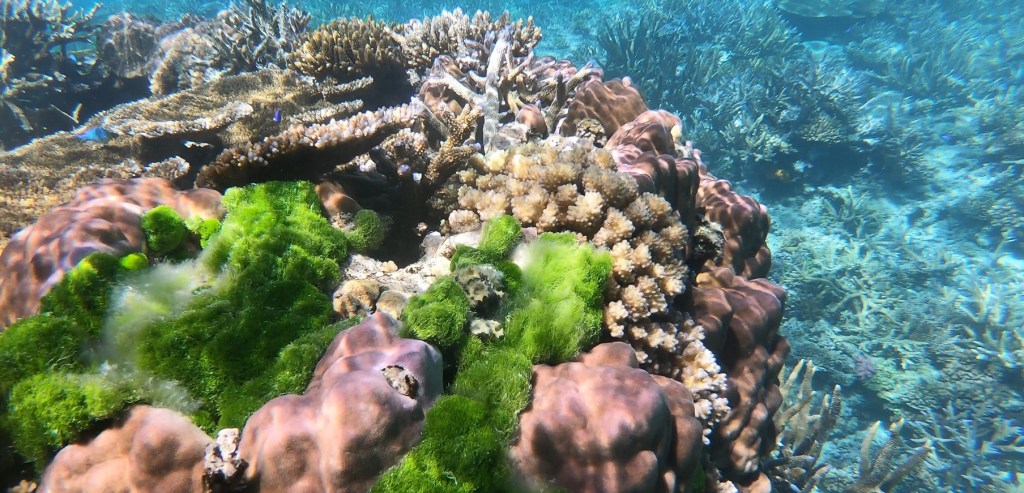
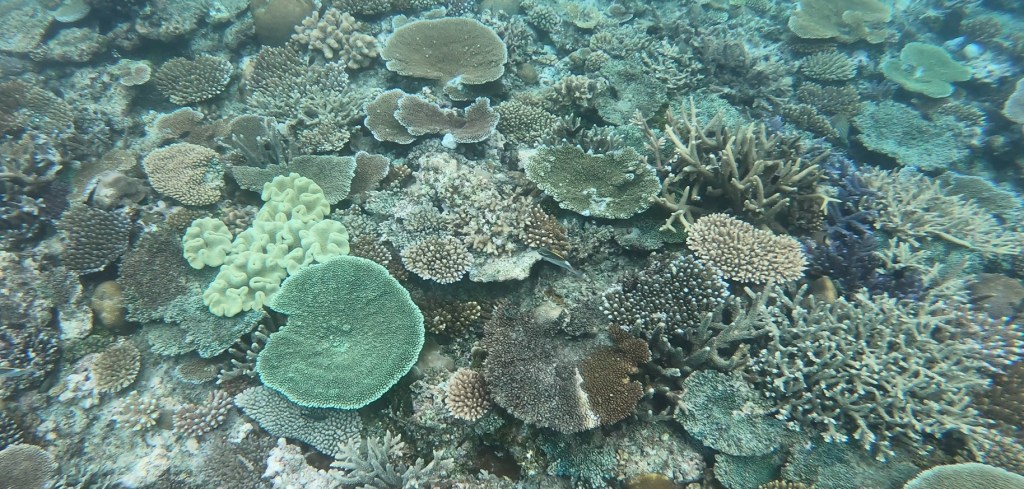
Because of the coral, most of the time, the water feels pretty shallow, but every now and again there are some big breaks in it and I realise how deep it actually is. Again, I am surprised (and so pleased) at how calm I feel. I have a very big fear of sharks and being in open water like this is not something I would normally do. But this is an opportunity of a lifetime and not something I am going to miss out on. I am feeling pretty proud of myself for being so brave. There are lots of fish around, but I am not really paying much attention to them, the coral is certainly the standout here.
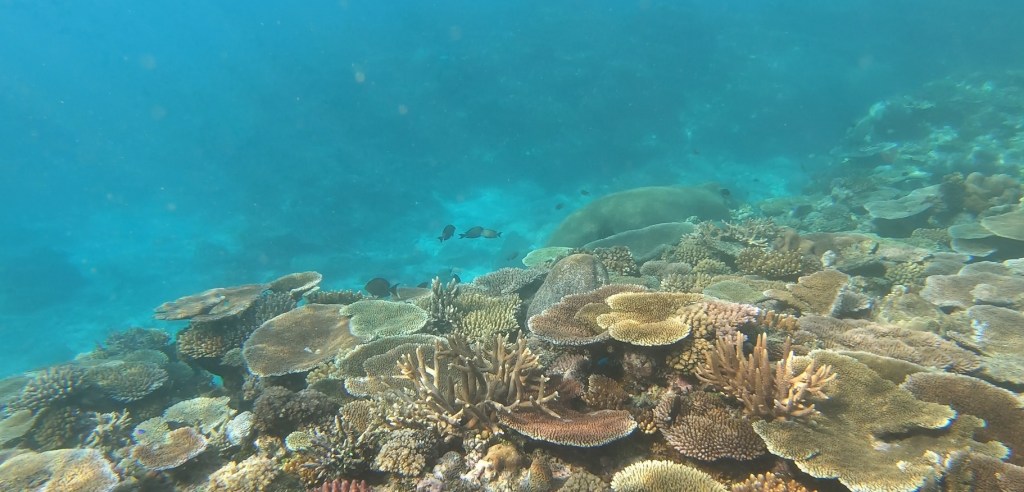
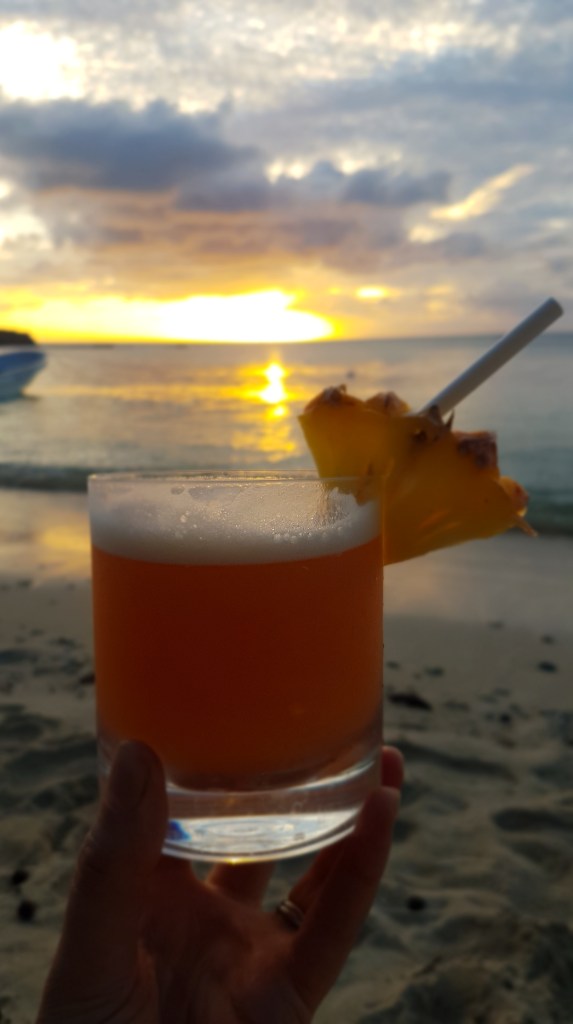
It has been such an incredible day, but I am pleased to be getting in the boat to head back. We have done 3 snorkeling trips today and it has really drained us. Once back on land, I decide it’s cocktail o’clock and grab a drink from the bar to enjoy down on Sunset Beach, watching the last of the wonderfully warm rays slip behind the clouds.
I head over to dinner, in bare feet, wearing a simple sundress thrown over the top of my swimsuit. I love that I can do this and not look out of place. It’s not a big flashy resort, guests don’t get dressed up for dinner. We are here for authentic experiences and that’s what Barefoot Manta delivers.
 Exploring the Long White Cloud