I wake up early, around 6am, to a spectacular view from our bure. I lie in bed for a while, listening to the ocean. Since I am awake so early, I decide to get up and head to Sunrise Beach and welcome in the day. In bare feet, I head along the path towards the restaurant, to cross over to the other side of the island. Just as I am passing the dining room though, a woman starts beating the Lali (Fijian drum) and calling ‘manta! manta!’ I literally start jumping up and down in excitement, I feel like a kid in the candy store.
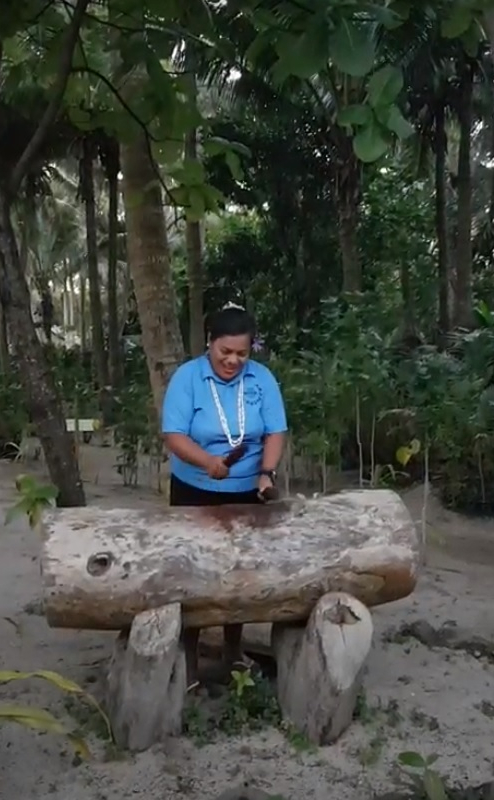
I quickly head back to our bure to find Daniel up and rushing to get his swimsuit on. The playing of the ceremonial drum is used to communicate to guests that manta have been spotted in the channel and tours will be run. Within a couple of minutes we are ready to go and head to the dive shop to get fitted with masks, snorkels, flippers and await the briefing.
After the orientation, we are split into groups and taken out to Drawaqa Passage in boats. Barefoot Manta Island is right next to the passage so we don’t have to travel far. It also means that we get there before guests from the other islands arrive. Within minutes, we are in the water, it can’t even be 7am yet, but the water is warm and the visibility is amazing. It’s deep, but I can easily see the bottom. I thought I would feel scared, but I feel safe here.
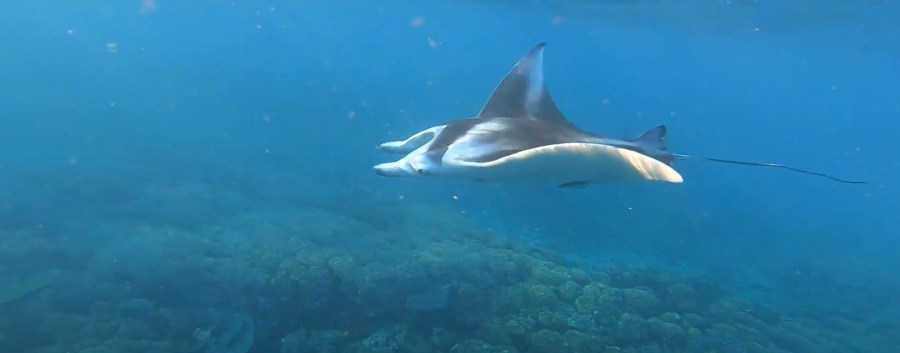
In our groups of 6-8, we form a line and drift down the channel behind our guide, letting the current take us. And then we see it, our first manta! A dark shadow that appears from within the deep blue. It’s not scary at all. It is graceful and gentle, gliding through the water. A second one appears. They come sailing past us and then just like that, they are gone.
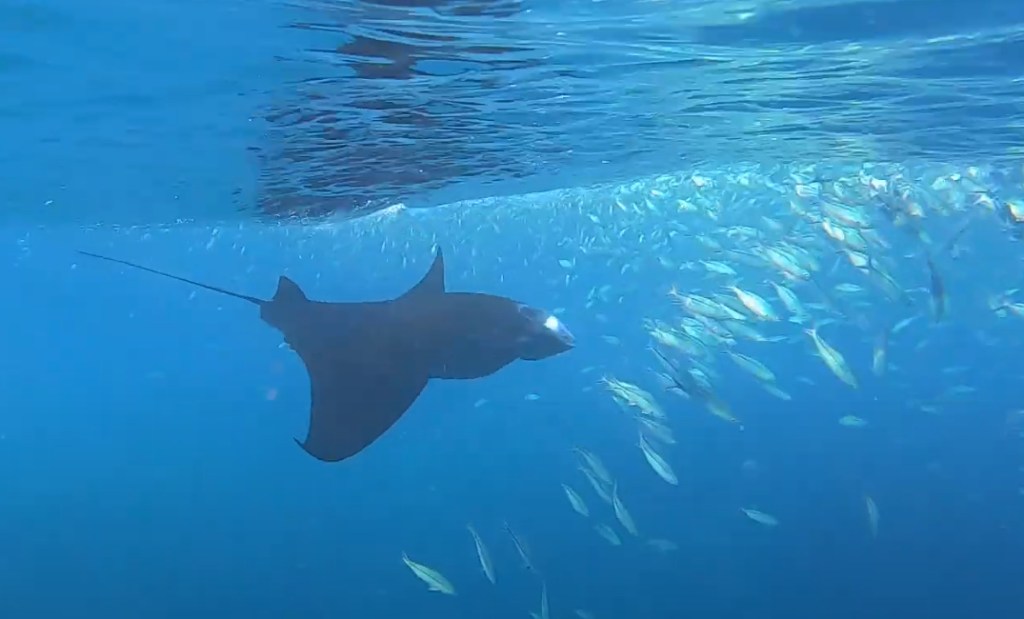
I can hear all these strange popping sounds in the water, later I find out that the sound is coming from fish eating. While we are here to see the manta, there are also lots of fish about. We swim through schools of silver fish, their little bodies flashing as they catch the light. We also float through cloudy patches with little white flecks. This is plankton, manta food. This passage is very rich in plankton and the reason why the manta’s love this spot so much.
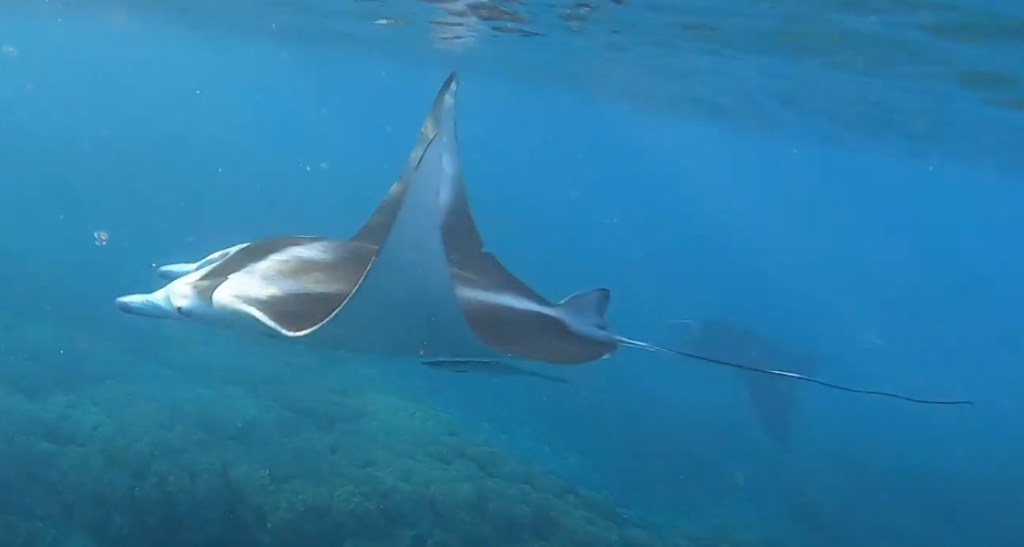
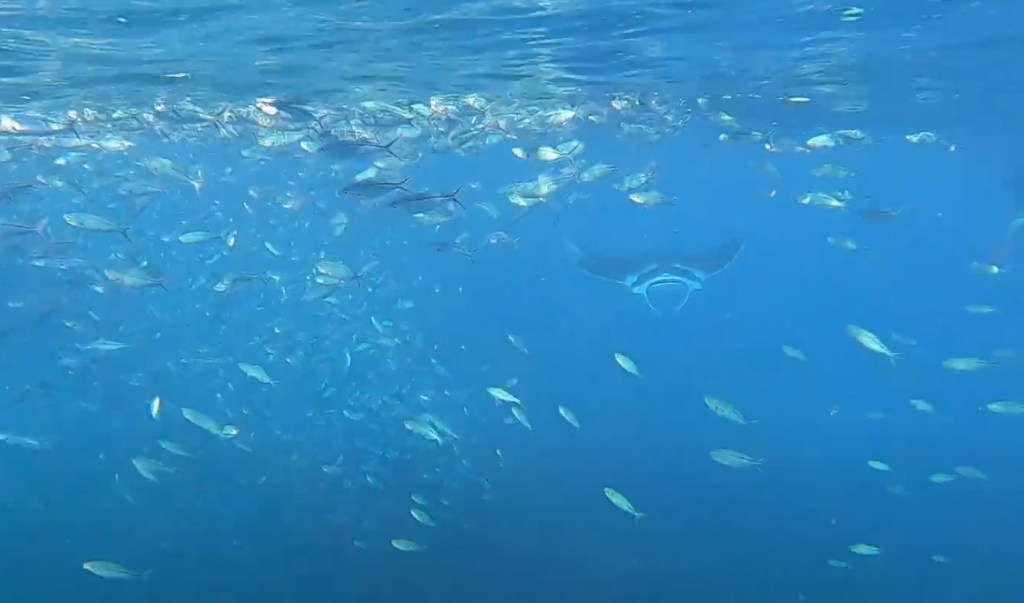
We continue floating in the current to the end of the channel and get picked up by the boat. It takes us back to the start so we can get in and do it again. We drift through more schools of fish and plankton and then see the beautiful manta again. They are much closer this time and moving slower, so we get to have a really good look. One turns towards me and I see her front on. She is huge, but graceful, her fins effortlessly moving through the water.
Animal encounters like this are so incredible. It’s such a humbling experience to see a wild animal up close in their natural habitat. I watch her as she turns, opens her mouth and swims through a school of fish, although it’s not what she is hunting. We get a couple of sightings like this, they aren’t passing us so quickly. And then we see what we think is a third manta but later find out one had circled back and come past again.
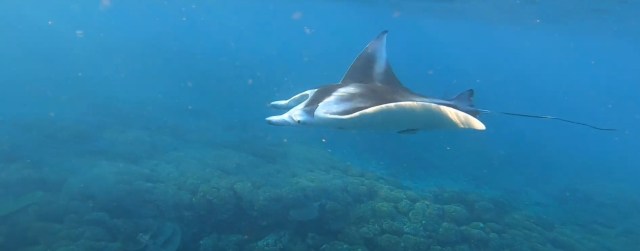
There are 2 types of manta, oceanic manta and reef manta. The oceanic can grow up to 7m! They can travel long distances and are found around the world in tropical and subtropical waters. The reef manta, which are the ones that travel through Drawaqa Passage, are smaller, growing up to 5 meters. They do not travel between countries, these ones will stay around the Yasawa Islands.
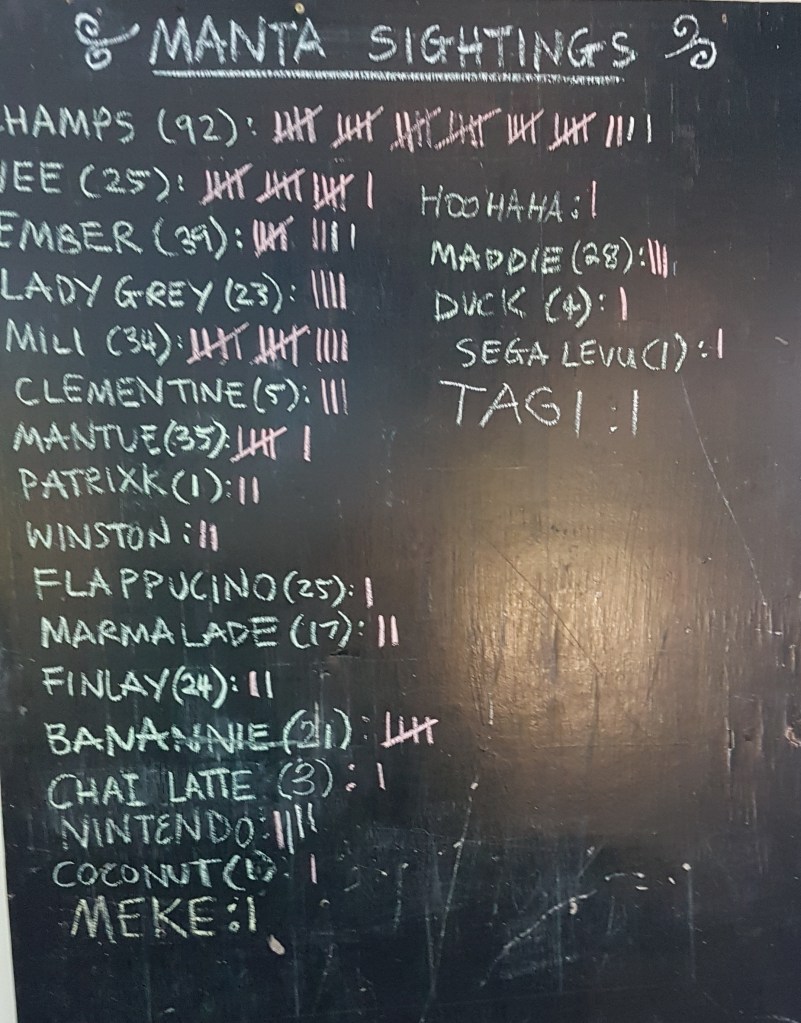
Each manta has its own distinctive markings. The team of biologists at Barefoot Manta study these beautiful creatures. Each manta has a name and there is a board in the Marine Biology hut that lists them, along with the number of times they have been spotted this season. Today we are seeing Champs and Ember. These two have made regular appearances this season. Unfortunately we didn’t get to see Lady Grey. She is one of the largest manta’s in the Yasawa region. From memory she is about 4.2 meters, I think Champs and Ember are around 2.5 meters. They still seem pretty large when you are in the water next to them!
We climb back on board the boat to do a third and final swim. I am so pumped and excited. That was amazing and I can’t wait to get back into the water and do it again. Unfortunately though, the boats have arrived with guests from the other islands. There are so many people in the water, all over the place, splashing about. Barefoot Manta runs a really professional tour that first protects the manta, but also allows the guests great viewing opportunities. Sadly, the other islands don’t follow the same structure. None of them are staying in a line and this means when the manta do swim past, I only see a glimpse as there are so many people in the way.
It was a disappointing way to end, but our second viewing was so amazing that I can’t complain. Rob, the head biologist, said the visibility today was amazing and the best sighting of 2023, even though there were 4 manta yesterday, today’s sightings were better. I feel incredibly lucky to have been a part of that.
We head back to shore, it’s only just gone 8am and already our day has been action packed! We head to breakfast which is a gorgeous array of breads, cooked food, pastries and tropical fruits. I absolutely love breakfast, and today’s morning snorkel has made me rather hungry. As I eat my way through breakfast & second breakfast, I can’t help but wonder what other incredible surprises today will have in store for us.
 Exploring the Long White Cloud